
College sports are flourishing, not fading away, despite what politicians from both parties would have you believe.
Hello and welcome to another edition of Free Agent! Keep an eye out this week, you never know what job opportunities will suddenly come your way.
No fluff in this week’s issue—just a sharp look at the problems with the Protect College Sports Act, followed by a quick aside on why Saturday nights are perfect for a brawl.
Don’t miss sports coverage from Jason Russell and Reason.
Locker Room Links
- Alex Ovechkin bizarrely claimed he was “not in politics” after appearing in a commercial for Russian dictator Vladimir Putin’s party (but at least he answered an ESPN reporter’s questions about the ad). Rep. Joe Wilson (R–S.C.) sent NHL Commissioner Gary Bettman an angry letter about the ad but stopped short of calling for punishment.
- The 2028 Los Angeles Olympics will not have a $20 billion to $40 billion benefit to the region’s economy.
- Logan and Jake Paul went to the Pentagon, people got mad online, and Jake defended himself in a lengthy post.
- Florida Republican Gov. Ron DeSantis is not happy with how the MLB playoff bracket seeds are placed.
- Lately it seems like every sports-related TV rating is going up, but here’s an outlier from golf: The Solheim Cup (the women’s version of the Ryder Cup) got far fewer viewers this year than in the past. That’s a real shame! I watched Saturday afternoon and the Sunday singles and got very into it (Jennifer Kupcho has a new fan). The U.S. narrowly lost, but people missed out on an entertaining event.
- Swiss soccer captain Granit Xhaka will miss at least three international matches, and possibly face legal consequences, for faking his COVID-19 vaccination certificate.
- Elsewhere in Reason, my colleagues had two pieces about the viral post by Texas Republican candidate Bo French, who seemed unhappy about the race of students in a photo of celebrations during the Texas win over Ohio State: “Why the Right Should Celebrate the UT-Austin Football Photo” by Robby Soave, and “Despite Nativist Outcry, Texas Shows the Melting Pot Works Incredibly Well” by Nick Gillespie.
- Congratulations to my Reason Foundation colleague Rich Sill, who this season attended 100 MLB games in all 30 ballparks. (How he did all this travel and kept his job, I do not know.)
Mission accomplished #BaseballMaxxing @MLB @MLBNetwork @RaysBaseball @raysbeisbol @tropicanafield
Following the end of the 5th inning (official game) we celebrate. pic.twitter.com/vSaaKsxkhQ
— Rich Sill (@itsRaiderRich) September 20, 2026
7 Myths Behind the Protect College Sports Act
The Senate is poised to approve the Protect College Sports Act (PCSA) this week. In procedural votes last week, it drew support from more than 70 senators. It still needs to clear the House, which isn’t in session until after the midterms—there’s still time for hiccups. Some observers worry the bill faces a tough ride in the House, but the Senate tally gives it serious momentum.
The measure is led by Sens. Ted Cruz (R–Texas) and Maria Cantwell (D–Wash.), who have drawn both bipartisan backing and opposition.
If it becomes law, it would represent an extraordinary level of government micromanagement in American sports. While sports and law sometimes intersect, this would impose precise controls on athlete compensation caps, transfer behavior, coaching departures, and a host of other granular rules that Congress would oversee.
Support for the bill rests on a handful of misconceptions about the state of college athletics. Here are the commonly cited points, along with the realities you should know.
The spending is too high!
The athletics budgets at many schools aren’t exactly shining examples of profitability: about 94 percent of Division I institutions, and 71 percent of power-conference schools, reported deficits in the most recent year surveyed by the Government Accountability Office. What isn’t visible in those numbers is why schools tolerate the losses: there is evidence that athletic programs help retain nonathlete enrollees, thereby boosting university revenue through tuition. Not every student-athlete lands a full ride—some are on partial aid or walk-on status, yet still contribute to the team through their participation.
Athletics serve as a powerful marketing engine—arguably more effective than any billboard or mail campaign. We’d all prefer students choosing schools for academics, but many pick campuses because of the excitement of a big game, like storming the field against a powerhouse. Claiming that schools lose money on sports is a bit like saying a business loses money on marketing—the losses are often offset by the revenue generated elsewhere.
Nevertheless, in some places, the push to compete has strained taxpayers (Cantwell’s office identified six states that directed tax dollars, hiked taxes, or created substantial tax relief to support college athletics) and students (a majority of Division I schools rely on mandatory student fees to support athletics—over $2,500 per year at several institutions). Politicians and universities should avoid this path. With wealthy boosters, sponsorships, and even private equity sources, there are smarter ways to fund college sports.
Unlimited transfers are getting out of control!
If players weren’t receiving compensation, this would be harder to manage. Fortunately, they now engage in name, image, and likeness (NIL) arrangements. NIL contracts are enforceable to some extent, and they can be used to lock down a multi-year commitment with top recruits.
The legal landscape is still evolving. A notable case involved Washington quarterback Demond Williams Jr. after the 2025 season: he signed a lucrative revenue-sharing deal with the school, then immediately explored the transfer portal (rumor had it that Lane Kiffin was trying to lure him to LSU). The contract, however, limited portal entry. After a brief attempt to leave, Williams decided to stay, later attributing the turn of events to “really bad advice.”
One might think athletic directors and coaches would want to deter recruits from leaving, and players may seek the stability of multiyear deals to protect against injury or performance slumps. Others may prefer annual portal flexibility to chase better NIL opportunities after a strong season. If that’s the case, fans might not love the reality, but the market will continue to adapt.
We can’t let professional athletes back into college sports!
Here’s the good news: this is largely resolved. The Southeastern Conference (SEC) successfully pressured LSU to abandon a plan to roster two players who had previously been in NFL camps. It demonstrates that college sports can self-regulate without congressional meddling.
The contemporary issue—late-round draftees attempting to re-enter college athletics—appears unlikely to persist. The turmoil stemmed from the NCAA’s own rules: this summer, the association announced a broad five-year eligibility rule. It wasn’t intended to cover players who began college in 2022, but lawsuits broadened the class. If the NCAA had announced the change earlier, the class of 2022 might have faced fewer dilemmas about staying in school versus entering the draft.
There will still be edge cases—such as whether a player can join a college basketball program after earning wages in Europe, or how prize money affects earnings for individual sports. The NCAA had previously restricted teenagers who played in the junior Canadian Hockey League, despite only modest stipends; that policy shifted in 2024.
Frankly, with so many student-athletes now receiving NIL or revenue-sharing deals, it’s hard to claim that athletes must be blocked from playing if a non-NCAA entity pays them.
Conference realignment is out of control!
The horse has already left the barn on this one, and the PCSA won’t reverse what’s already done. The current proposal would cap power conferences at 19 members and discourage realignment by forcing schools to operate as independents for a three-year period before joining a new league (a deadline that expires sometime in 2032). This cap effectively entrenches advantages for the Big Ten and SEC, blocking worthy challengers and rising programs, and it isn’t just about who wins on the field—it affects enrollment too.
In short, the bill protects the schools you already dislike for switching conferences, while shutting out others on the rise.
What I’d prefer is sport-specific conferences. Consider Division I men’s hockey: there are six conferences plus several independents. Besides the Big Ten (which includes Notre Dame), most conferences are hockey-focused. This should be a more common arrangement. Rather than letting football’s high-revenue priorities dictate all conference alignments, other sports should set their own leagues. That would spare baseball and softball from cross-country travel whenever possible. Fortunately, the PCSA doesn’t ban or discourage this option—it’s simply a degree of flexibility that schools and conferences don’t seem eager to pursue.
We’ve got to save smaller sports!
On the bright side, outside of football and the marquee men’s and women’s basketball programs, many other college sports are thriving, and the total number of NCAA student-athletes continues to rise.
The 2026 Women’s College World Series (softball) drew 2.5 million viewers for the championship game and 1.6 million for the entire 16-game event. TV viewership for the Women’s College World Series was up 20 percent from the prior year, and the softball tournament overall rose by 28 percent.
In 2023, Nebraska’s Memorial Stadium hosted around 92,000 spectators for a women’s volleyball match. Earlier this year, roughly 40,000 attended volleyball games at AT&T Stadium in Dallas. The plan is to repeat the event next year, potentially at a different venue. In September, about 43,000 filled Wrigley Field to watch two volleyball matches (even though the marquee matchup was affected by a slick court). That’s a sizable crowd, given Chicago’s distance from the participating teams (Kentucky, Missouri, Nebraska, and Penn State).
I’ll borrow from Sports Media Watch to summarize the academic-year television ratings for college sports: the women’s gymnastics national championship drew its largest audience since 2007 (about 1.1 million on ABC); the men’s hockey national championship attracted its biggest crowd since 2009 (901,000 viewers as Denver defeated Wisconsin); the men’s lacrosse final (778K) was the most-watched since 2007, and the women’s lacrosse final (470K) marked a record high; Penn State’s wrestling championship win was the most-watched since 2017 with 712,000, and the full championship was the most-watched since 2013. Both beach and men’s volleyball posted new May records, while women’s volleyball nearly set a record for its national championship in December. The men’s gymnastics national title game, in only its second year on Nielsen ratings, drew 152,000 viewers, a 42 percent increase.
And so on. Higher television ratings translate into better media-rights deals, which means more money for athletic departments across the board.
Some smaller programs have faced cutbacks at both large and small schools, but we aren’t at a point where America’s top Olympians are struggling to find scholarships. It’s a reminder that schools must think creatively about funding. Arkansas even attempted to eliminate men’s and women’s tennis, but donors stepped in to save the programs—why not rally support earlier?
We’ve got to protect smaller schools!
The NIL landscape is actually empowering the little guys. Without NIL, you wouldn’t see an undefeated Indiana football team in 2025 (even though they’re still in the Big Ten).
In any case, the NIL and transfer systems have proven beneficial for Group of Five programs (now six conferences). In the old model, schools relied on prestige, famous coaches, and top facilities to attract talent (and perhaps, allegedly, some informal incentives). Smaller programs didn’t have that leverage. Now they can make a straightforward pitch: revenue-sharing opportunities.
Imagine you’re a high school prospect who’s a three-star recruit and perhaps coming off an injury. Under the old system, you’d chase a spot in a power conference and wait two or three years for your chance. Today you could join a Group of Five program, get immediate playing time, earn NIL money, and prove your value for a future jump to a bigger program.
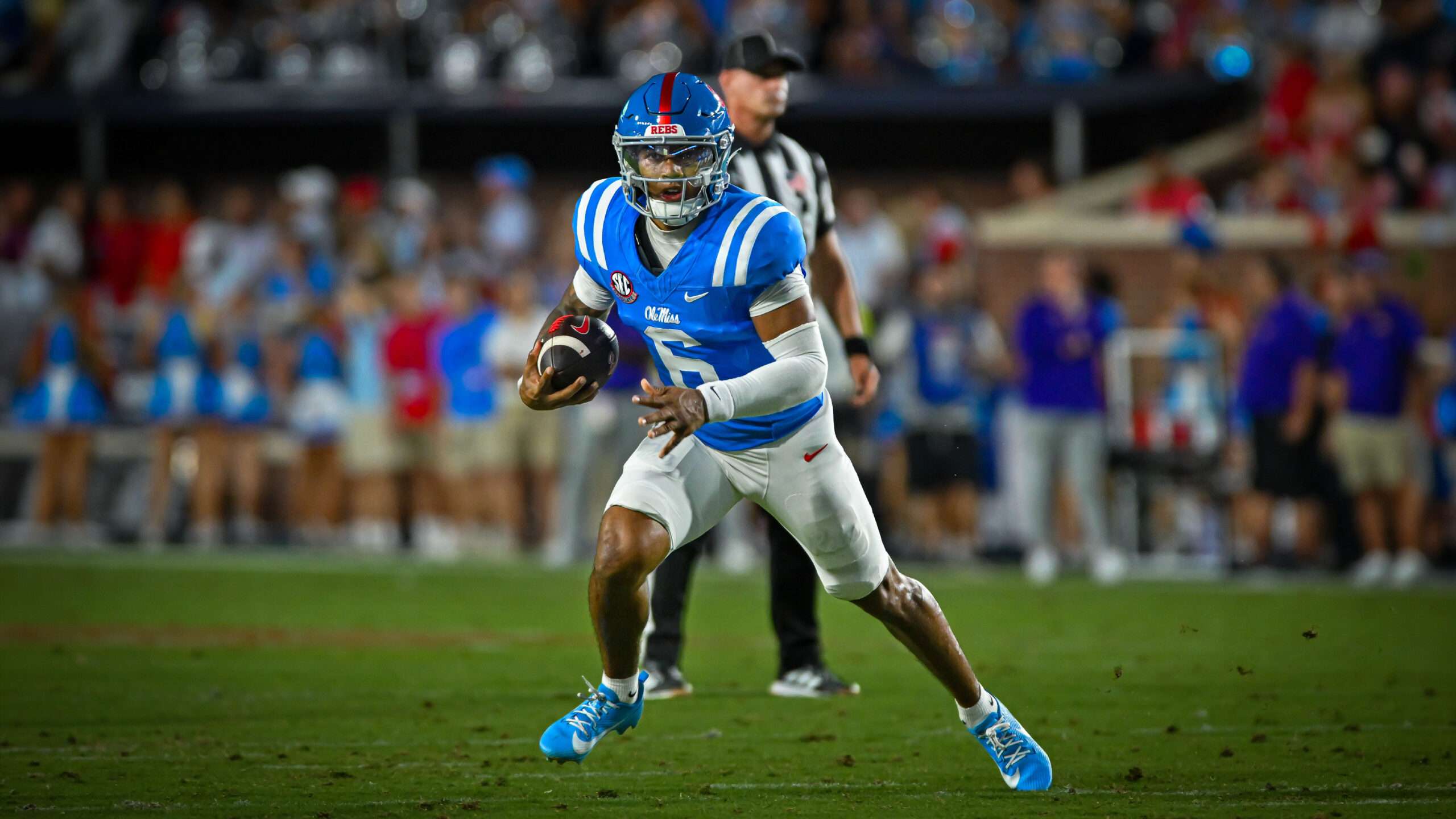
Consider examples like Trinidad Chambliss, the Ole Miss quarterback and Heisman hopeful who moved from a Division II program; Cam Ward leaped from an FCS program to the No. 1 overall draft pick; Travis Hunter started at an FCS school before starring at Colorado. College football has benefited from players developing at smaller schools before becoming household names at larger ones.
Those original schools also gain from these stories; under the old system, a Group of Five school might have missed out entirely on such a talent. Now they may land the athlete for a season or two and gain a shot at upsetting the powerhouses with a player who would have languished on a bigger program’s bench otherwise.
Lane Kiffin sucks!
He absolutely does! (This one might actually be a genuine myth, after all.) Fortunately, Ole Miss handed out consequences to Kiffin on Saturday. No need for Congress to bar coaches from switching teams midseason. Yet the so‑called Lane Kiffin Rule remains in the bill, oddly enough targeting only FBS football.
We all know how this ends: School A fires its coach in October after a poor start. The AD quietly contacts the agent for the coach at School B. The coach agrees to sign as soon as legally possible. Meanwhile, the coach is already mentally checked out of School B, even though they could still reach the playoffs. The agent leaks the saga to ESPN insiders to drum up boosters’ support and push the salary higher. The coach may even begin reaching out to players about transferring once the portal opens.
In short, the law may exist, but the effect is rarely dramatic in practice.
Let Them Fight!
Here’s a little truth: most sports fans enjoy a good scuffle between rivals. Why do you think Don Cherry used to rake in money selling Rock’em Sock’em Hockey tapes in the ’90s?
League executives, on the other hand, generally dislike brawls. They dole out suspensions and fines, and fighting has declined even in the NHL. According to 25 seasons of data on HockeyFights, 42 percent of games featured a fight in 2001–2002, but only 19 percent did last season. The Professional Women’s Hockey League bans fighting altogether (players are ejected rather than penalized with a major). Yet the viral moment that sparked the discussion shows why some fans crave the drama. I’m not advocating injurious altercations, but leagues could afford to be a touch more tolerant of players letting their emotions show.
That said, I was pleased to see NASCAR decide on Monday that no penalties were needed for Carson Hocevar and Ryan Blaney after their altercation following Saturday’s Bristol night race. Here’s a clip of the fight, followed by the on-track sequence that started it.
The postrace show aired more replays and discussion of the brawl than of the dramatic finish. The merchandise lines afterward suggested the same sentiment among the crowd.
“If drivers are going to handle their own business, we’re not encouraging fighting, but we are encouraging passion, right? Those two showed plenty of it—Blaney’s fire, and the other driver’s heat,” as NASCAR chief Steve O’Donnell aptly described it. “We’re not issuing penalties now, and we’ll monitor the rest of the season—but there won’t be penalties after the race.”
Let them fight, and then hug it out and move on. The fans will eat it up.
Replay of the Week
I wish this moment had unfolded in a clash between two powerhouse teams, not two clubs unlikely to reach a bowl. It was unbelievable!
VANDERBILT WINS IN A MIRACLE OVER NC STATE!
NC State tried to drain the clock and take a safety… but fumbled in the end zone. Vanderbilt recovered for a TD.
(Officials added 1 second after review, and Vanderbilt held on)
Here’s how it looked and sounded on SEC Network. pic.twitter.com/JXmRMlGHu6
— Awful Announcing (@awfulannouncing) September 19, 2026
That’s all for this week. Enjoy the genuine centerpiece game of the week—Boston University versus Bucknell in field hockey. (Yes, you read that right—college sports are thriving!)
