
It would, in the long run, worsen the situation rather than improve it.
It’s the kind of idea that feels tempting at first: when you’re short of a crucial commodity, why would you sell off the little you still possess?
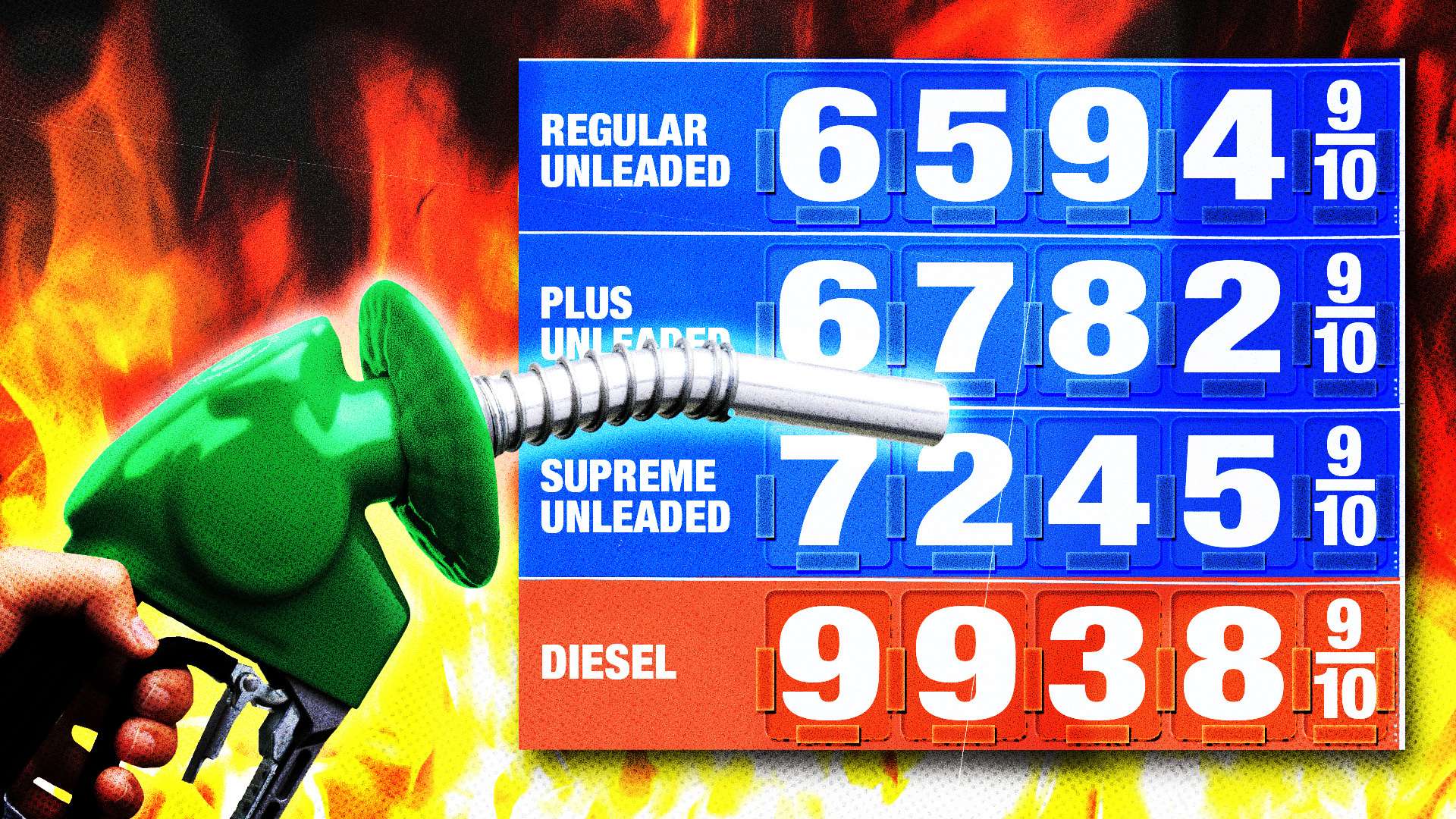
And diesel fuel ranks among the most essential elements of a modern economy. It powers trucks, trains, and ships, all of which are crucial for moving goods from one place to another. As diesel becomes more expensive—never at a higher nominal level than it is today—everything that depends on trucking, rail, or maritime transport becomes pricier too. That’s no fun for anyone involved.
Some Republicans believe they’ve found a simple remedy: halt diesel exports altogether.
“High diesel prices ARE KILLING FARMERS INCOME,” Sen. Chuck Grassley (R–Iowa) posted on X on Saturday, urging President Donald Trump to embargo diesel exports. Others have since followed Grassley’s lead, including Rep. Ashley Hinson (R–Iowa), who is competing in a closely watched Senate race.
To date, the White House has not taken action. That’s fortunate. Despite appearances, a ban on diesel exports would probably make an already difficult situation worse by pushing prices higher.
That might seem counterintuitive. After all, wouldn’t hoarding America’s diesel supply translate into cheaper fuel at the pump?
In reality, a prohibition on exports would push prices up, according to the American Fuel and Petrochemical Manufacturers (AFPM), a trade group representing the oil and gas industry. U.S. refineries produce more than 5 million barrels of diesel daily, while domestic consumption stands at roughly 3.6 million barrels. If exports are shut off, refineries would run out of room to store the surplus and would have to reduce output. Lower production means tighter supply, which drives prices higher.
That isn’t the whole story. Because diesel trades on global markets, cutting American supplies out of the equation would lift the worldwide wholesale price of diesel—and that rise would bounce back to regions that depend on imports, notably the East Coast and, to a lesser extent, the West Coast, explained Garrett Golding, an energy sector analyst at the Dallas Federal Reserve, in a series of posts on X.
Golding co-authored a 2022 study that looked at the possible consequences of a ban on crude-oil exports—an outcome that would unfold in a broadly similar way to a diesel-export ban. In that analysis, the Dallas Fed researchers concluded that such a ban would be “not only ineffective, but also counterproductive.”
There are additional potential effects that would be harder to predict. New export controls would act as a chilling sign to markets, warned Patrick De Haan, a petroleum analyst. Likewise, the AFPM notes that any export ban enacted by the United States could prompt other countries to follow suit, generating prolonged volatility in the market.
The Trump administration appears conscious of that risk. Interior Secretary Doug Burgum told reporters last week that export restrictions could invite retaliation from other nations, worsening the problem.
An export ban would “disrupt supply chains and hurt American producers,” said Jason Isaac, founder and CEO of the American Energy Institute, to Forbes. “Diesel is a global commodity, and restricting American exports won’t shield us from global market dynamics.”
High fuel prices sting, and the downstream effects of diesel costs will ripple through the entire economy. With midterm elections on the horizon, it’s understandable why Republican politicians would be tempted to try anything that might ease the price surge this year—an elevation driven in part by the Trump administration’s controversial and unpopular stance toward Iran.
Yet, from an economic perspective, those higher prices are “working exactly as they should,” notes De Haan. “Prices for diesel are rising because diesel isn’t as abundant globally—which reduces demand.”
Politically, the feedback loop is less efficient, but the final outcome is likely the same: waning support for the party that created this mess.
In the meantime, credit is due to the White House for resisting the lure of this flawed idea.
