
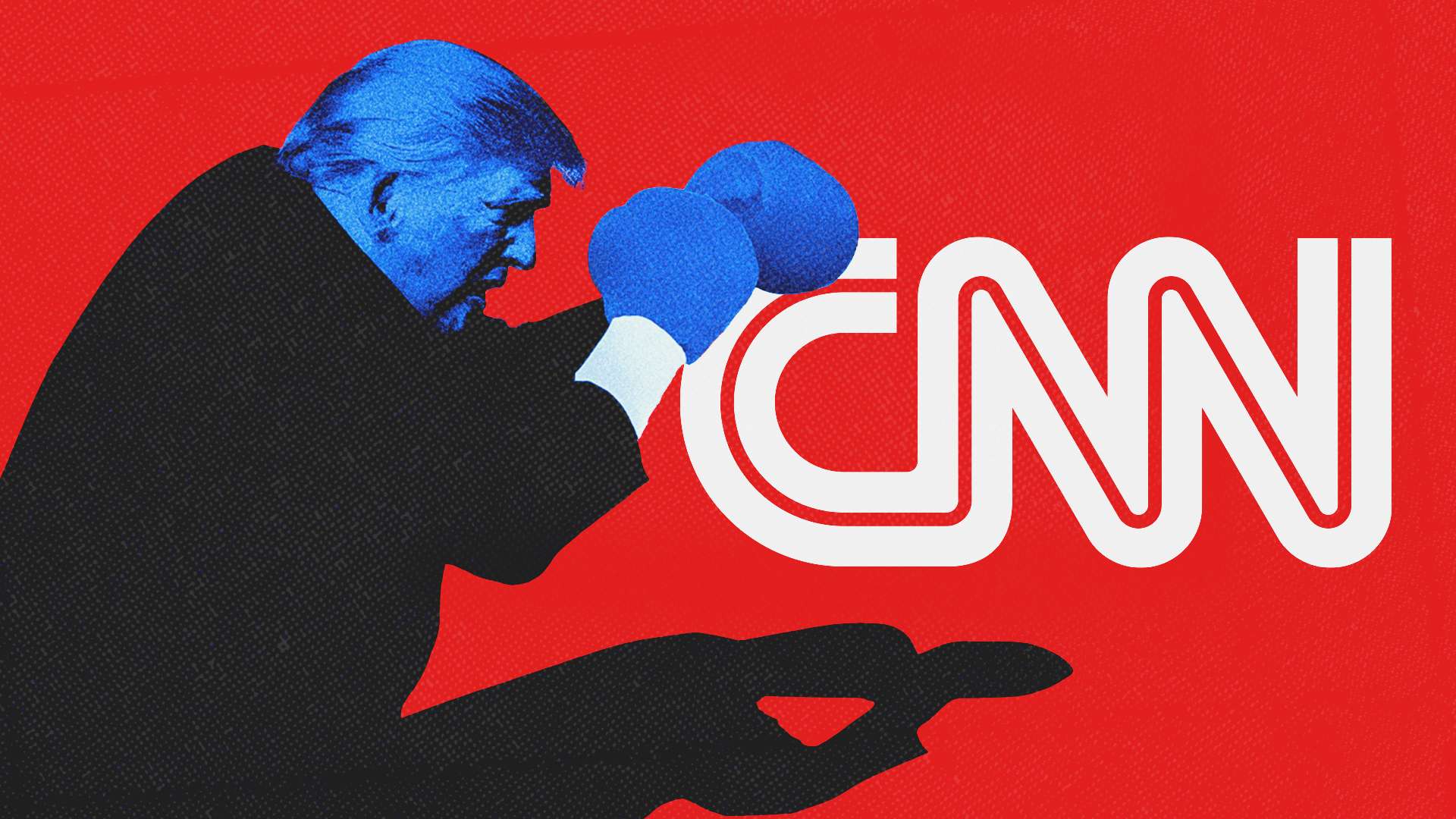
U.S. District Judge Timothy J. Kelly remains doubtful about the later-developed “national security” reasoning used to justify expelling CNN, MS NOW, and Politico from access to the White House.
Early today, a federal judge in the District of Columbia issued a temporary injunction that blocks President Donald Trump’s move to bar CNN, MS NOW, and Politico from White House grounds, ordering the reinstatement of the hard passes assigned to employees of those outlets. U.S. District Judge Timothy J. Kelly, a Trump appointee, described the abrupt exclusion of these organizations—announced by the president last Friday—as appearing inconsistent with the due process standards established by D.C. Circuit rulings, and he voiced rightful doubt about the later-cited national security rationale for such a hasty measure.
Beyond their due-process challenges, CNN and its allies claimed that their exclusion was discriminatory on viewpoint grounds and a retaliation for protected speech. The ruling issued today does not resolve those First Amendment questions, but it does not look favorable for Trump’s effort to sanction journalists who are not their preferred voices.
Reflecting on the 1977 case Sherill v. Knight, Kelly notes in the temporary restraining order that the U.S. Court of Appeals for the D.C. Circuit held that “the interest of a bona fide Washington correspondent in obtaining a White House press pass… undoubtedly qualifies as liberty which may not be denied without due process of law under the fifth amendment.” And in the 1983 decision in Karem v. Trump, the Circuit reaffirmed that “a duly issued hard pass may not be suspended without due process.”
Trump’s team contends that “Sherrill” and “Karem” were wrongly decided, Kelly writes. “Perhaps—but this Court is bound by D.C. Circuit precedent, full stop.”
Contrary to those precedents, Kelly observes, the White House did not provide CNN and the others with advance notice before revoking their reporters’ hard passes, nor did it offer a chance to be heard. And as in Karem, he notes, “the record lacks any formally articulated standards available before the conduct for which the Defendants revoked the passes.”
In communications the government later filed after CNN et al. sued, the White House Press Office claimed that “your organization has demonstrated behavior violating the standards of professionalism and decorum expected of those granted access to the White House Complex.” Kelly describes that justification as so vague that it hardly suffices.
Those letters, written only four days after Trump announced the bans, cited stories that allegedly “threatened national security and/or spread falsehoods.” Yet Kelly characterizes those reports as routine journalism, pointing out that the White House renewed CNN reporter Betsy Klein’s hard pass “months after” she published some of the identified items, undermining any assertion that she or her employer had “the necessary notice that the conduct at issue violated a relevant standard.” And “in most instances,” he adds, “the reporters named in the letters did not even hold hard passes.”
Regardless, the defendants “offer little support for their claimed national security interest to justify revocation of the plaintiffs’ hard passes,” Kelly writes. “The Court remains skeptical—at least on this record—that the defendants’ stated aim of protecting national security actually motivated, or even advanced, the removal of the plaintiffs’ passes.”
Kelly expands on this point: “Nothing in the prelitigation record indicates that the revocation of the plaintiffs’ hard passes was driven by national security concerns. Certainly, that was not what the President conveyed when he announced the ban—he instead focused on alleged untruthfulness and negativity in the plaintiffs’ reporting.”
Trump stated that he was banning CNN, MS NOW, and Politico “as a result of their constant ‘reporting’ [of] FAKE NEWS!” He added that journalists “shouldn’t be able to perpetually write or report FICTION and LIES when covering the President of the United States, the Trump Administration, or the United States of America.”
Subsequently, Trump told reporters that his punishment of CNN and the others stemmed from viewing their coverage as “purposely negative,” “one-sided,” and “never good.” He charged that these outlets “want to diminish the Republicans and a Republican administration.”
Trump did not cite national security as the justification for the ban until three days after the action. “The White House is not launching an assault on the Free Press, something I value,” he asserted in a Truth Social post Monday, reacting to widespread criticism of the move. “It is launching an assault on the FAKE NEWS, something that has grown like Cancer in our beloved United States of America. It is corrupt, deliberate, pervasive, fully coordinated, and totally out of control. It is a threat to our National Security, and must be stopped, NOW!”
The government’s attorneys attempted to recast that later-claimed rationale into a sweeping, constitutionally significant justification. Yet that maneuver did not persuade Kelly.
The outcome was anticipated, particularly given Kelly’s 2018 temporary restraining order requiring the White House to reinstate CNN reporter Jim Acosta’s hard pass, grounded in the same due-process concerns central to the current ruling.
Trump had suggested in advance that Kelly would rule against him. “The good news for CNN, MS NOW, and Politico is that they have a great, for them, and totally disloyal Judge,” he proclaimed in a Truth Social post on Tuesday.
For Trump, loyalty to himself—rather than the rule of law—remains the foremost duty of his judicial appointees. Kelly’s approach, by contrast, reflects a different view of his role and obligations.
