
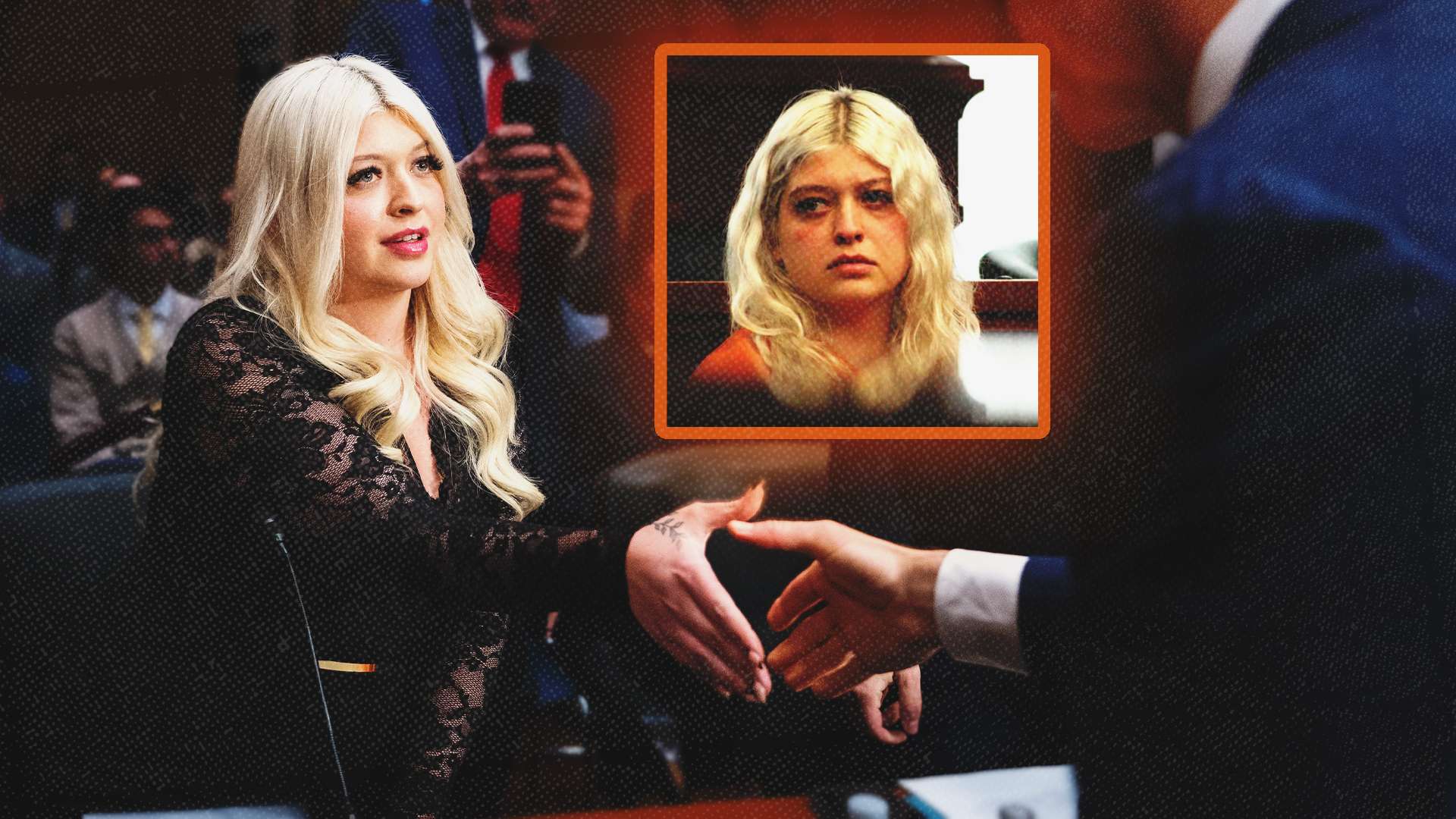
It was Flock’s surveillance that steered authorities toward the wrong woman, and the police overlooked other evidence, ultimately jailing her.
In a bipartisan Senate hearing on Wednesday, Lindsey Isaacs described her harrowing legal battle stemming from the increasingly unpopular Flock Safety’s automatic license plate reader (ALPR) surveillance network. But without proper police accountability and oversight, law enforcement mistakes like the ones experienced by Isaacs are bound to repeat.
Following a routine day of cooking and running errands on October 4, 2025, Isaacs testified that she jolted awake at roughly 4:45 a.m. The police were at her door. Her nearly new black Dodge Durango was in the process of being seized. The officers explained there had been a deadly crash, and three people had died.
Isaacs, then 23 years old, told the officers she had not been involved in any crash. “I handed over my receipt and the details of where I had been,” she recalled, yet the troopers asserted there was damage to her car consistent with a collision. “But I could not see the damage they were describing,” she added. “My Durango was in immaculate condition.”
It took months for Isaacs to learn why she had been linked to the fatal crash. “I later discovered that a Flock automated license plate recognition camera had captured my Dodge Durango approximately two to three miles west of the crash scene,” Isaacs testified. She would also learn that witnesses at the scene described a maroon Dodge Durango as being involved, and a partial license plate number of 458, both pointing to a different vehicle and driver.
“Despite this information, the investigation continued to focus on me and my vehicle,” said Isaacs. And six months after the fatal crash, Isaacs was ordered to surrender herself to the Volusia County Jail north of Orlando. She faced eight felony counts, including three counts of vehicular homicide. Isaacs testified that she was placed in solitary confinement for three and a half days due to “the severity of [her] charges.” She was then transferred to a maximum security unit where she would spend the next 10 days.
“I was terrified,” said Isaacs. “I was facing the possibility of spending the rest of my life in prison for a crash I knew I had not been involved in…. At my lowest point, I did not want to be alive.”
Although she was initially denied bond, prosecutors reevaluated the case against Isaacs after her attorney presented evidence of her pristine Durango. After 13 days in jail, she was released on $250,000 bail. And in May 2026, prosecutors declined to file formal charges against her, pursuing charges against someone else instead.
Isaacs’ story is a chilling one. But while Flock’s technology and public relations missteps rightly took on heightened criticism from both Republican and Democratic senators during Wednesday’s hearing, one player in Isaacs’ story was left largely untouched: the law enforcement agents who, despite ample exculpatory evidence, continued to investigate and ultimately arrest Isaacs.
After hearing from Isaacs and multiple experts on civil liberties and cybersecurity, Sen. Alex Padilla (D–Calif.) asked how to close ALPR data loopholes and ensure Americans’ right to privacy. “You ban them, sir,” said Chad Marlow, a senior policy counsel at the American Civil Liberties Union. “You ban them.”
But banning ALPR technology won’t fix bad police work, and it won’t stop cops from violating constitutional rights either.
Rather than playing whack-a-mole with ever-evolving surveillance tools, truly securing Americans’ rights in the 21st century means passing proactive legislation. “Congress can require federal agents to get a warrant before they search historical location data,” testified Alasdair Whitney, the legislative counsel at the Institute for Justice, a nonpartisan, nonprofit law firm. Whatever the source of the data, Congress “can impose tight limits on how long that data is kept” and at minimum require officers to obtain a warrant before using surveillance data.
Because while the Flock battle may be won, the surveillance war is far from over.
“We urge the honorable members of this subcommittee to enforce constitutionally grounded restrictions on these technologies before these cameras end up on every street corner,” Whitney continued. Only time will tell if they will listen.
