
A Tennessee resident is pursuing a federal civil rights action against the city of Kingsport, its police department, and several officers, alleging that his First Amendment rights were violated after he posted videos showing an officer speeding. The complaint, brought with the support of the Foundation for Individual Rights and Expression (FIRE), accuses law enforcement of acting in retaliation for his online recordings and criticisms of the department.
The Foundation for Individual Rights and Expression (FIRE) announced on Tuesday that it represents Joshua Gibbons in the suit against the City of Kingsport, the chief of police, and various officers. The case contends that the department’s actions were aimed at silencing him for his coverage and commentary about policing in Kingsport.
Gibbons, who routinely records Kingsport police activity and shares the footage on his YouTube channel, was arrested in October 2022 on charges including disorderly conduct, speeding, and using a cellphone while driving. After nearly four years, all of the charges were dismissed. He asserts that his recordings and criticisms of the police department helped prompt the arrest.
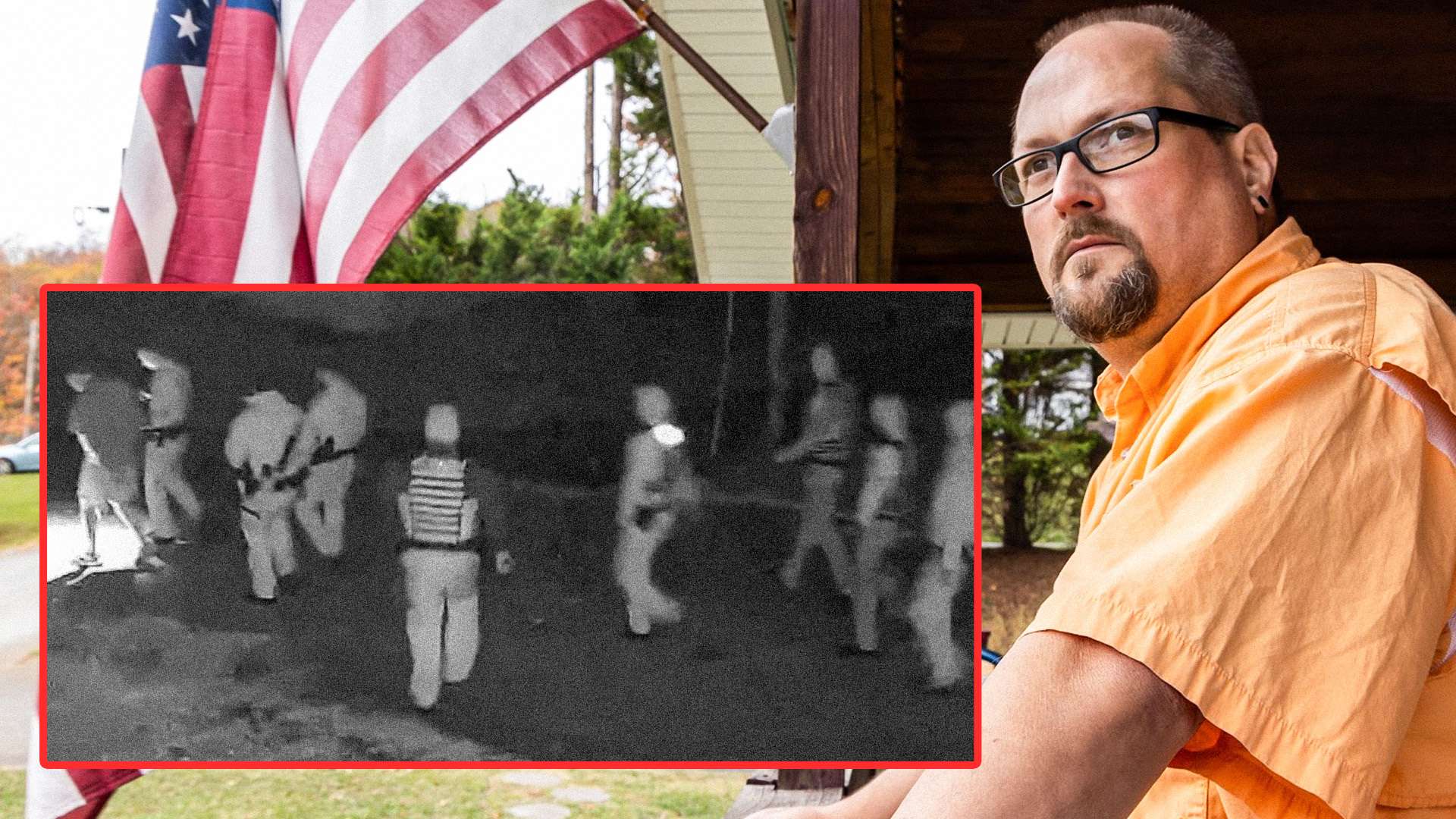
In a FIRE press release, Gibbons stated that authorities tried to intimidate him but that he would not back down. He said the arrest was an injustice that jeopardized his family’s sense of safety, noting that eight heavily armed officers were involved in what he described as a raid on his home.
The sequence began on October 9, 2022, when Gibbons recorded a Kingsport police sergeant driving a police SUV with no emergency lights activated, seemingly speeding. He followed the officer to a fast‑food restaurant where the officer waited in the drive‑through, then stepped out with his phone recording to ask for the officer’s name and badge number. When the officer refused, Gibbons directed a harsh insult and then departed. The encounter lasted roughly a minute.
A few days later, on October 15, Gibbons posted another clip showing a Kingsport officer giving him the middle finger. The next morning a member of the public filed a complaint about that same officer, according to the lawsuit, and it was at that point that the Kingsport Police Department learned of Gibbons’ more recent videos.
On October 17, a Kingsport detective secured an arrest warrant from a court clerk. The detective’s affidavit claimed that Gibbons’ video depicted him operating a cellphone while driving and traveling at 53 mph in a 45 mph zone. It also stated that Gibbons’ yelling at the drive‑thru created a disturbance that disrupted the officer and other customers.
Eight armed officers arrived at Gibbons’ home at about 5 a.m. the following morning and reportedly woke him in a half‑dressed state, arresting him before his elderly mother and daughter.
Gibbons is part of a broader movement of independent reporters, livestreamers, and self‑described First Amendment “auditors” who document police and government workers to hold them accountable and to examine their adherence to constitutional rights.
The right to film police in public, and to criticize officers—including using crude language or other forms of expressive conduct—has strong support in federal appellate courts. All nine circuits that have ruled on filming police in public have upheld that ability, and there is substantial case law recognizing the right to criticize law enforcement, even when it involves vulgar language or gestures.
In a press release, FIRE attorney Adam Steinbaugh criticized the Kingsport Police Department’s response as an extreme overreach and argued that it stands as a clear example of how authorities should not react to criticism. He added that the First Amendment protects both filming police officers and engaging in critique without fear of arrest, and urged the Kingsport department to acknowledge that principle.
Gibbons initially filed his civil suit in 2023 but kept the matter private until the criminal charges were dismissed. The legal proceedings unfolded over several years.
During a 2023 bench trial, a county judge acquitted Gibbons of speeding and cellphone-use charges but found him guilty of disorderly conduct. He appealed for a jury trial, which did not occur until 2025.
At the new trial, jurors were instructed that Tennessee’s disorderly conduct statute applies when a person in a public place, with intent to cause public annoyance or alarm, creates a hazardous or physically offensive condition through an act that serves no legitimate purpose. Prosecutors contended that even if others in the drive‑thru merely noticed Gibbons, the sight and attention they described distracted them from their own tasks.
Although the drive‑thru witnesses stated that Gibbons’ outburst did not prevent them from placing orders or receiving their meals, the jury nonetheless convicted him of disorderly conduct.
Gibbons appealed, and in June the Tennessee Court of Criminal Appeals ruled that the evidence did not prove guilt beyond a reasonable doubt. Judge Matthew J. Wilson remarked that the prosecution’s theory—that a momentary distraction could sustain the charge—was mistaken. He stated that there was no evidence showing Gibbons’ yelling stopped anyone from engaging in lawful activity; the witnesses testified the encounter did not impede their ability to order or obtain food.
The language of Gibbons’ outburst was, in fact, relatively mild compared with what courts have previously deemed constitutionally protected speech. For example, in 2022, the Sixth Circuit found no probable cause existed for arresting a man who wore a T‑shirt bearing the words “f— the police” to a county fair. Many of these rulings draw on a 1987 Supreme Court decision striking down a Houston ordinance that banned verbal abuse of police, holding that the freedom to verbalize opposition to police action is a defining feature of a free society rather than a police regime.
The Kingsport Police Department did not immediately respond to requests for comment.
