
Excerpts from Reason‘s vaults
5 years ago
October 2021
Cancel culture now reaches across three distinct spheres: the individual, the corporate realm, and the political arena. Each tier is more alarming than the one before because it broadens its reach while narrowing the range of acceptable choices. It can be one thing to withdraw from Twitter after being accused of moral failing; it is something else entirely to be barred permanently because moderators deem you unforgivable; and even more troubling to witness government action shutting down the platform over what was said. While it’s easy to fixate on that final step, the other two involve private actors who, in principle, should retain the freedom to act as they wish. Yet censorship is a prerogative of the state, surely. Still, all three layers cooperate to tighten cultural and political control over what people think and say. If we aim to foster a freer and more open society, we must challenge cancel culture at every level.
Nick Gillespie
“Self-Cancellation, Deplatforming, and Censorship”
The record of the U.S. in Afghanistan does not indicate that continuing interference would yield meaningful gains. A large portion of the aid and reconstruction funds vanished into wasteful projects or padded the pockets of corrupt officials and contractors. Washington never gained a better grasp of the country’s internal dynamics, which were largely shaped by distrust and contempt for foreign occupiers. No matter how much money was poured in, the Afghan government could not produce meaningful security across most of the land. The United States may not leave behind a safe and stable situation, but it was never capable of creating one.
Brian Doherty
“Leaving Afghanistan”
10 years ago
October 2016
American politics, this year more than ever, resembles a collective lapse of memory. Distracted by populist authoritarians hurling collectivist insults or by machine politicians repeating lies about personal accountability, voters quickly forget or outright ignore sweeping policy shifts unfolding right before their eyes. It is the same pattern at work in the bipartisan handling of debt, deficits, and long‑term fiscal stewardship.
Matt Welch
“Debt Denialists”
45 years ago
October 1981
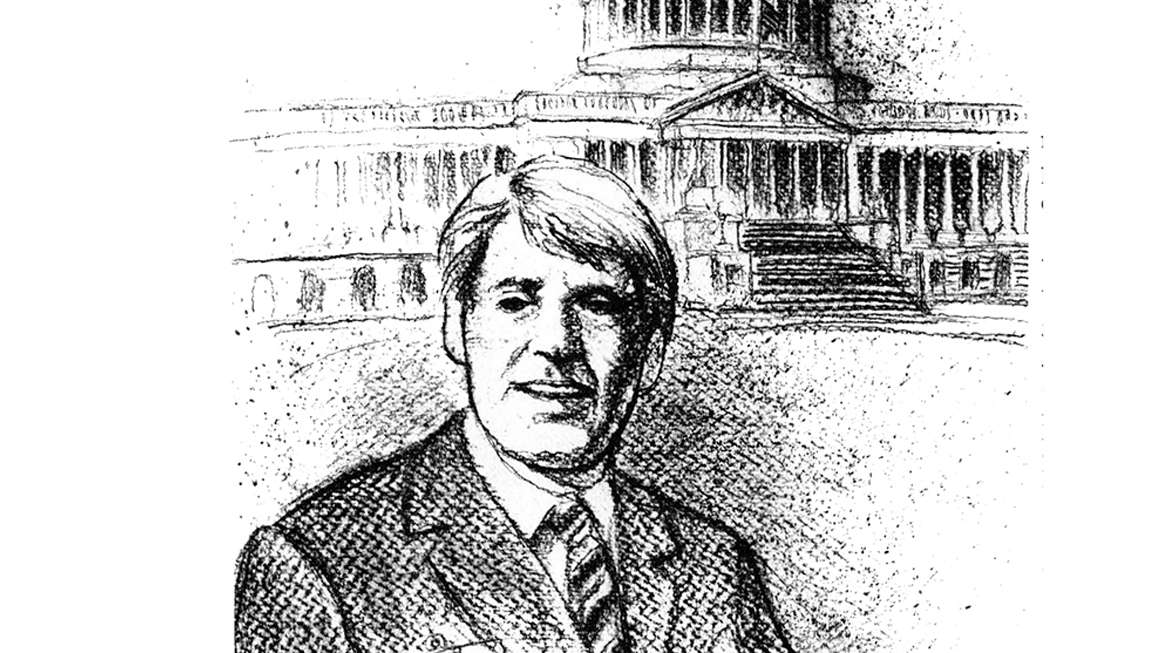
Special interests have sprouted in the nation’s capital as if they were rabbits. Yet these rabbits are not always tame or courteous as they pull in conflicting directions. There are roughly 200 labor lobbies listed in the Washington Yellow Pages, typically pushing one way, while more than 500 corporate lobbies pull in another. There are around a dozen gun-lobby groups—some advocating gun ownership, others supporting gun control. Some lobbying groups are antiabortion, others prochoice. One thing most lobbiers share, however, is a demand for more money from Uncle Sam. The Hill becomes a pressure cooker, shaped by countless campaigns, competing viewpoints, and cries of “Gimme.”
William Peterson
“It’s a Company Town”
50 years ago
October 1976
I am left marveling at a policy approach that keeps conventional fuel prices artificially low through government controls, only to concede later that substantial development of synthetic fuels requires special government support. The natural and more sensible order of things is straightforward. Remove the price controls on existing conventional fuels. This would spur further exploration and promote greater conservation. As the price of conventional fuels rises toward the cost of synthetics, private firms will have a clear incentive to advance. Yet, given the usual desire to minimize risk, private investments will be discouraged if there is a strong chance the Federal government will step in and assume the risk.
Murray Weidenbaum
“Fuel for Bureaucrats—or People?”
55 years ago
October 1971
From a practical standpoint, wage-price controls, much like rent-control laws, cannot function effectively. Imposing them creates inequities and black markets. When a freeze ends and adjustments are permitted under government oversight (Phase 2), the result tends to be bureaucratic expansion and the substitution of political judgments for those of private businessmen. As Murray Rothbard observed, attempting to curb inflation through price controls is comparable to treating a patient’s fever by manually lowering the mercury in the thermometer.
Manuel Klausner
“The Wage Price Freeze”
