
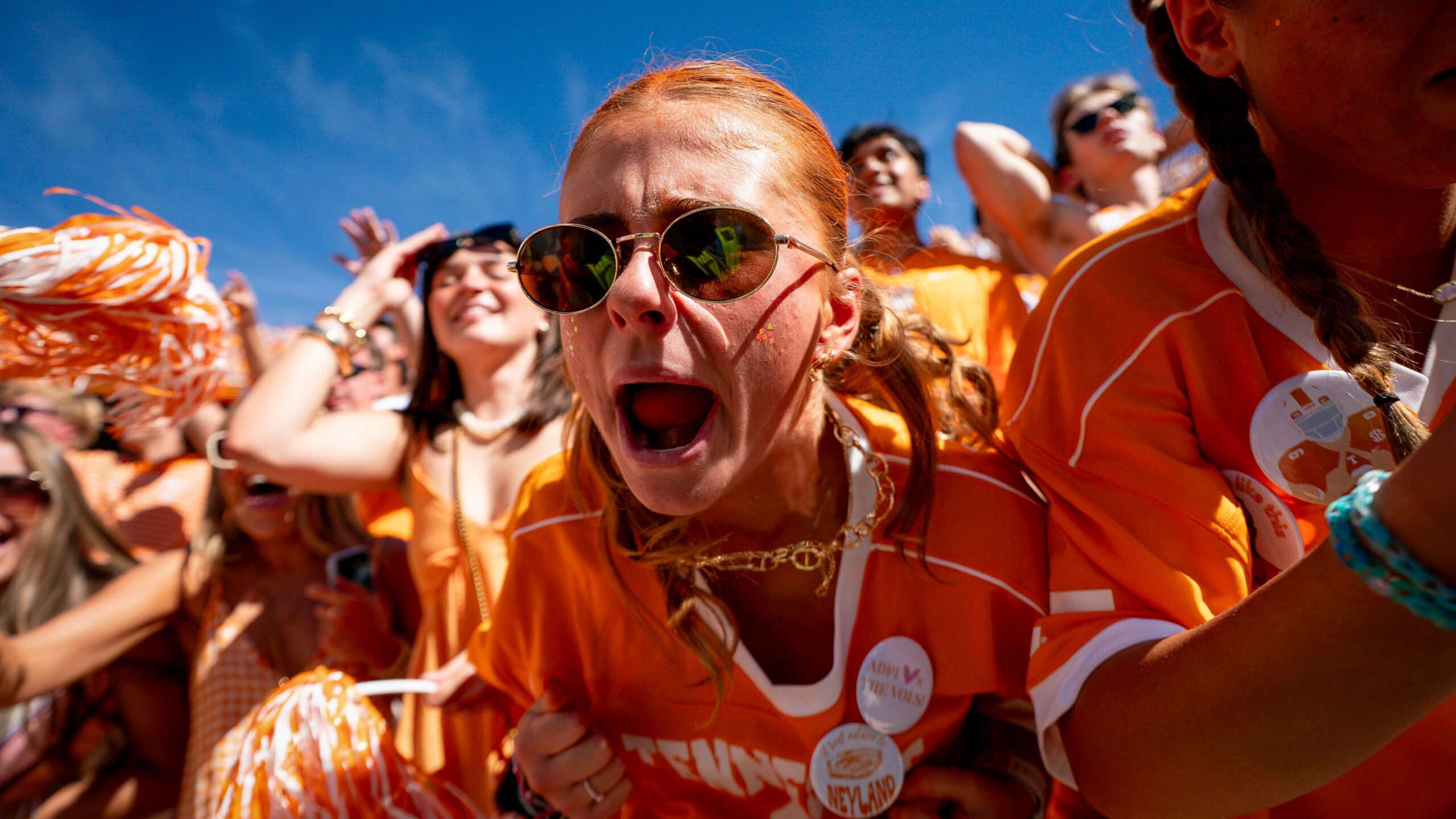
Lawyers, not athletes, universities, or college sports, stand to gain the most from the Protect College Sports Act.
Hello and welcome to another edition of Free Agent! Is your toilet running? Then you’d better go catch it.
The Senate approved the Protect College Sports Act late Monday night, so we’ll tackle that one last time before offering some closing reflections on golf.
Be sure to catch sports reporting from Jason Russell and Reason.
Locker Room Links
- The Irish soccer team nearly boycotted a match against Israel (which was played in Hungary instead of in the Middle East).
- MLB talked to the Trump administration about hosting a baseball game in a national park, according to The Washington Post.
- South Korean golfer Tom Kim hopes to win at the Asian Games this week to earn an exemption from South Korea’s mandatory military service (apparently four PGA Tour wins is not enough).
- The National Women’s Soccer League is expanding again, with its 17th team based in Atlanta starting in 2028. The United Football League also announced expansion plans for Colorado and Rhode Island in 2027, plus Oklahoma and Utah in 2028.
- In Week 2, Houston Texans linebacker Azeez Al-Shaair wrote on his eye black the name of a girl in Gaza who was killed by an Israeli airstrike. An NFL official told him he had to remove it or he couldn’t keep playing.
- The NFL also decided Week 2 was the right time to crack down on a bunch of celebrations with fines, often for allegedly drinking fake beers.
- “Kentucky State center Aminata Seck has been in ICE custody for weeks,” says Dennis Young of Front Office Sports.
- Elsewhere in Reason: “No, Private Equity Isn’t Ruining Your Sandwiches, Your Apartment, or Grandma’s Nursing Home.” Private equity is good, actually!
- Many thanks to Sen. Rand Paul (R–Ky.) for quoting my earlier work on the Protect College Sports Act during a Senate floor speech and in a Fox News op-ed.
“The backers of the bill believe politicians, not the NCAA, should decide how many transfers are allowed. They think politicians, not conferences, should set a compensation cap on how much schools can pay athletes. They think politicians, not athletes and businesses, should get… pic.twitter.com/JpHpmdSH5x
— reason (@reason) September 28, 2026
The Protect College Sports Act Passes the Senate
The Senate approved the Protect College Sports Act on Monday by 77 votes in favor to 22 against (one senator did not cast a vote). The backing was broadly bipartisan—50 Republicans supported it, along with 27 Democrats. Four amendments were added to the bill—mostly minor tweaks, though one broadened the cap on membership within power conferences from 19 schools to 20.
Sen. Ted Cruz (R–Texas), the principal champion of the measure together with Sen. Maria Cantwell (D–Wash.), asserts that the House will return from recess to vote before the November midterms—and that President Donald Trump could sign it into law during ESPN’s College GameDay.
Yet that seems to be a rather hopeful forecast from Cruz, as insiders tell reporters the House is unlikely to reconvene solely for this legislation, especially amid campaign season. In reality, the bill may stall in the House altogether. (A parallel bill, the SCORE Act, has collapsed in the House several times due to weak support.) If it fails to clear Congress before 2027, the clock resets and everything would have to start over from scratch.
That is only one reason for the urgent push behind the measure, and why its sponsors in the Senate have kept the focus for weeks (instead of, say, lowering gas prices, reclaiming tariff powers from the president, tackling the ongoing confrontations with Iran, or addressing the looming insolvency of Social Security and Medicare). A central claim from supporters is that college sports have spiraled into disarray, with judges stepping in to decide who may play, and the fix seeming to shift every week.
Backers contend that the Protect College Sports Act will inject stability and order into the college-athletics landscape. In the short term, however, it is likely to trigger a wave of federal lawsuits challenging various provisions of the act. Here are the elements of the bill likely to be attacked in court:
- The student-athlete salary compensation cap
- The ceiling on agent fees
- How Title IX interacts with the compensation framework (namely, the prospect that male and female athletes may not earn the same amounts)
- The eligibility rules, especially the age threshold
- The eligibility rules, specifically the exemptions
- The transfer restrictions
- The anti-tampering provisions around transfers
- The “Lane Kiffin Rule” prohibiting midseason coaching departures
- The cap on conference membership
- The preemption of state laws on eligibility, rooted in the 10th Amendment
- The preemption of state laws on name, image, and likeness (NIL) payments, under a 10th Amendment rationale
- The preemption of state laws on eligibility under a Commerce Clause theory
- The preemption of state laws on NIL payments under a Commerce Clause theory
- The delegation of lawmaking-like powers to the NCAA, the College Sports Commission, and the conferences
So, sports fans who hoped judges would stop hogging the headlines with courtroom drama won’t get relief. The real beneficiaries of the Protect College Sports Act? Lawyers. Billable hours remain undefeated.
The Protect College Sports Act Sucks, but It Wouldn’t Ruin College Sports
The average sports enthusiast likely isn’t fully aware that the Senate just passed what would become the largest and most invasive law affecting sports in American history. That’s understandable, since the measure wouldn’t touch most fans directly.
The Protect College Sports Act is a poor law for a variety of reasons I’ve laid out before, yet it wouldn’t erase what makes college athletics compelling.
It won’t decide whether your favorite squad faces its archrival. It won’t stop tailgating before home games. It won’t prevent Michigan’s student section from singing “Mr. Brightside” after the third quarter, nor will it stop Ohio State players from wearing those garish stickers on their helmets (if you’re into that). It won’t silence your alma mater’s fight song as you cradle your infant to sleep, nor will it erase the moment your bar erupted when your team delivered the season’s most stunning victory. It won’t alter the crisp autumn morning breeze as you survey the day’s football slate, or the thrill of Selection Sunday when you draft a bracket that’s bound to explode.
The virtues of college sports were never in peril. They didn’t need politicians to guard or rescue them.
The U.S. Almost Completely Blew It at the Presidents Cup
As a devoted golf fan, I have some thoughts about the Presidents Cup, where Team USA edged the International squad 17–13 but nearly slipped up for the first time since 1998.
The Americans clearly boasted stronger individual players—just review the head-to-head results in the singles, which they dominated 9.5–2.5. Yet, as with last year’s Ryder Cup, Team USA struggled with the team-play format. In the alternate-shot rounds, the U.S. was swept 5–0 on Friday and split 2–2 on Saturday. Only a handful of best-ball wins kept the rivalry tight, leaving a nerve-wracking three-point gap entering the final day. Had a few tight singles matches flipped the other way, the host nation might have faced a humbling defeat rather than a victory celebration. (This marks the second-worst point total the U.S. has posted in a home Presidents Cup, even though the event’s format has evolved.)
That said, team golf is a joy to watch and seems ripe for more use as a way to attract new fans. A newcomer might not know who to back at the U.S. Open, but a national team presence in the Ryder Cup or Presidents Cup gives them a clear hook. Once a spectator connects with a player, they invest and want to see that individual succeed in majors and other events too. Both the PGA Tour and the LPGA should remember this and explore more international team competitions. Fans appear to crave team golf—a Presidents Cup may not always deliver big ratings because it can be less competitive, yet early TV numbers this year look more promising than usual (weekend ratings aren’t published yet). I’m surprised the Tour didn’t pursue additional international team events when it reworked its schedule.
More international team golf can only help. But if American teams fail to secure the right leadership and the proper pairing strategy against foreign opponents, expanding the format could become more embarrassing than entertaining for Team USA.
Replay of the Week
There were plenty of wild plays and memorable moments in sports this week, but this is my newsletter, so here’s my pick of the week’s replay (with an honorable nod to Max Scherzer).
How can you not be romantic about baseball? pic.twitter.com/SRitybOvCv
— Detroit Tigers (@tigers) September 26, 2026
(Oh right, he pitched brilliantly and the Tigers won with a walk-off.)
That’s all for this week. Happy watching the marquee event of the weekend—the Formula 1 Bahrain Grand Prix (which, naturally, isn’t actually held in Bahrain).
