
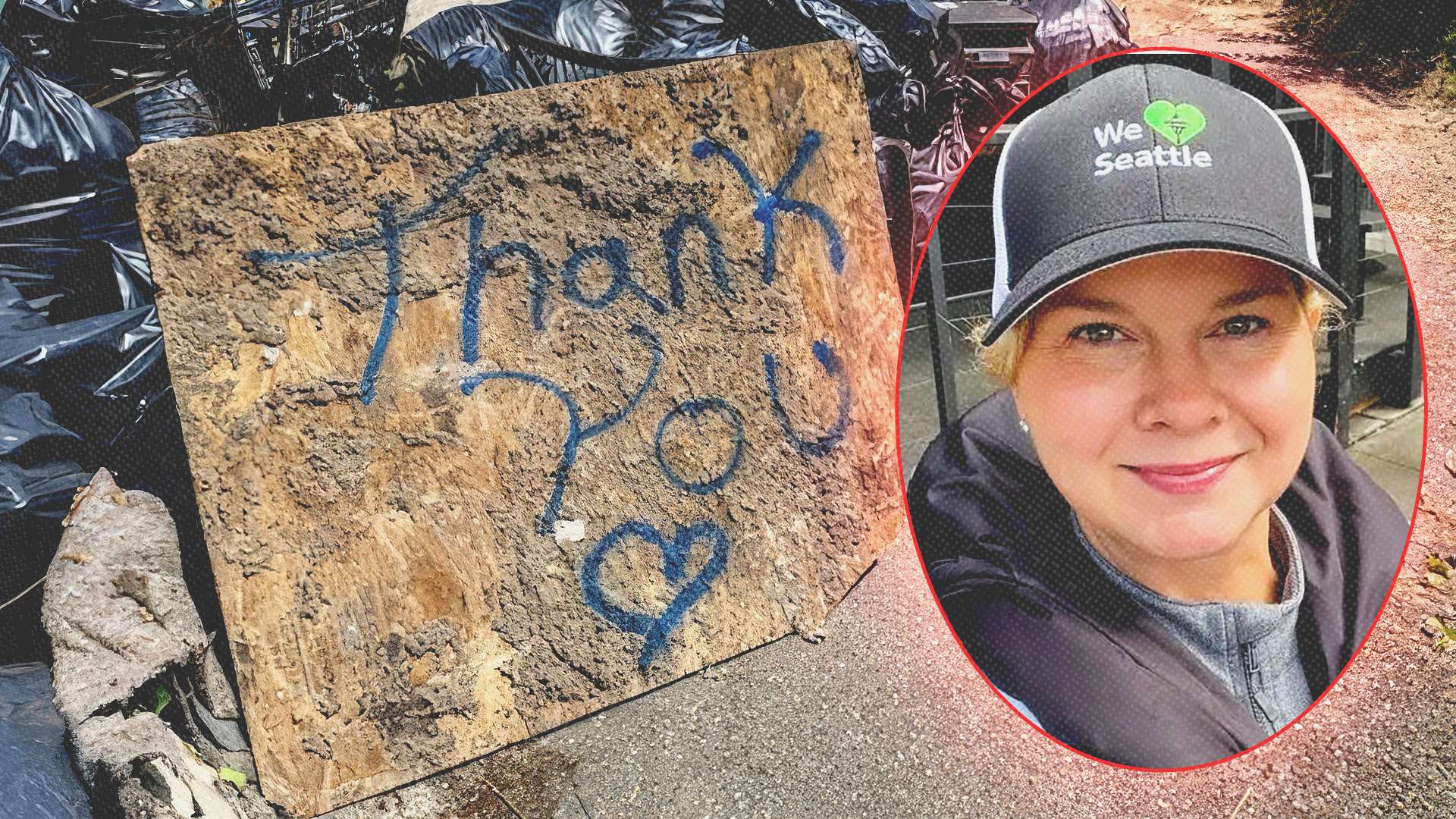
Since 2020, We Heart Seattle has removed more than two million pounds of discarded material from the city. In reaction, state authorities have opened an inquiry into the group over alleged improper handling of certain materials.
Across the United States, large cities grapple with homelessness, and with no single clear answer in sight, the challenge shows little sign of vanishing soon.
The consequences of the issue extend beyond the people directly affected. Consider the situation in Washington.
“Washington state records one of the highest per-capita levels of unsheltered homelessness in the country,” the Washington Department of Ecology warned in 2020. “On any given night, about 10,000 residents of Washington live outside or in spaces not fit for living.” And while encampments pose risks to nearby communities, their existence “also compromises the environment. Improper disposal of garbage and human waste can pollute ecosystems, spread disease, and attract pests.”
So when a Seattle resident decided to improve public spaces in her city, why did the state feel the need to intervene?
Like many others, Andrea Suarez found herself with plenty of extra time during the COVID-19 outbreak. Yet during strolls near her downtown Seattle home, she was unsettled by what she saw: used needles, litter, and individuals experiencing addiction and untreated mental health issues.
“Tourism no longer masked the crisis our city faced,” she tells Reason.
She wasn’t alone. In a 2021 piece for The Seattle Times, Sara Jean Green observed that the city’s once-bustling core had become a scene of “open-air drug use, lawlessness, and squalor.”
When her appeals to local officials went unanswered, Suarez took action herself: “I went to Home Depot and bought pliers, vests, trash bags, and a small red wagon,” she recalls. With the new gear, she ventured out to pick up litter in Denny Park—which KOMO, Seattle’s ABC affiliate, at the time described as a place “plagued by crime, drugs and homelessness.”
Ultimately, Suarez invested about $25,000 to launch We Heart Seattle, a nonprofit dedicated to tidying up public spaces and supporting the unhoused. She announced upcoming cleanups on the organization’s Facebook page and asked for volunteers. Over time, the operation expanded, and she now oversees more than a thousand volunteers.
We Heart Seattle does not take public funding; its work is funded entirely through private donations. The group boasts that it has collected more than 2 million pounds of litter from public areas and helped 365 people transition off the street in just six years.
But in July, Suarez received a “notice of alleged safety or health hazards” from the Washington State Department of Labor & Industries (L&I) Division of Occupational Safety and Health. The notice alleged “improper handling and collection of hypodermic needles and fentanyl paraphernalia.”
Accompanying the notice was a letter indicating that We Heart Seattle would undergo a “review as part of the inspection process.”
The review appears to have stemmed from an anonymous complaint, claiming that the cleanup work was not handling hazardous items correctly. (Reason requested a copy of the complaint last month; L&I’s Public Records Unit responded on August 26 that “due to a high volume of requests,” it may take until October to fulfill.)
The letter demanded Suarez submit several documents within 48 hours, including copies of the organization’s safety training materials, logs showing completion of employee training, and any “safety-related employee disciplinary records” from the previous six months.
Yet according to We Heart Seattle’s IRS filing, Suarez is the sole employee. All cleanup activities are performed by volunteers under her guidance and that of a pair of site supervisors.
Still, she notes, “we do hold hazmat and bloodborne pathogen training certifications.” The group’s website offers extensive guidance on what volunteers should expect during a cleanup, including safety guidance and waivers. It also states that “gloves, grabbers, rakes, and trash bags” are provided.
“From the outset,” Suarez emphasizes, “we have always used red sharps containers,” along with the county needle-exchange program’s recommendations for proper collection and disposal.
The crux of the issue, she says, is that the other requirements feel excessive.
Indeed, when someone is willing to shoulder the burden of clearing vast amounts of trash from public spaces, why impose such obstacles?
Part of the difficulty lies in how the state classifies We Heart Seattle, a nonprofit that is, in effect, a one-person operation. Suarez says this is deliberate: “I don’t want to grow into a large organization. I don’t want heavy infrastructure. The mission of We Heart Seattle is to be agile and potent. I’m privately funded, so I can’t simply hire people without a guaranteed revenue stream.”
Now, Suarez must navigate a state inspection, which an L&I spokesperson told Reason “can take up to 180 days” to complete. In the meantime, she faces the prospect of financial penalties, as violations could lead to fines or even closure.
“The entire aim of nonprofits is to supplement government work,” she says. But the L&I probe “puts you in a position where you may hesitate to do the work or fear carrying it out, knowing you could be fined or shut down.”
How does Washington state thank @weheartseattle for picking up over 2 million pounds of trash? By launching an investigation into their work. Reason’s @BessByers shares more. pic.twitter.com/nYQIWHUixU
— reason (@reason) September 29, 2026
