
This October 1st, the People’s Republic of China marks 77 years since Mao Zedong proclaimed its founding in Tiananmen Square in Beijing. This event ended 22 years of struggle between the Chinese Communist Party and Chiang Kai-shek’s Kuomintang, and led the latter to retreat to the island of Formosa. Since then, the annexation of Taiwan to mainland China has ceased to be merely a territorial dispute and has become a central component of national identity, of the regime’s legitimacy, and of the broader project of “national rejuvenation.”
In this conflict, the United States holds a singular position: it is perceived simultaneously as the main external constraint on reunification and as the decisive variable to determine whether coercion, conflict, or a prolonged strategy of pressure can succeed. Yet Xi Jinping continues to bet on reunification without resorting to force. Recent history, from Ukraine to the U.S. military campaign against Iran, shows that no armed conflict, however asymmetrical it may seem on paper, is immune to drift and surprise. On the other hand, in the event of a Chinese intervention in the Taiwan Strait, Beijing anticipates grave political, economic, and reputational consequences.
“Recent history, from Ukraine to the U.S. military campaign against Iran, shows that no armed conflict, however asymmetrical it may seem on paper, is immune to drift and surprise”
Now, the People’s Republic of China finds itself at a unique moment in its modern history. The credibility of the United States as the guarantor of the liberal international order is at its most fragile since the end of the Cold War. The Trump Administration has spearheaded a series of decisions that, taken together, are redefining Washington’s image as a reliable power: it has questioned commitments to NATO and imposed broad tariffs even against long-standing allies; pressured Ukraine to reach a quick peace, prioritizing its electoral considerations over the conditions Kyiv deemed acceptable; seized the Venezuelan president Nicolás Maduro and intervened militarily in Iran without allied coordination or a political framework defining the scope or duration of the operations.
The accumulation of these decisions has measurable consequences. According to a Pew Research Center study published in July 2026, the People’s Republic of China is now viewed more positively than the United States. These results follow a trend that predates President Donald Trump, even though he could be considered the main architect of the notable deterioration in the country’s reputation. The survey, conducted with more than 42,000 people across 36 countries, yielded the following data: in the 20 countries continuously included since 2023, the median of those with a favorable opinion of China is 46%, compared to 36% for the United States. Some of the countries where this preference is observed are among the most important in the Western world: Germany, Canada, France, Italy, and Spain. On the other hand, in 17 middle-income countries, the median of those who consider China a moderately or very reliable partner is 69%, versus 49% for the United States.
For Beijing, these data are strategically revealing: if Washington’s own historic allies have autonomously concluded that the U.S. is a less reliable guarantor, China does not need to invest in convincing anyone of it. The narrative is taking shape on its own. In that context, an action against Taiwan would interrupt precisely the moment when American prestige is crumbling at no cost to Beijing, turning China into the actor who chooses to destroy the international order just as history offered it the opportunity to preserve and lead it.
“If Washington’s own historic allies have autonomously concluded that the U.S. is a less reliable guarantor, China does not need to invest in convincing anyone of it”
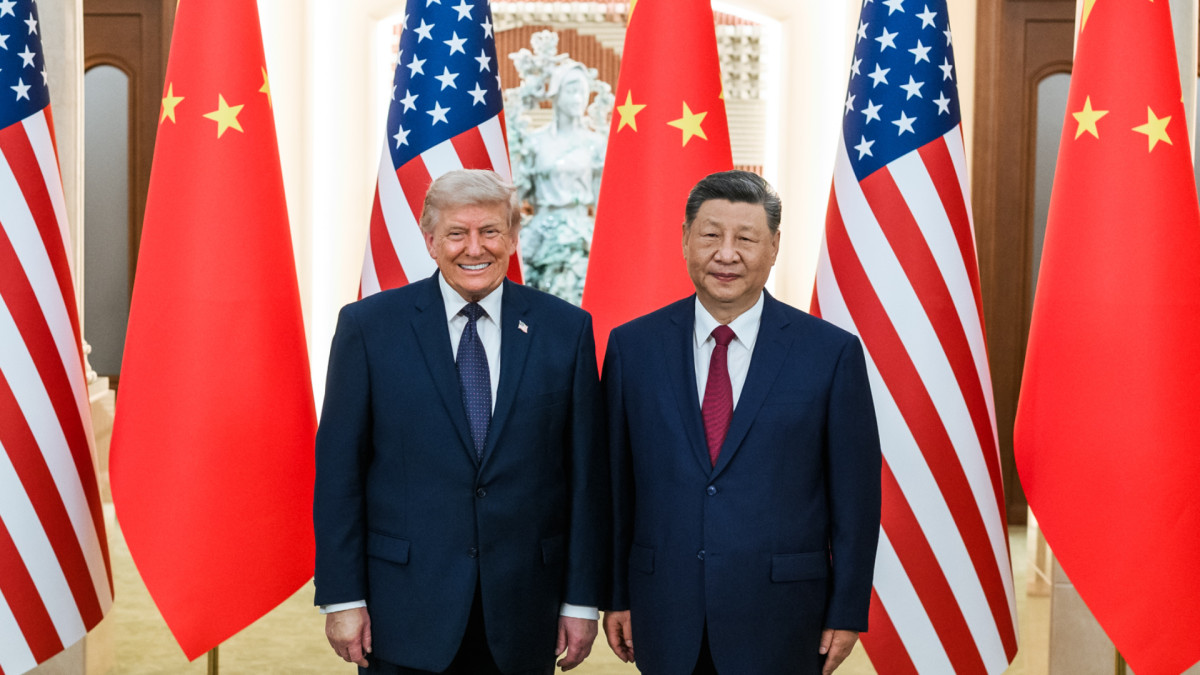
This erosion reaches even Taiwan, where another study conducted by the Academia Sinica revealed that only around 34% of respondents consider the United States a credible country, a figure that has fallen by more than ten percentage points in five years. Likewise, the May 2026 meeting between U.S. President Donald Trump and Xi Jinping heightened doubts about the Trump administration’s commitment to Taiwan after the suspension of a major weapons package, which the U.S. president described as a “negotiation letter.” Those doubts were not cleared by the new summit held in Washington on September 24, where Taiwan again figured among the main issues in the bilateral relationship. By the end of the month, Taipei was still awaiting approval of a weapons package worth around $14 billion, although U.S. officials have assured that Washington’s policy toward the island has not changed. As faith in American protection wanes, Taiwan’s more skeptical politicians find it harder to justify defense spending, and the case for greater accommodation with Beijing gains ground; China hopes to capitalize on this opening to push the Kuomintang toward an openly pro-Chinese stance and return it to power in 2028. Meanwhile, Taiwanese confidence in China has risen from 11% to 17% in the last year.
Alongside the growing skepticism about American international commitments is the personal crusade of President Trump against the island of Formosa, after he repeatedly stated that Taiwan “stole” the United States’ chip industry. Statements like this amplify Taiwanese fears that the United States seeks to dismantle Taiwan’s advanced semiconductor industry.
The implications of this dynamic extend beyond the Strait. U.S. policy toward Taiwan is perceived across the Indo-Pacific as a critical indicator of the durability of Washington’s commitments. If other regional countries conclude that support for Taipei is negotiable, some, like Japan or South Korea, could opt for greater autonomous military capabilities or a foreign policy less aligned with American interests; the majority, however, would conclude that they have no option but to accommodate Beijing’s preferences.
