
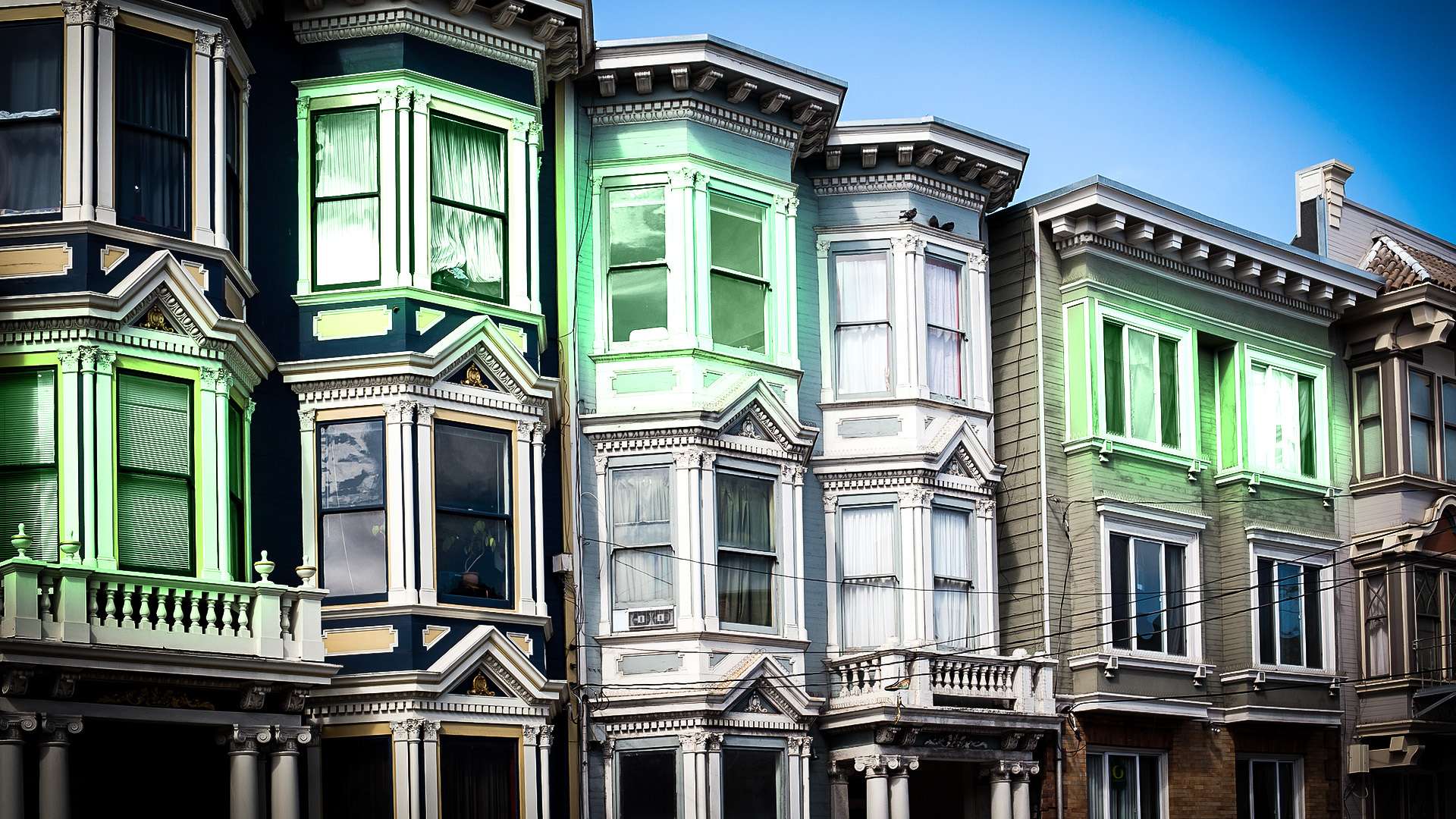
San Francisco’s vacancy tax on empty homes is misguided policy—and it has now become illegal.
Counter to the growing belief that high housing costs stem largely from regulation that throttles new construction, another explanation points to the sizable stock of homes that exist but are intentionally withheld from the market.
To address this issue, several California municipalities have enacted vacancy taxes aimed at compelling so-called hoarded properties to reappear on the market.
Critics argue that the revenue generated by these empty-home levies is modest and consistent, suggesting only a small pool of units remain vacant for long periods and that the tax does little to bring them back into use.
Beyond the policy critique, there is a legal dimension to consider.
Earlier this month, a California appellate court upheld a trial court ruling that struck down San Francisco’s vacant-home tax. In an opinion written by Judge Kathleen Banke, the court found that a state statute known as the Ellis Act preempts the city’s levy by protecting owners’ right to withdraw their units from the rental market.
San Francisco’s vacant-home tax, named Proposition M, was approved by voters in 2022 and was scheduled to take effect in 2024.
In 2023, groups representing owners of vacant units and landlord associations challenged the tax on a range of legal and constitutional grounds.
They contended that the tax infringes upon the Fifth and Fourteenth Amendments of the U.S. Constitution by singling out property owners’ right not to rent out their units for special taxation. They also argued that the tax violates the privacy protections in the California Constitution.
They further asserted that the tax was illegal because it imposes charges for exercising Ellis Act rights to remove rental units from the market.
In 2024, the San Francisco Superior Court ruled in favor of the plaintiffs on all counts and barred the city from collecting the tax.
The city appealed the decision to the California First District Court of Appeal.
That court likewise sided with the plaintiffs on their claim that San Francisco’s tax is superseded by the Ellis Act.
Throughout the litigation, San Francisco had argued that it did not restrict owners’ right to withdraw their units from the rental market. It merely taxed them for keeping units vacant.
Banke was unimpressed with this argument.
“As the City apparently sees it, while a property owner, indeed, has the right to exit the residential rental business, they have no correlative right to remain out of that business and can be pressured back into it on pain of significant taxation. This circularity in reasoning is a patently unreasonable reading of the Ellis Act,” she wrote.
Because the tax is illegal under state law, the appeals court declined to rule on the plaintiffs’ constitutional claims.
A spokesperson for San Francisco city attorney David Chiu declined to comment on whether the city would appeal the ruling to the state Supreme Court.
In addition to San Francisco, Oakland and Berkeley have both adopted vacancy taxes. San Diego has also considered adopting an empty home tax.
The ruling in the San Francisco case would appear to put those taxes at legal risk as well.
Berkeley officials have already reported that some property owners have not been paying the city’s vacancy tax due to uncertainties surrounding its legality.
In a recent audit, Oakland officials rated their vacancy tax (which applies to both empty lots and vacant units) as a revenue success. It consistently brings in about $6 million per year. The city’s auditor also noted that it has had little impact on converting empty lots and units into productive use.
That outcome is not surprising. Vacancy taxes typically fall short on boosting supply.
As studies have shown, there simply aren’t many homes that sit vacant for long periods, a fact that is especially true in cities facing steep housing-cost pressures.
In fact, low vacancy rates are often viewed as a symptom of a broader housing shortage. When rents are high, owners have a strong incentive to rent out any available space.
Higher vacancy rates are typically linked to a healthier, more adequately supplied housing market.
Beyond the legal complications, policies aimed at driving down already-low vacancy rates in expensive cities to zero misdiagnose the underlying problem.
