
Just as in 2023, when Spain’s general elections intensified the debate about the changes and appointments that would reach the EU a year later, the electoral call for November 29 also looks set to mark the starting point for a period of profound changes within the European club. The outcome of Spain’s snap elections will inaugurate the second half of the current European legislature (2024-2029), a midterm, to borrow the American term that is so fashionable these days, which could mean the definitive end of the grand coalition (between the People’s Party and the Socialists) that has effectively governed the EU for seven decades, and could drag the union toward uncharted shores inhabited by forces reluctant to continue with European integration or openly inclined to roll back and return to scenarios of national priority that, in Europe, have always ended badly.
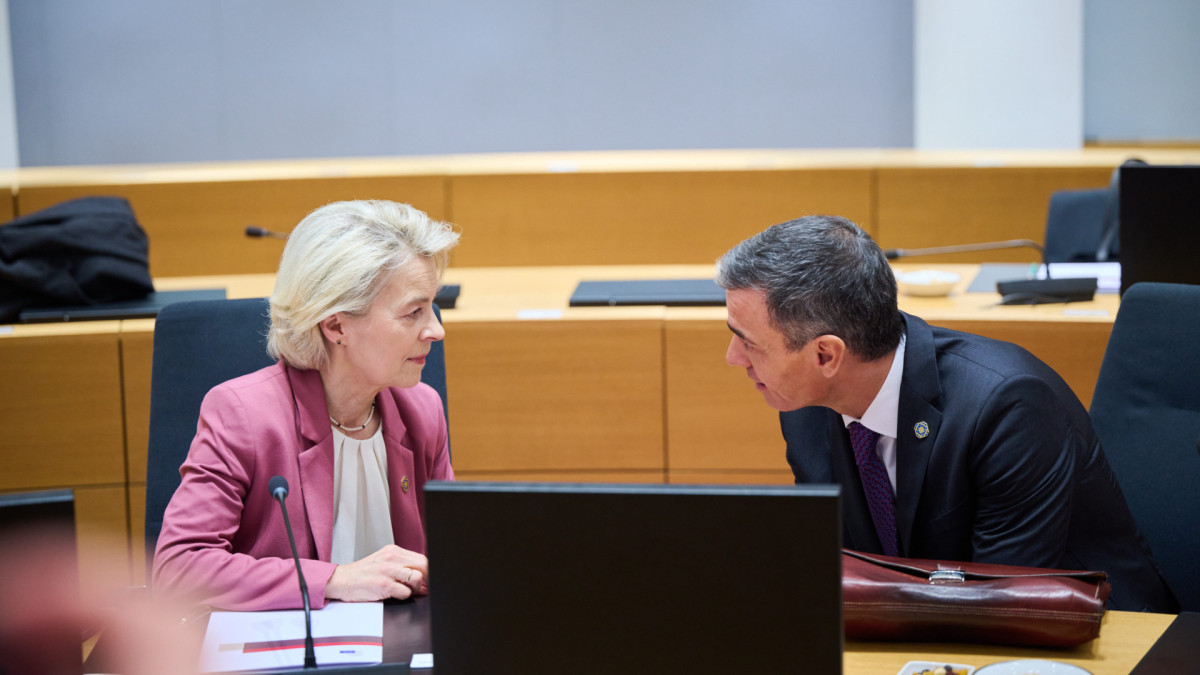
The shake-up could complicate the end of the second term of the President of the European Commission, Ursula von der Leyen, whose investiture majority has faltered several times and could sink completely if the Spanish Socialists led by Pedro Sánchez lose, as polls predict, the Government of Spain in favor of a coalition between the People’s Party led by Alberto Núñez Feijóo and Santiago Abascal’s Vox. The transfer of power in Moncloa could accelerate the rupture between the conservatives and the Socialists in the European Parliament, an alliance that has up to now been the firmest cornerstone of von der Leyen’s policies. But neither the continuity of Sánchez nor that of a socialist successor would guarantee the German a peaceful end to her mandate, because the Socialist Members of the European Parliament, led by the Spanish Iratxe García, are increasingly uncomfortable with von der Leyen’s concessions to the right-wing agenda in areas such as migration, the environment, or agriculture.
“The replacement at Moncloa could accelerate the rupture between the conservatives and the Socialists in the European Parliament, a coalition that has been the most solid bedrock of von der Leyen’s policies.”
Von der Leyen counted in 2024 on the votes of Iratxe García’s group (135 of 719 seats at present), which, added to those of her own party (the European People’s Party, 184 seats) and those from liberals and greens, allowed her to rise for a second time to the presidency of the European Commission. But since then the Conservatives have sought closer ties with the radical-right parties, both the Italian Giorgia Meloni’s (ECR) and the French Marine Le Pen’s (PfE), the fourth and third groups in the European Parliament, respectively.
The emergence of that alternative majority, fostered by the rise of the radical right in the 2024 European elections, is sidelining the Socialists and exposing them to become a mere prop for the PPE to push through von der Leyen’s initiatives that do not please their extreme allies.
Von der Leyen has also grown distant from Pedro Sánchez, with whom she maintained a close collaboration during her first term, in line with the rollout of the post-pandemic recovery fund (Next Generation). But the relationship has broken down in this legislature.
“The emergence of that alternative majority, driven by the rise of the far-right in the 2024 European elections, is sidelining the Socialists.”
The President of the Commission and the Spanish Prime Minister have maintained diametrically opposed stances on the thorny international agenda, from the relationship with Donald Trump to whether to condemn or not the destruction of Gaza and the war against Iran. And the progressive rightward shift of the European Council (where, besides Sánchez, only two socialist prime ministers remain) has not helped von der Leyen seek a rapprochement with the only remaining weighty left-wing leader in the EU. The cold reaction of the German to the attack on the Spanish border in Ceuta highlighted the deep split that has opened between her and Pedro Sánchez.
Yet von der Leyen still needs the Socialist group (S&D) in the European Parliament if she does not want to be at the mercy of a far-right that holds a strong grudge against her (they have tabled three motions of censure, without success, so far in this legislature). And the Spanish Socialists are the largest delegation within S&D (with twenty seats), in addition to holding its presidency.
The Socialists are already weighing the possibility of breaking with the Conservatives, a development that could hasten if Sánchez leaves Moncloa and the interest in maintaining an understanding with von der Leyen fades, however fragile that may be. The coexistence between the conservatives and the European Socialists will soon be put to the test, with several appointments and renewals of posts at stake.
“The cold reaction of the German to the attack on the Ceuta border highlighted the deep rift that has opened between her and Pedro Sánchez.”
The President of the European Parliament, Roberta Metsola, a member of the EPP, aspires to a third term at the head of the institution. In 2027 the first part of Portuguese António Costa’s mandate at the helm of the European Council also ends, the only one of Brussels’ top jobs held by the Socialists. And within weeks a near-complete renewal of the ECB’s leadership is anticipated if Christine Lagarde’s premature departure is confirmed, to allow time to appoint a new bank president before a potential far-right victory in France.
A full change of the guard is brewing in the European Union, whose starting pistol was set the day before yesterday: the upcoming November 29 general elections in Spain, brought forward by Pedro Sánchez.
