
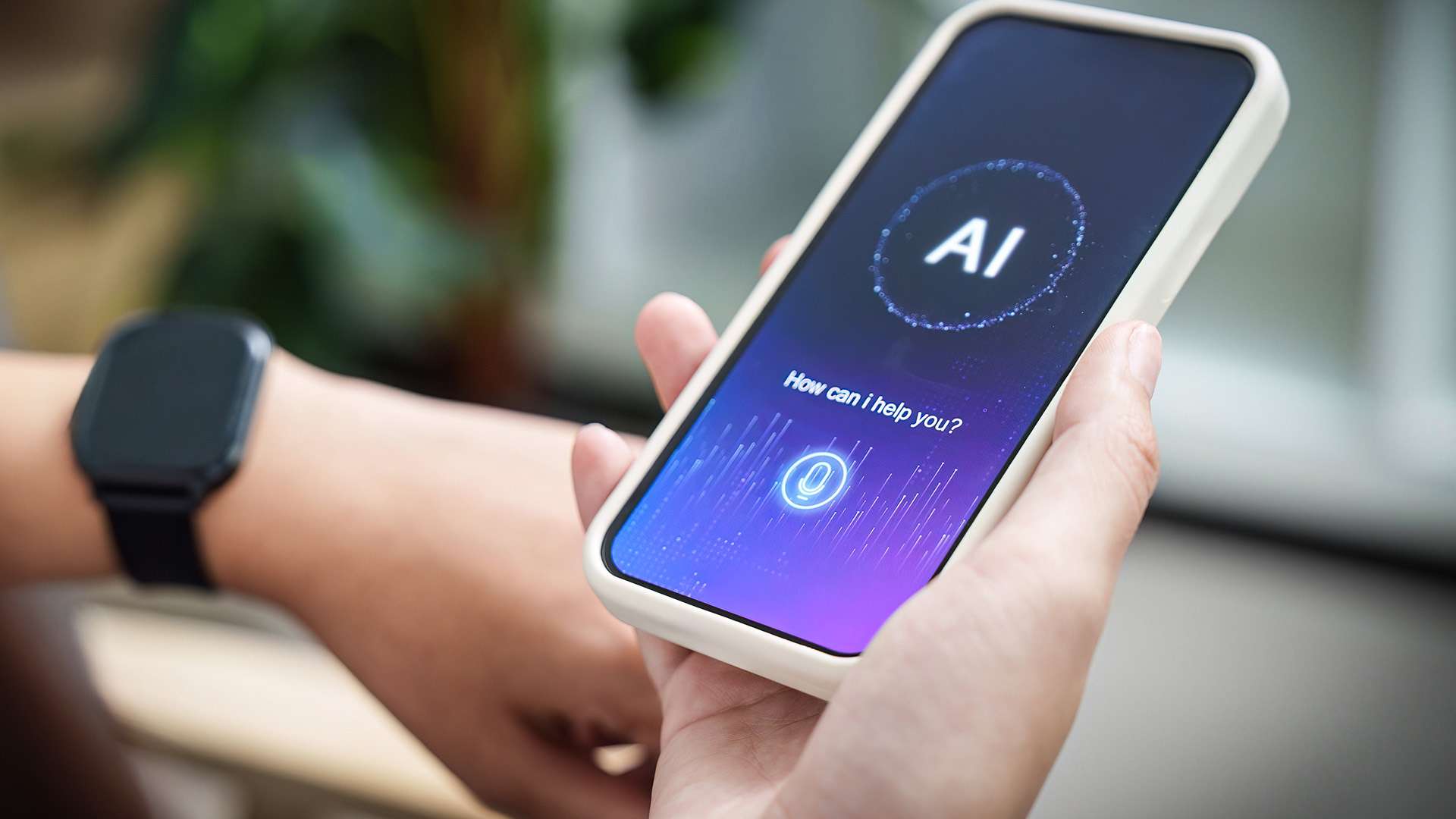
Everyday consumer use-case: Is consumer AI a solution looking for a problem?
Last year, Anthropic CEO Dario Amodei warned that artificial intelligence could eliminate roughly half of entry-level jobs in the United States, driving unemployment closer to 20 percent within the next one to five years.
“Many of these workers are unaware that the shift is imminent,” Amodei told Axios. “It sounds unbelievable, and people simply refuse to accept it.”
Perhaps he is referring to company-wide transformations as certain administrative, managerial, and technical roles become automated away. The well-worn refrain of the past five to ten years—“learn to code”—has long served as a snarky retort to journalists who lose their jobs and lament a diminished industry stake and murky funding models. But what happens when learning to code no longer suffices? When AI models replace even coders? The conventional wisdom of the recent past ceases to apply.
Still, contrast these forecasts with the data we have on how many households nationally subscribe to AI services: about 2.2 percent as of April.
This is my thesis: no one uses AI. I repeat, absolutely no one. We live in a bubble.
Even among my friends who pay for it, when I ask them to open ChatGPT and show me their queries, it’s the same handful of basic things.
Most don’t even know they can upload a photo and ask… https://t.co/03GbUSJGKW
— Nicolas Bustamante (@nicbstme) October 3, 2026
The majority of consumers currently appear to rely on AI systems as search tools: chat interfaces that can tailor results a bit more precisely, but nothing truly novel. It serves as a stand-in for Google.
There exists a smaller cohort of users—such as Jesse Genet—who employ AI agents as personal aides; they invest upfront in teaching the agents to perform tasks, and they grant some degree of autonomy and trust, even letting the agents use a linked credit card to buy items they deem necessary for you.
Yet it remains unclear that this second use is going to markedly surpass the first, even if it embodies a more advanced scenario (and the one developers envision).
AI could prove to be considerably more valuable as an enterprise solution than as a consumer product.
There’s a few important things going on here i think.
First, there’s a lot of people who aren’t ready for full leaps from doing lots of things themselves to having agents (or anyone for that matter) take a lot control from them. This is just bc people don’t like tons of change… https://t.co/MUE39SmsCS
— Charlie Warzel (@cwarzel) October 7, 2026
This seems like the correct perspective, at least for the moment:
The problem with a lot of AI assistant use cases is that specifying the work to be done in sufficient detail actually IS the work.
— Alan Cole (@AlanMCole) October 6, 2026
Admittedly, there are enterprise use cases that have yet to be fully realized but carry enormous disruption potential: coding agents capable of constructing and maintaining software with far fewer engineers than before; models that review contracts or process insurance claims faster than junior staff; customer-service systems that actually fix problems rather than merely route them; and back-office tools that quietly absorb scheduling, invoicing, and data-entry tasks that once justified entire departments. None of these require users to entrust a credit card to an agent. They simply require employers to decide that software is cheaper than labor.
There are also more forward-looking applications: in drug discovery, models can screen millions of candidate molecules in the time it once took a laboratory to test a few; in protein-structure prediction, researchers now possess structural maps of proteins that previously took years to determine one by one; in imaging, models are trained to flag tumors and early disease signs that humans miss; and in clinical trials, AI could speed up matching patients to studies and detecting safety signals in the data.
We shouldn’t let the discussion focus solely on the supposed futility of consumer offerings when that isn’t where the real value lies. Nevertheless, this expectation may pose a public relations challenge for these firms: it would benefit them if consumer-oriented applications proved their worth clearly, given that many people’s working lives are likely to be reshaped by enterprise AI adoption.
Scenes from New York: Ketamine, “which has surged in popularity in recent years, appeared repeatedly that night at a Chi Phi fraternity party in October 2024, according to documents and a lawsuit filed last month by a former Cornell student who identifies as Jane Doe,” notes The New York Times. The night of the alleged assault marked Doe’s first experience with ketamine, the lawsuit states, and all seven named men reportedly used ketamine as well. “Investigative files also show that on the night of the alleged assault, Doe encountered a fraternity member she knew who served as the party’s DJ,” the Times reports. “Later, she said another student told her the DJ had overdosed on ketamine and other substances the night before, according to the records.”
Ketamine’s rise in popularity—which I touched on briefly on this week’s Reason Roundtable—is troubling yet well documented. “From 2017 to 2024, the share of New York City nightclub attendees reporting ketamine use nearly doubled,” ketamine researcher Joseph Palamar told the Times. “Even at relatively small doses, you can feel distinctly detached from your surroundings.”
QUICK HITS
- “Billionaire Ray Dalio warned that Treasuries could see a drop in demand from China and Japan, two of the United States’ largest foreign creditors, signaling a potential stress point for a market that has swung wildly this year,” reports Bloomberg.
- There is a measles outbreak in Pennsylvania, and a pediatric infectious-disease expert tells Leana Wen that this one looks different from previous waves: “[Patrick] Gavigan informed me that he is seeing more severe cases in previously healthy individuals, with many presenting non-respiratory symptoms,” Wen writes for The Washington Post. “Some patients experienced vomiting and diarrhea and showed elevated liver enzymes, ultimately diagnosed with hepatitis; some developed encephalitis, an inflammation of the brain that can cause seizures, paralysis, and lasting cognitive impairment. Some have been discharged home; others face a slower recovery and may never regain pre-illness abilities.”
- “Oura’s glossy smart ring is everywhere these days: in high-profile TV campaigns and on many users’ fingers. Yet when the company attempted to go public late last month, it failed to attract enough buyers at its asking price and postponed the listing,” reports The Wall Street Journal. “The firm blamed jittery markets, even as major stock indices hovered near record highs; surging Treasury yields also contributed to the problem. But the bigger issue was a mismatch between how Oura sees itself and how prospective investors viewed it.”
- Insane:
The cost of heating oil in Maine is up 80% from last year. https://t.co/0iD19D4PbG pic.twitter.com/x9Lqt1vwmx
— Joe Weisenthal (@TheStalwart) October 6, 2026
