
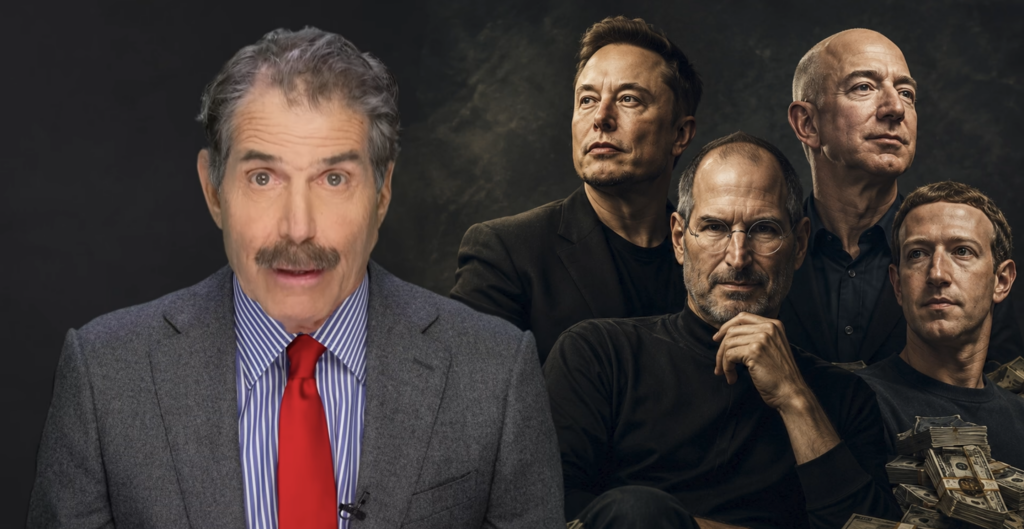
The issue isn’t the amount of wealth someone accumulates. It’s the path by which they acquired it.
What is a reasonable limit on an individual’s fortune?
When Elon Musk reached the world’s first trillionaire milestone, the public mood soured.
“He will own everything!” proclaimed a well-known YouTuber. “He will own your home…your country…your government.”
The comedian Bill Maher, who has lately offered a measured perspective, asked, “Would it be insane to enact a law preventing any person from exceeding 1 percent of the gross domestic product?!”
In fact, yes. My latest video explains why that would be excessive.
Critics of extreme wealth often assume there is a finite pool of riches. So if Musk possesses a trillion dollars, everyone else must hold less.
“That simply isn’t accurate,” argues business ethics professor Chris Freiman. In a free market, firms generate new wealth, because customers spend dollars only “because they got goods they valued more in return.”
People who buy cars give Musk money voluntarily because he produced a vehicle they value more than competing options.
Similarly, “Steve Jobs became a billionaire, but the rest of the world gained a billion iPhones,” Freiman notes. Since the exchange was voluntary, “that looks like something to celebrate rather than resent.”
Even Senator Bernie Sanders (I–Vt.) understands this—kind of.
Some years ago, he argued, “Nobody should earn more than one million dollars!”
Yet he later became a millionaire himself. When asked about it, he quipped: “Write a best-selling book, and you too can be a millionaire!”
“If we had capped success in the past,” Freiman observes, “we probably wouldn’t have given rise to the iPhone, Netflix, DoorDash, Amazon, Spotify.”
Or to robotic vacuum cleaners, air fryers, Uber, Waze, and so on. We are all better off thanks to the ingenuity (and sometimes the appetite for wealth) of millionaires and billionaires.
No one compels us to part with our money. We hand it over because their innovations are valued more by us than the dollars we surrender.
Nevertheless, when Musk became a trillionaire, a YouTube channel with over two million subscribers proposed that the United States should “tax every penny of net worth above $999 million.”
That idea would discourage people from becoming billionaires. But what’s the upside? Consumers are better off when Musk earns money.
No one is forced to purchase his cars or satellite internet. We pay because his products outperform what existed beforehand.
Admittedly, there are times when we are compelled to contribute to Musk’s ventures. Yet that comes from government support for NASA, and NASA itself has found that Musk can launch payloads far more efficiently than NASA. In effect, Musk saves the taxpayer money.
When government spends, on the other hand, I wince.
Lawmakers siphoned billions of your dollars to install electric vehicle charging stations. After more than three years, only 384 were accessible to the public.
In the same period, Tesla deployed more than 35,000 chargers.
“Who manages resources more wisely?” Freiman asks. “Entrepreneurs or government officials?”
Entrepreneurs, without a doubt, because they put their own money on the line. People expend their own funds more carefully than governments do with others’ money.
Even the most persistently greedy enterprise faces a constraint that government doesn’t: consumers can simply opt out.
I won’t defend every billionaire.
Some accumulate wealth by deceit.
Bernie Madoff swindled billions by deceiving investors. Sam Bankman-Fried, who ran the FTX cryptocurrency exchange, defrauded customers and backers.
Others, like Russian President Vladimir Putin and former Cuban leader Fidel Castro, accumulate wealth through political power, coercing people to surrender money.
“I won’t defend Fidel Castro,” Freiman clarifies. When Castro died, his fortune was estimated at around $900 million. “He acquired it through coercion. That’s problematic. But if you earn $900 million by delivering goods and services at set prices, then the potential is limitless.”
Where there is honest capitalism—wealth earned without government favors (crony capitalism)—everyone benefits.
That distinction is what billionaires’ critics often overlook.
The crucial question isn’t: How much money someone has?
It is: by what means did they obtain it?
If wealth came from fraud, theft, coercion, or government subsidies, pursue the fraud and end the subsidies.
If wealth resulted from voluntary purchases of goods or services they created, praise them. They contribute to our prosperity.
I hope America sees more trillionaires.
COPYRIGHT 2026 BY JFS PRODUCTIONS INC.
