
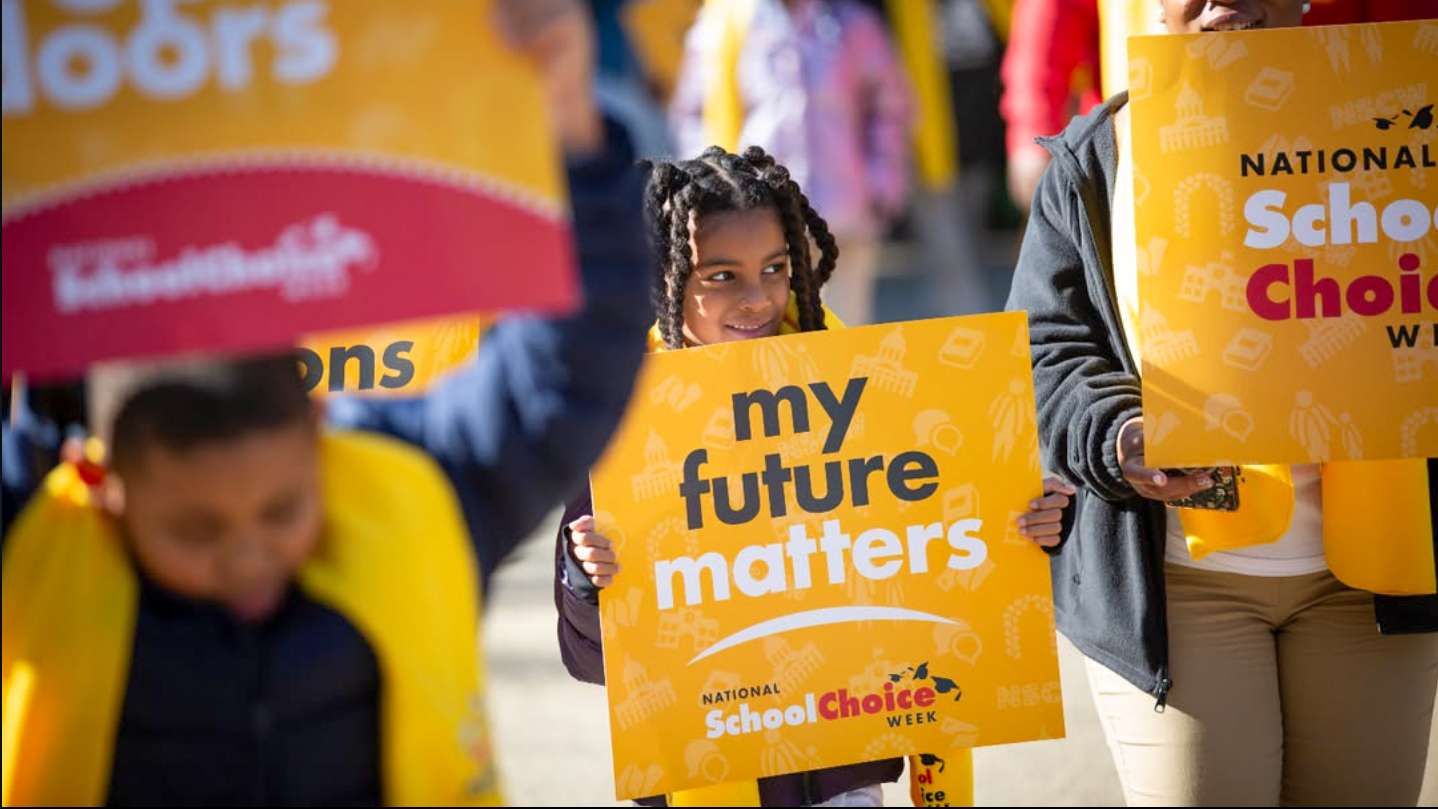
Starting next year, a dollar-for-dollar tax incentive of up to $1,700 will finance K–12 scholarships. Thirty states have chosen to participate, yet a considerable number of Democratic governors are sitting this out.
From 2027 onward, school choice will become a more realistic option for a broad range of American families.
In 2027, the Education Freedom Tax Credit (EFTC) will be introduced by the IRS, providing a federal tax credit for contributions to K–12 scholarship programs. The credit, unveiled in the One Big Beautiful Bill Act last year, signals a major reorientation in how the federal government engages with the education system. The Trump administration has promoted it as an unprecedented broadening of school choice, and in that sense, it is accurate.
Under the EFTC, individuals may claim a dollar-for-dollar federal tax credit for donations of up to $1,700—or $3,400 for married couples filing jointly—to scholarship-granting organizations (SGOs) to assist families with incomes no more than 300 percent of the area’s median gross income in covering K–12 costs. These costs encompass private school tuition, tutoring, services for students with special needs, and required supplies. EdChoice estimates that across all private school choice programs in the U.S.—including vouchers, education savings accounts, and tax-credit scholarships—roughly $10.6 billion reached students in 2025, up 29 percent from the year before. The Treasury Department and IRS project that the EFTC could support as many as 700 SGOs—there are about 531 in operation today—and generate $26 billion in annual contributions by 2030.
Although affording parents greater leverage over their children’s education should be a nonpartisan objective, the tax credit has not been universally welcomed. So far, 30 states have opted in, while 20 have not; among the latter, 19 are led by Democratic governors. In March, Wisconsin Gov. Tony Evers vetoed legislation that would have required his state to participate. In his veto message, he argued that the credit reallocates public resources toward private education without sufficient academic accountability, asserting, “Public funds should go to public schools. Period.”
Randi Weingarten, president of the American Federation of Teachers, issued a statement last week urging governors to reject the program. She characterized the tax credit as “yet another cruel chapter in the Trump’s [sic] administration’s war on families.”
“This plan acts as a poison pill for the 90 percent of American children who attend public schools,” she stated. “Instead of strengthening public education, President [Donald] Trump is diverting $500 billion in taxpayer funds into private hands, leaving everyone else to contend with the scraps in a real-life Hunger Games.”
The remarks by Evers and Weingarten reflect a broader conviction that federal education funding directed toward anything other than public schooling undermines the everyday families who rely on the public system. This school of thought (no pun intended) has long steered federal education funding, keeping education dollars under the control of public-school administrators and leaving parents dependent on those spending choices.
The Children’s Scholarship Fund (CSF), a nonprofit that helps families explore educational options, views the program in a markedly different light. “The Federal Scholarship Tax Credit will be a real game-changer for school choice and philanthropy, placing parents in charge,” Elizabeth Toomey, CSF’s communications director, tells Reason. “We believe it will be a genuine step forward in empowering and fully engaging parents in shaping their children’s education. Ultimately, that is how true reform in education can emerge.”
Toomey also notes that the notion that the tax credit diverts resources away from public schools is misleading. The tax-credit-funded scholarships (STC-funded) assist public-school students by supporting tutoring, after-school programs, summer enrichment initiatives, SAT prep courses, and other services. “It places resources in the hands of those who should have the greatest say in their children’s education—the parents.”
Polls from EdChoice indicate strong parental backing for school-choice mechanisms. Since 2014, support among parents for programs like vouchers has stayed above 60 percent, and today more than 70 percent of parents favor federal tax-credit scholarships. Additionally, a large majority of parents believe K–12 education is moving in the wrong direction, a view that has remained relatively stable over the past decade.
States that decline to participate are pursuing a largely doomed effort. Donors in non-participating states can still qualify for the tax credit; however, they cannot fund residents of their own state, which means states that reject the program will merely redirect more money to opt-in states. Meanwhile, the overall reach of the tax credit remains intact.
For decades, Washington has funneled increasing amounts toward education through public-school systems, yet this approach has not produced meaningful gains in student outcomes or public attitudes. One can question the merits of a tax credit while still recognizing that giving parents more control over their children’s education constitutes a meaningful shift away from the current framework.
