
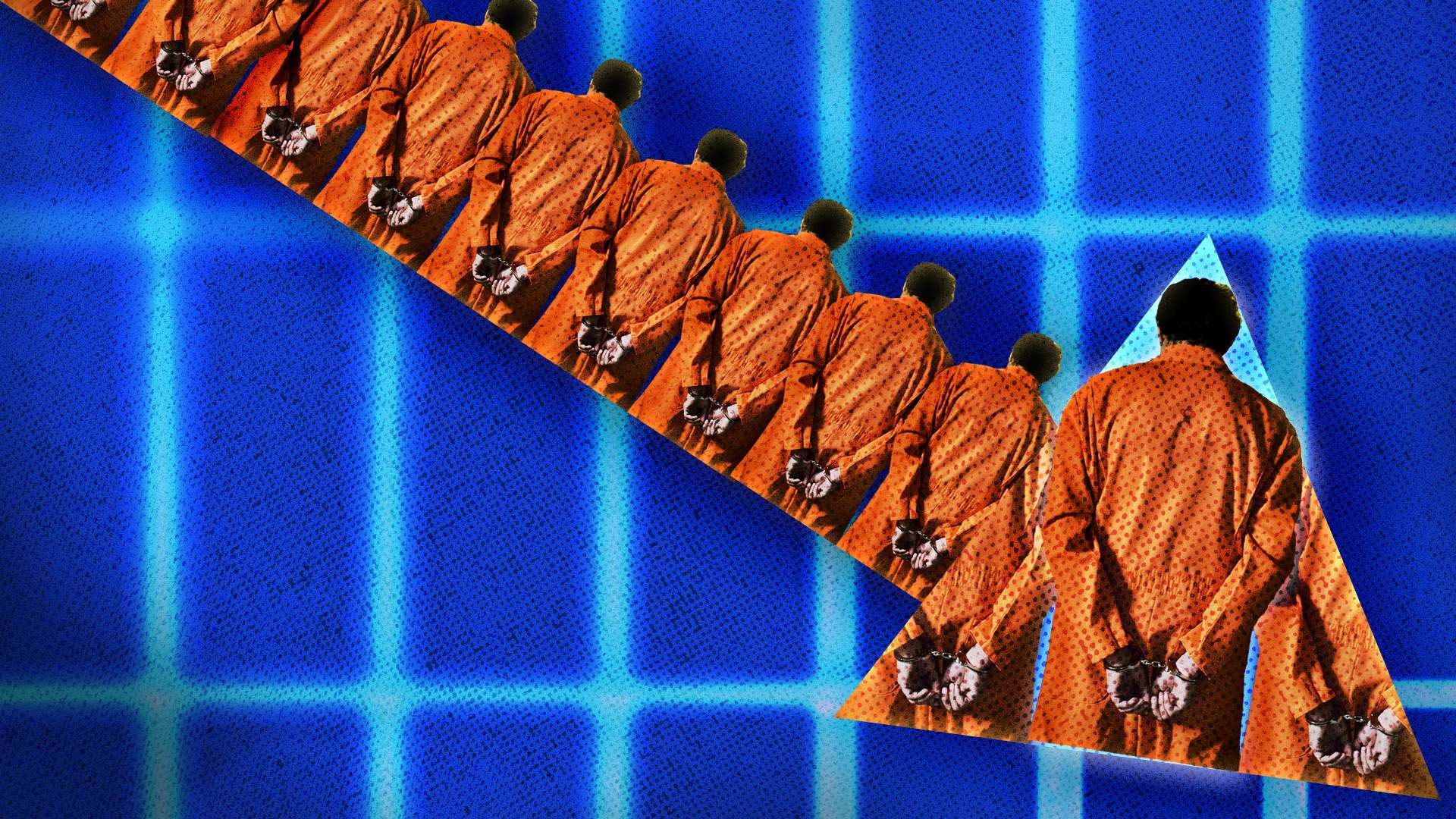
Experts contend that the decline in crime among Gen Z and millennial cohorts could persist, continuing to shrink the prison population over the next two decades.
Researchers maintain that a deep generational shift among millennials and Gen Z away from unlawful conduct is helping to dismantle mass incarceration and could cut the overall prison population by roughly half over the next twenty years, irrespective of major policy changes.
In a Washington Monthly feature published recently, Keith Humphreys, Shawn D. Bushway, and Jason Robey argued that the era of mass incarceration is fading, pointing to their fresh study in the Annual Review of Criminology.
Humphreys, a Stanford University psychiatry professor and former senior policy adviser for the White House Office of National Drug Control Policy; Bushway, a professor of public administration and policy at the University at Albany’s Rockefeller College; and Robey, an assistant professor of sociology and criminology at the University of Iowa, contend that the historic drop in crime over the past three decades—and the associated declines in prison admissions—are largely due to younger generations entering adulthood with “exceptionally low rates of criminal involvement and arrest.”
As older cohorts such as baby boomers and Gen X have aged out of offending—an activity that typically peaks in the late teens to mid-20s—fewer millennials and Gen Z individuals have emerged to fill those roles. Humphreys, Bushway, and Robey conclude that this generational shift—what demographers call cohort nonreplacement—has already reduced the prison population and is likely to continue doing so regardless of the current political climate.
“The punitive machinery remains, but the receiving bays are empty,” they wrote.
Nevertheless, criminal justice advocates argue that the political environment is not as hostile as conventional wisdom suggests. Although the bipartisan consensus on reform in Congress collapsed in 2020, and several states rolled back measures, advocacy groups continued to press at the state level successfully.
Udi Ofer, a Princeton University lecturer in public and international affairs and the former deputy national policy director of the ACLU, wrote in Just Security in March that the narrative of a national backlash against criminal justice reform after 2020 overlooks the reality that legislation has continued to pass “across red, purple, and blue states, often with bipartisan support—even amid heightened political polarization and federal retrenchment.”
Data gathered by Ofer and his students show that from 2021 to 2025, states enacted at least 654 criminal justice reform laws, with a rise in 2025—the first year of President Donald Trump’s second term.
“These figures do not support the claim that reform has come to a halt,” Ofer explained. “Rather, they suggest a shift away from sweeping reform packages toward more incremental, targeted policy changes, frequently enacted with bipartisan backing.”
In a previous interview with Reason earlier this year, Ofer noted that although lawmakers’ rhetoric about the criminal justice system may have evolved, the underlying problems remain.
“We live in a moment where there has been a fundamental change in how Americans view the system, and there is broad agreement that it is broken,” Ofer stated.
Ofer argued that while the reform movement did not achieve every objective by its peak in 2020, the idea of a popular backlash overlooks the massive and ongoing changes within the American criminal justice system. He highlighted that by 2020, incarceration rates in the U.S. had fallen 31 percent from their 2010 peak.
Similarly, the oft-cited statistic from reform advocates in the 2010s—that the U.S. holds the world’s highest incarceration rate—no longer holds true.
“We’re now fifth,” Ofer noted. “Is that a cause for celebration? Not really; we remain an outlier among wealthy democracies, or really any democracy. But moving from first to fifth is not insignificant.”
Humphreys, Bushway, and Robey also warn that the significance of these developments is being obscured by stale narratives from both sides of the political spectrum.
“Loud voices who claim that Americans with darker skin are inherently criminal cannot reconcile such a dramatic drop in crime with the nation’s shift toward a minority-majority demographic,” they write. “Meanwhile, those who portray America’s carceral system as an unyielding tool of systemic racism cannot account for nearly two decades of declining imprisonment. Yet the declines in crime and imprisonment are real and deserve attention, even if they require radically new narratives and ways of thinking.”
Reason’s recent cover feature on the history of U.S. prisons argued that America must decide soon what the next era of incarceration will look like. If Humphreys, Bushway, and Robey are correct, that decision has already arrived.
