
The relationship between Ignacio Cembrero and Morocco is complex: the country has taken him to Spanish courts on four occasions, but none of the suits have prospered. The Spanish journalist is one of the best analysts of Moroccan politics: he has known the subject for decades, and perhaps for that reason his phone number appeared on a list of potential Pegasus spyware targets revealed in 2021. Around that time, the mobile phones of several members of the Spanish Government were also attacked, including then Foreign Minister Arancha González Laya, Interior Minister Fernando Grande-Marlaska, and the Prime Minister, Pedro Sánchez.
Cembrero arrived at the Foro La Toja to explain what Morocco’s international priorities are and what Spain could do to improve its position vis-à-vis its southern neighbor. These are certainly not minor issues.
In our conversation, the Maghreb specialist explains why he characterizes the Ceuta migratory crisis as an “orchestrated operation” and recalls the vulnerability of the two Spanish autonomous cities: “Ceuta and Melilla are indefensible”. After ruling out that Israel or the United States played any role in the events that took place between July 30 and 31, Cembrero discusses the imminent visit of the Moroccan and Spanish kings to Ceuta and Melilla, the first since 2007. “I tend to think there will be some anger, because otherwise they wouldn’t stay true to their own tradition”, he asserts. Although he also predicts that the reaction will be smaller than in 2007, since he believes Morocco has a lot to atone for after turning Ceuta “topsy-turvy”.
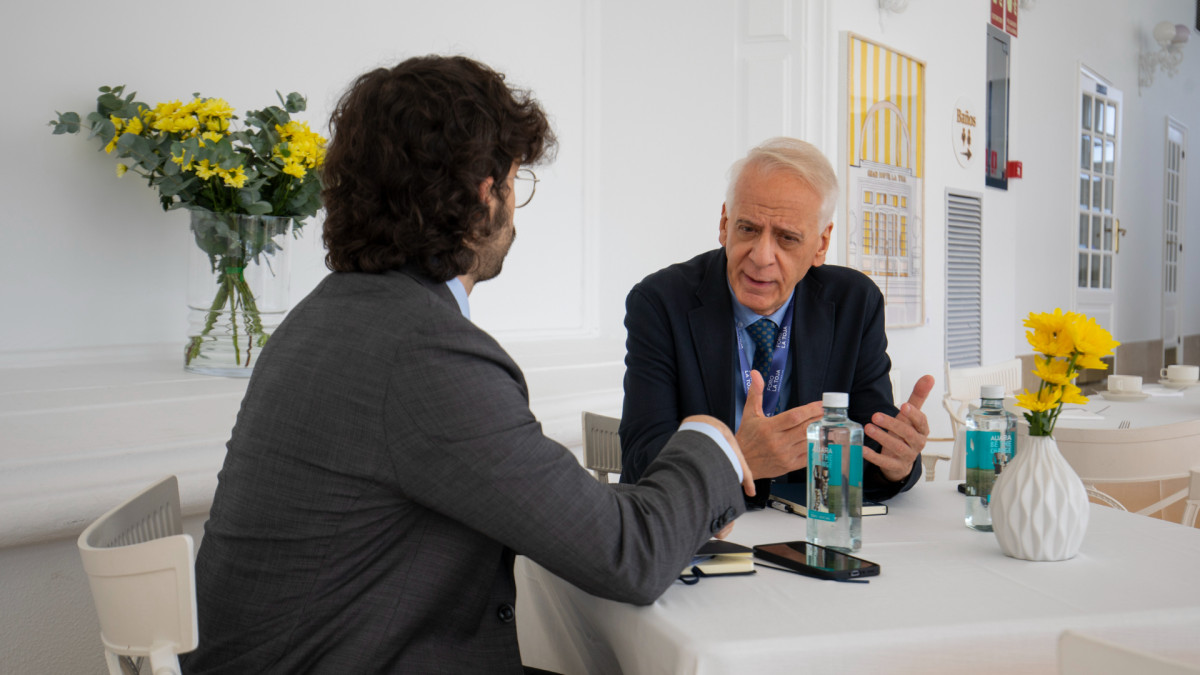
Ignacio Cembrero, during the conversation with Agenda Pública at Foro La Toja. Photo: Agenda Pública / Yanka Soto
You have defined what happened in Ceuta as an orchestrated operation. What evidence exists to support that claim? Could new evidence appear to confirm it?
We will see as documents are declassified or become public, through Judge María Tardón, but in any case, we already have the first document, the one that the General Directorate of Immigration and Borders sent to Judge María Tardón at the beginning of September. There it was already clear that Moroccan agents had guided the migrants who wanted to enter Ceuta.
But there is something even more evident to me. Especially on July 31 and August 1, many Spanish and foreign media quickly went to Ceuta. Televisions, newspapers, from The New York Times to Le Monde, The Guardian, etc. All of them asked the migrants how they had entered. And there was a general answer: there was no control, it was free rein; they could enter without problems.
Others even went further and said: “I didn’t know the way well because I come from Larache or from far away, and they directed me the way and the best way to enter Ceuta without problems.”
If we accept that there is a political component behind what happened, what incentives would Rabat have to carry out such an operation?
It is a punitive operation against Spain through one of its weakest points, which is Ceuta. The other is Melilla. And it is a punishment operation that has nothing to do with the visit of the president to Algiers, nor with the law on Sahrawis that will allow access to Spanish nationality, nor with the change of status of Gibraltar.
It is a punishment operation because, for three days, fourteen media outlets, thirteen European and one Israeli, published a series of reports that exposed the functioning of the Moroccan intelligence services and demonstrated also the massive use Morocco has made of Pegasus.
“It is a punishment operation against Spain through one of its weakest points, which is Ceuta”
I think that irritated and angered Moroccan authorities a great deal. On October 1, linking with what we had done, Amnistía Internacional also published a magnificent report on this issue. We worked on an investigation coordinated by Forbidden Stories, and I like to remember it because their support was crucial, with the collaboration of Amnesty International’s Security Laboratory. I think all of that annoyed them very much.
Now you can ask me a question: how can Moroccan authorities punish Spain, and specifically Ceuta, for articles published in the press?
One must know that the investigation we had been developing for months had many ramifications in Spain. Many. There were foreign journalists who came to Spain to work with us precisely because of that.
It is likely that the Moroccan intelligence services knew. I’ll give you a very concrete example: we have a lot of detail on how Moroccan intelligence services had spied on the Guardia Civil when its agents went to work in Morocco. In other words, they exposed the Guardia Civil. I think all of that made these people very irritated and looking for a way to take revenge.
In my opinion, the social media movement originated spontaneously, after the Supreme Court ruling on hot returns was known on July 8. But the authorities let the situation run and, above all, did not take any measures. Then the ball kept rolling until what happened that day. Also, I think they didn’t want it to be so large, but they lost control. The operation got out of hand.
“In my opinion, the social media movement originated spontaneously, after July 8 when the Supreme Court ruling on hot returns was known”
And this is a suspicion. While I am absolutely sure that it was retaliation for all that journalistic work that took place largely in Spain, I think the operation was designed to be much smaller, something similar to what had already happened in Ceuta in May 2021. But I have no proof of the latter.
However, it got out of hand and, instead of 10,000 people, eight times more entered, according to the figure given by the Minister of Territorial Policy. Or even the 90,000 people that Juan Jesús Vivas has spoken of. There is also a report from the CNI that I have not had the privilege of reading, but I know someone who has read it, and it mentions 100,000 people in the last week of July 2026.
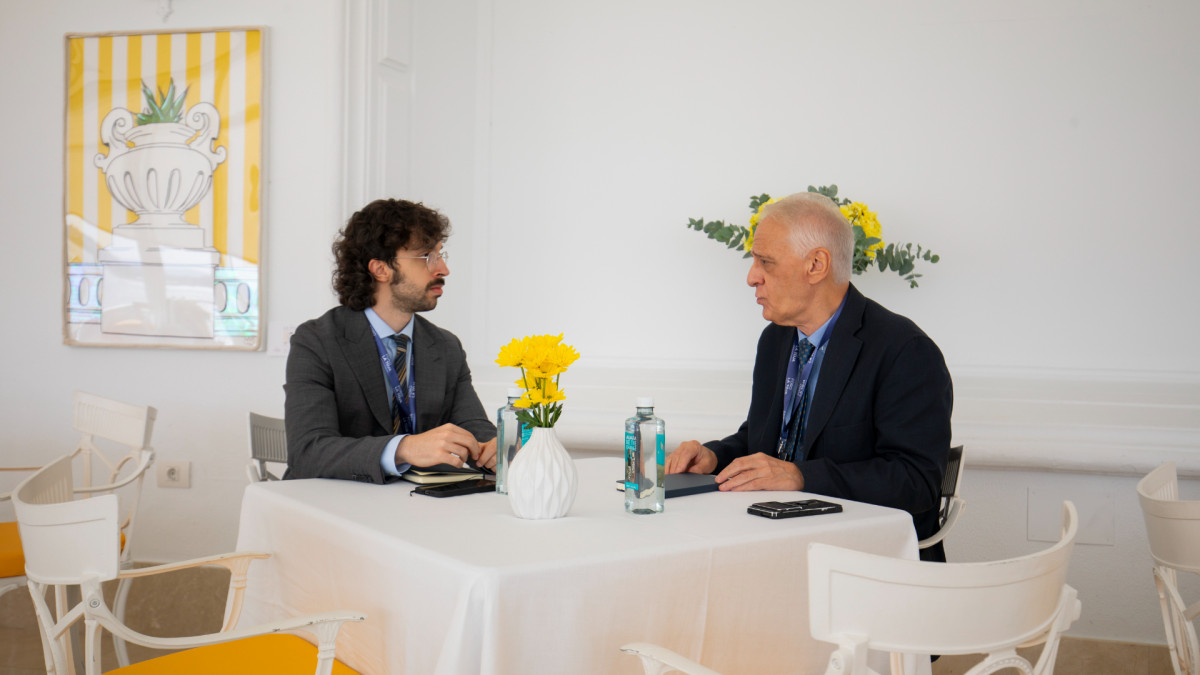
The journalist analyzes the reasons that, in his view, explain the Ceuta crisis and Morocco’s actions. Photo: Agenda Pública / Yanka Soto
Morocco thus has incentives to punish Spain. Should we expect some form of retaliation for the kings’ visit to Ceuta and Melilla on October 13 and 14?
Morocco has a long tradition of punishing and taking retaliation. I would say: I tend to think there will be some anger, because otherwise they would not be faithful to their own tradition. But I believe the anger will be smaller than what occurred in 2007.
Why? Because the Moroccan authorities know they have a lot to atone for. They have turned Ceuta upside down, their image is deeply damaged. That image is tainted by many reasons: because it is a country that does not control its border well, because it is not a reliable partner, and because, as soon as the border opens a crack, tens of thousands of young people want to leave. As a Moroccan friend of mine has said, the true vote was July 30 in Ceuta, not September 23 in the Moroccan parliamentary elections.
“The true vote was July 30 in Ceuta, not September 23 in the Moroccan parliamentary elections”
So I think, in order not to strain the situation further and not to complicate Pedro Sánchez’s government, which has been accommodating toward Morocco, the reaction will be small. But I may be wrong, and I can admit it in a few days.
What can Spain do to prevent Morocco from having these kinds of leverage? Do you think containment or counterweights measures will be put in place?
Ceuta and Melilla are indefensible. Their defense can be improved; they can be a bit more fortified, but if 80,000 or 100,000 civilians show up at Ceuta’s gates and there is no shooting—indeed, it is right not to shoot—then they are truly indefensible.
Moreover, in some cases they try to enter by land, sea, and air. There have even been cases of people attempting to enter by paraglider and ending up dying. Therefore, one must rely on Morocco. We must continue externalizing, even if we don’t like it, part of the defense of Ceuta and Melilla.
How can we guarantee that Morocco truly takes on that commitment? It is clear that the policy of appeasement developed by President Sánchez starting July 12, 2021, which later extended to the Sahara and many other episodes, has not yielded results.
“We must continue externalizing, even if we don’t like it, part of the defense of Ceuta and Melilla”
We must seek an alternative policy. And I believe that alternative policy is deterrence. We must explain to Morocco that Spain, at bilateral level and through the European Union, has many more means of pressure on Morocco than Morocco has on Spain. Morocco has some important ones, such as migration, but Spain has many more.
And if Morocco does not fulfill its role, or the role we want it to fulfill in Ceuta and Melilla, there will be, this time, Spanish retaliation that can do it a lot of damage.
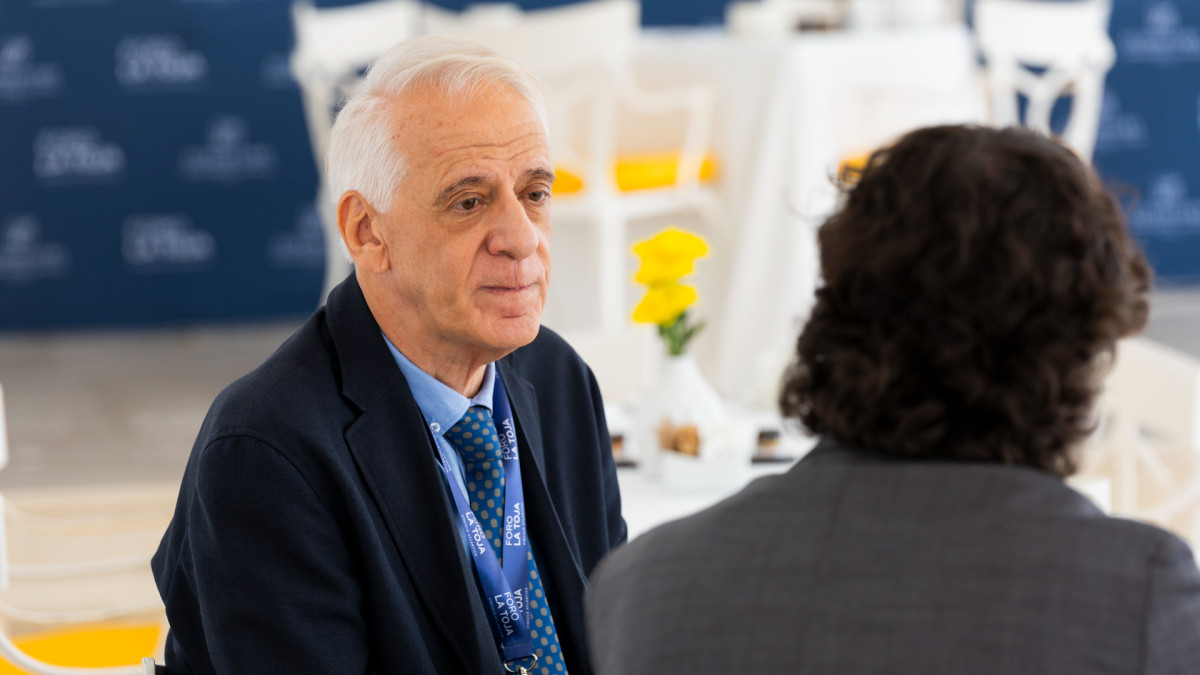
Cembrero reflects on the possible retaliations from Rabat and the need for a deterrence strategy. Photo: Agenda Pública / Yanka Soto
Do you think that deterrence policy will be put into practice?
So far it has not been applied beyond the José María Aznar era, with the Perejil affair.
Moreover, not only has it not been applied, but something worse has happened here: not even the instruments or tools we have at our disposal to harm Morocco have been shown to them, if they truly behaved as they did in July in Ceuta, if they give us big scares or overturn a Spanish city. They have not even been shown. I think it’s time to do so, but I don’t know if it will be.
Certainly, the relationship between the Popular Party and Moroccan authorities is not just bad, it is terrible. That does not mean that one day, if Alberto Núñez Feijóo becomes Prime Minister, things could not radically change.
Among other things, because I fully understand that a new head of government who arrives at La Moncloa and who also does not have international experience would not want to face a crisis with the neighbor. Therefore, I don’t know if today’s discourse will be maintained tomorrow. It will be interesting to see.
United States and Israel, what role have they played in Ceuta?
I think none. Neither of them.
We have seen some Israeli ministers rejoice on social networks about what happened to Spain, and we have seen Trump talking a lot about Ceuta, but always from a United States domestic political perspective. He has come to say that this would happen in the United States if the Democrats were in power, but since they govern, these things do not happen. In other words, he has brought it home.
But at no time has he or the State Department questioned Spanish sovereignty over Ceuta and Melilla.
“At no time has Trump questioned Spanish sovereignty over Ceuta and Melilla”
Another thing is that there have been initiatives from Congress, but the official position has been very clear. The State Department issued a note and it is clear that the United States still considers the sovereignty of Ceuta and Melilla to be Spanish.
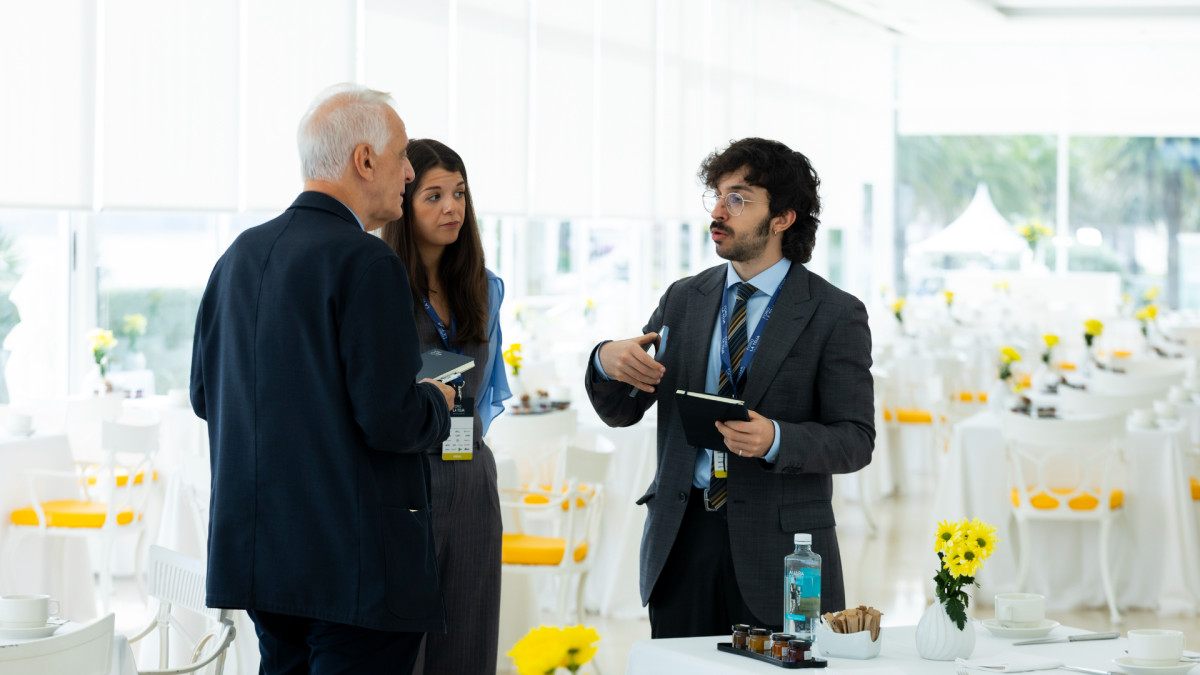
Cembrero chatting with the Agenda Pública team at La Toja. Photo: Agenda Pública / Yanka Soto
Earlier you mentioned the Western Sahara. Could what happened in Ceuta have any consequence for your political future?
No, I don’t think there will be any consequence. But I’d like to take the opportunity to say something.
Contrary to what people sometimes believe, because we have heard many statements from Moroccan politicians, ministers and even many articles in the press since early August claiming sovereignty over Ceuta and Melilla, Morocco’s priorities are not there.
Spain’s sovereignty over Ceuta and Melilla, of course, is an ambition, a wish, a dream of Morocco. But their priorities with Spain are generally on the southern flank or the southern front, i.e., the Western Sahara. Those are their priorities. They have four main demands.
The first is that Spain transfer control of the Western Sahara airspace, which today is exercised from Las Palmas, to Moroccan authorities.
The second priority is for Spain to do the same as France and the United States: not only to back the autonomy plan but to recognize Morocco’s sovereignty over Western Sahara.
“Spain’s sovereignty over Ceuta and Melilla is an ambition, a wish, a dream of Morocco […] but their priorities are in Western Sahara”
The third demand is that there be a division of territorial waters between the Canary Islands, southern Morocco, and Western Sahara that favors Morocco. Today there is no agreement. In short, the country with a continental coast would have more waters than the archipelago facing it.
Legally, they justify this. There are also arguments that rebut this interpretation, but it isn’t a whim. There is a whole legal argument behind Morocco’s position. They say that the division does not have to be equidistant, but equitable, that is, just.
The fourth claim, which I think will become a problem in a few years, even though today it isn’t, is to share the exploitation of the Tropic Mountain’s riches.
The Tropic Mountain is a submerged volcano off the Canary Islands. It is not in Spanish territorial waters, but it is presumed to lie in the Spanish exclusive economic zone and would contain between 5% and 7% of the world’s rare minerals, minerals used for new technologies.
Today it lies two kilometers deep, and there is no technology to exploit it. But it is thought that in twenty years there will be, and that it will be a great wealth source.
So, what the Moroccans want is to share that wealth. Spanish legal documentation says no, because it lies in the Spanish exclusive economic zone.
“The Tropic Mountain is presumed to be in the Spanish exclusive economic zone and would contain between 5% and 7% of the world’s rare minerals”
We’ll see. In any case, what we have seen is that the United States seems to have a great interest, because several times American oceanographic ships have sailed through those waters — international waters, even though they are in the Spanish exclusive economic zone — to try to assess what lies beneath. Certainly, we know there is a great wealth source.
To conclude, if we were to meet again at the La Toja Forum in 2027, what good news would you like to share for Spain regarding Morocco, and which would you prefer not to have to deliver?
Well, one bad piece of news… I see that people are very concerned, although I am not much into football, that the World Cup final is not held in a Spanish stadium, such as Camp Nou or the Santiago Bernabéu, but is played at the new Hassan II Stadium, which is under construction in Morocco.
Morocco has made it very clear that it will fight hard to ensure the final is held at the Hassan II Stadium, which will be the largest in the world when it is completed next year.
That would be, shall we say, bad news for Spain. Although, again, football does not interest me much. But I understand that people consider it almost more important than what happened in Ceuta: Morocco, invited to join the Spanish-Portuguese candidacy, may end up snatching the final away from us.
And a good news? For both Spain and Morocco.
From the Spanish perspective, that the final is held here.
And a good thing for Morocco… I can think of many. I would especially highlight the prisoners.
All the leadership that directed the peaceful Rif uprising has been in jail since 2017. Journalists are not in jail anymore, but there are many journalists in exile. Also many bloggers, more precisely YouTubers, who are in exile.
“All the leadership that directed the peaceful Rif uprising has been in jail since 2017”
I would like all those people to be able to return to their country and work there, and for the few people who remain in prison for their critical presence on social networks to be released.
And then there is also Mohamed Ziane, the former Moroccan Minister of Human Rights, who has been imprisoned since 2022. He is 84 years old, his mother is Spanish and his father Moroccan, and he was born in Málaga. He is in delicate health and I would like him to be released from prison.
That would be the good news on the Moroccan side: that my YouTube friends return, that all those in prison are released, starting with Ziane.
In alliance with
Thank you very much.
