Europe is returning to discuss industry. After years during which a large portion of the economic debate fixated on the green transition, digitalisation and market regulation, mounting global competition has brought productive capacity back to the core of Europe’s strategic agenda. Recent analyses have underscored the continent’s relative loss of competitiveness and the urgent need to revive investment, productivity, and strategic autonomy. As Miquel Sàmper, minister for Business and Labour in the Government of Catalonia pointed out, the next phase is to move past mere diagnosis and begin acting: turning this renewed industrial ambition into concrete decisions and investments at the speed demanded by competition with the United States and China.
The Microspace event Industrial Accelerator Act: the regions in the European Union, held in Brussels by Agenda Pública with support from the Government of Catalonia, examined the role of regions in Europe’s renewed industrial push. Public officials, regional representatives, businesses, experts and civil society deliberated on how to translate European reindustrialisation into reality and, in particular, the role regions should play both in shaping legislation and in implementing it on the ground. Beyond the Industrial Accelerator Act itself, the discussion raised a broader question: how to draw on regional knowledge, industrial specialisations and the ability to translate policy into practice when designing European industrial policy.
From diagnosing Europe’s competitiveness problem to taking action
Europe appears to have acknowledged that industrial policy can no longer be confined to setting long-term targets. Comparisons with the United States and China introduce an increasingly decisive factor: speed.
Regulation remains one of the European Union’s principal policy tools. But when industrial policy is hindered by lengthy procedures, administrative fragmentation or regulatory uncertainty, Europe risks losing investment before incentives can even take effect. That is why a substantial portion of the dialogue surrounding the Industrial Accelerator Act (IAA) focuses not only on what needs to be done, but also on how to implement it more quickly.
“Public officials, regional representatives, businesses, experts and civil society discussed how to make European reindustrialisation a reality”
Sàmper framed this call for action within the context set by the Letta and Draghi reports: Europe has grown more conscious of its industrial standing, yet must translate that awareness into decisions that can keep pace with competing economies.
Moving faster does not automatically entail reduced regulation. The challenge is to find ways to maintain European safeguards without letting them become barriers to investment. One possibility discussed at the event was introducing mechanisms such as deemed approval when authorities fail to respond or adopting faster procedures for strategic industrial projects.
This underlying challenge is particularly relevant for regional and local authorities. They are often charged with turning major European decisions into practical approvals, for industrial sites, infrastructure, permits, training and support for businesses. Ambitious legislation can lose much of its bite if the administrative capacity to implement it is lacking in places where factories are ultimately built or where new industrial ecosystems take shape.
María Rodríguez Parareda, deputy delegate of the Government of Catalonia to the EU, opened the event on behalf of the Generalitat. Photo: Agenda Pública / BR&U Agency
Industrial policy as a tool for regional development
Reviving industry is not solely about sharpening international competitiveness; it also prompts questions about how growth is shared within nations. A central theme of the discussion was the role industry can play in strengthening territorial cohesion. Unlike economic activities that tend to cluster in major metropolitan areas, industrial projects can bring investment, jobs, infrastructure and know-how to regions distant from the largest urban centers.
“A central theme of the discussion was the role industry can play in strengthening territorial cohesion”
Jaume Baró, secretary for Business and Competitiveness in the Government of Catalonia linked this approach to Catalonia’s aim of expanding industry’s share of GDP to 20% and the implementation of its National Pact for Industry. By combining cross-cutting initiatives with measures focused on specific sectors such as semiconductors, the programme demonstrates how a regional administration can convert an industrial strategy into tangible action.
Its significance extends beyond economic growth. Industrial policy can help reduce territorial imbalances within a country: creating opportunities beyond major cities, reviving medium-sized towns and cities, improving employment prospects in particular areas and alleviating some of the pressure caused by the concentration of economic activity and population.
In this sense, reindustrialisation is about more than just backing businesses. It carries implications for employment, housing, infrastructure, training, innovation and regional cohesion. It could therefore become one of the most effective means of spreading growth across different parts of Spain.
This approach aligns with a broader debate that Agenda Pública has previously explored in its analysis of Spain’s various economic hubs: future competitiveness depends less on every region following the same model and more on building on their distinct industrial strengths and linking them with one another.

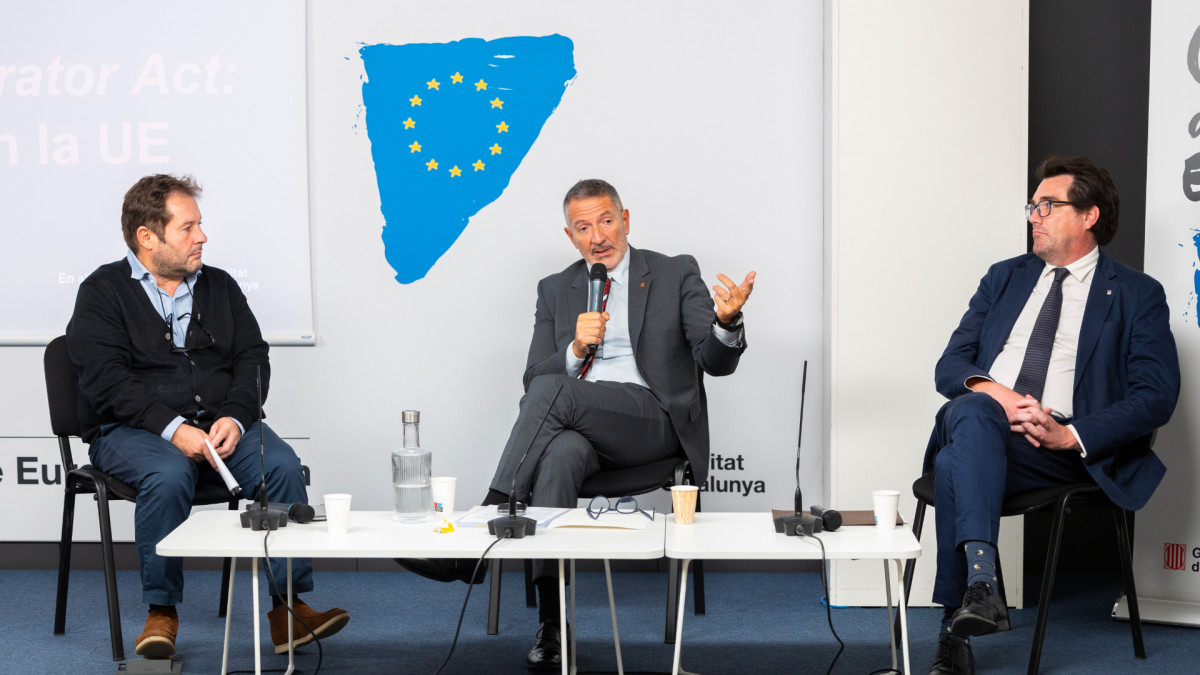
López Plana, Sàmper and Baró discussed the role of regions in industrial policy. Photo: Agenda Pública / BR&U Agency
European ambition, regional specialisation
Perhaps the phrase that best captures the discussion is “European ambition, regional specialisation”. Europe can set strategic priorities, outline overarching industrial objectives and mobilise regulatory and financial instruments. Regions, however, possess a far more granular understanding of their own value chains, companies, technological capabilities, infrastructure and vulnerabilities. Asturias faces different starting conditions for industrial development than Catalunya, Andalusia, Castilla-La Mancha or the Basque Country, and it would be illogical to expect every region to compete in exactly the same fields.
“Regions have a much more detailed understanding of their own value chains, businesses, technological capabilities, infrastructure and weaknesses”
Specialisation also enables identifying more concrete opportunities at a moment when Europe is unlikely to regain leadership across every technology. The ground lost to China and the United States in certain domains makes prioritisation essential. In technological battles where regaining a competitive edge may already be challenging, there remain niches —as evidenced by the discussion of photonic chips at the event— in which specific strengths in research, business and manufacturing can generate high-value opportunities. Bringing a regional perspective into European policymaking thus need not fracture industrial policy; it can make it more targeted.
The same question arose in discussions about future industrial acceleration zones. Speaking from the vantage point of a region with a long industrial heritage, Paz Palacio, Asturias’ representative in Brussels, observed that their design offers a chance to rethink the relationship between industry and regional development: which ecosystems should be reinforced, which infrastructure could be shared, how far existing industrial clusters should be favoured over the emergence of new hubs, and what criteria should determine whether a zone qualifies as strategic.
There is no one-size-fits-all answer. A mature industrial region may need to modernise and decarbonise its existing capacity, while another might require building new infrastructure, attracting supply-chain investment or developing emerging sectors. One-size-fits-all industrial policy has its limits when regional needs diverge so profoundly.

The director and editor of ‘Agenda Pública’ highlighted the role of regions as testing grounds for innovative industrial policies. Photo: Agenda Pública / BR&U Agency
Regions must also have a say in European policymaking
The debate surrounding the IAA also raises a broader institutional question. Regions clearly play a role in implementing European policies, but they are also demanding a greater voice in shaping them.
“Regions clearly have a role in implementing European policies, but they are also calling for a greater say in shaping them”
Concern is growing over funding models that rely primarily on national envelopes, through which European resources are routed via member states before reaching individual regions. From a regional perspective, this shift could weaken Brussels’ ability to identify existing industrial specialisms and the specific opportunities available in each territory.
A comprehensive map of industrial capabilities across Europe’s regions would reveal where particular expertise, suppliers, infrastructure, energy resources and technological capabilities are concentrated, helping to steer investment more effectively. The aim would not be to pit national governments against regions; it would be to determine the appropriate level of government for each decision. Europe can set common priorities; member states can ensure national coherence; and regions bring local insight and practical knowledge of the territory.
Such multilevel governance is especially important in Spain, where much of the power shaping industrial investment lies with the autonomous communities and local authorities.
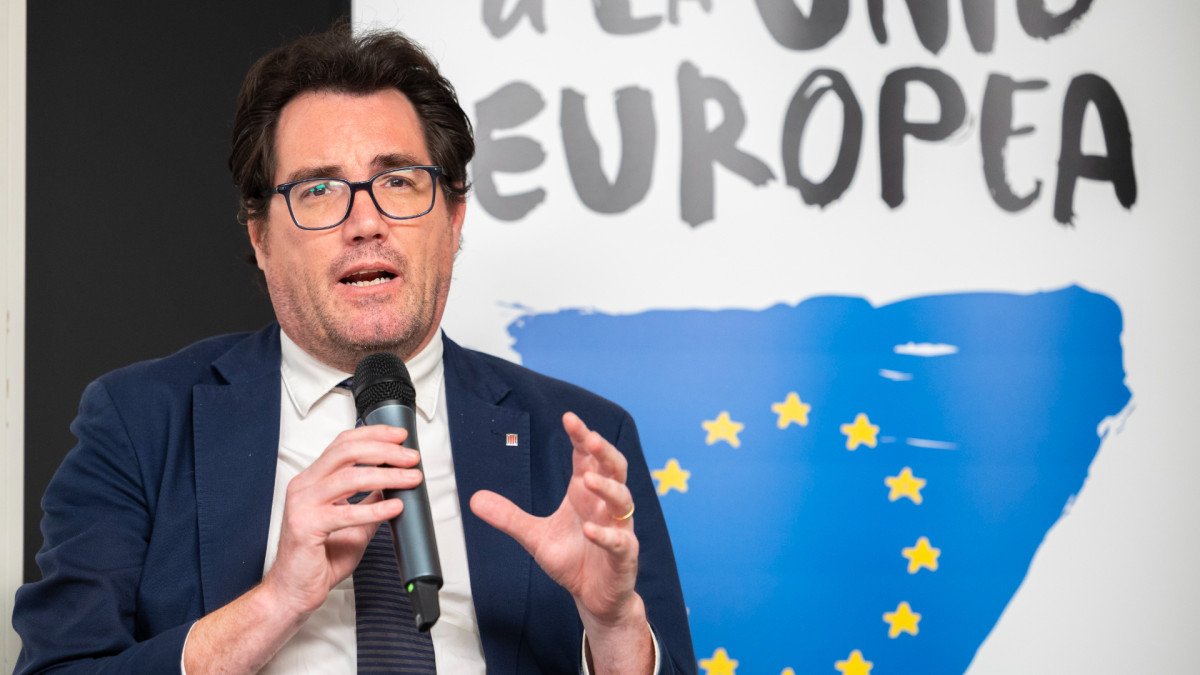
Jaume Baró, secretary for Business and Competitiveness in the Government of Catalonia. Photo: Agenda Pública / BR&U Agency
Green industry must still be industry
Europe’s new industrial policy cannot be separated from the climate transition either. Yet the relationship between these two agendas is starting to be framed differently. It is now hard to envision a future for European industry without decarbonisation. As one participant put it, “industry can no longer afford not to be green”. But the other half of the equation matters just as much: industry must remain viable.
The promise of competitive green industry rings hollow if the costs or procedures associated with the transition ultimately push production toward countries with laxer standards. The challenge is to use clean energy, innovation and decarbonisation to attract industrial activity rather than inadvertently nudging businesses to relocate elsewhere.
“The challenge is to use clean energy, innovation and decarbonisation to attract industrial activity”
Spain has notable advantages in this regard. Its access to renewable energy could help attract certain energy-intensive projects, provided it is supported by electricity grids, infrastructure, land, skilled workers and administrative arrangements capable of converting that resource into productive investment.
At the same time, European strategic autonomy cannot be measured solely by the number of factories and supply chains. Its legitimacy will depend on whether it delivers greater well-being, secure employment and good-quality jobs.
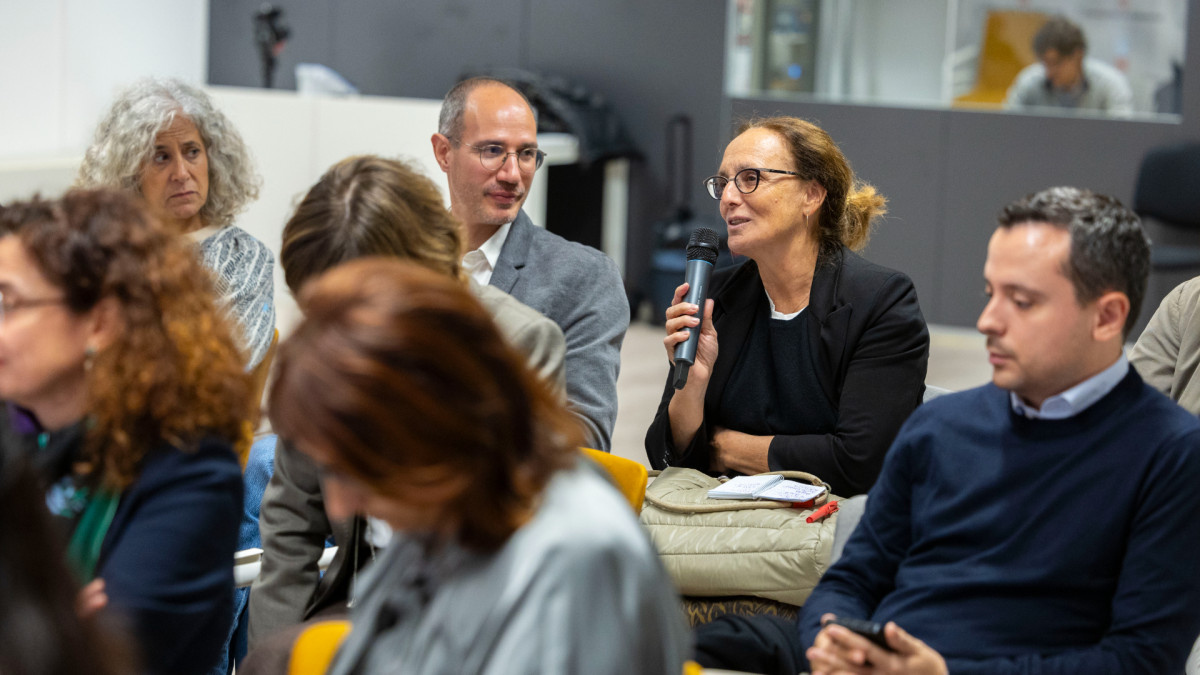
Paz Palacio, the Principality of Asturias’ representative in Brussels, spoke at the Microspace event. Photo: Agenda Pública / BR&U Agency
Foreign investment, but with a strategy
The push for greater autonomy does not imply shutting Europe off from the rest of the world. The debate around relations with China illustrates this tension. An open economy like Europe’s can hardly embrace isolation or turn its back on foreign investment and international trade. The question is how to ensure that foreign investment strengthens Europe’s industrial base.
The concept of “protected investment” captures that balance: drawing in international capital while safeguarding manufacturing capacity, jobs, competition rules and European standards.
Europe also retains qualities that are difficult to imitate —strong institutions, rights, stability, quality of life and access to a vast market— which continue to make it attractive compared with other regions. Spain’s economic and cultural position also gives it a distinctive role as a bridge between Europe and Latin America. Trade openness can therefore coexist with a European industrial policy, provided openness does not become dependence.
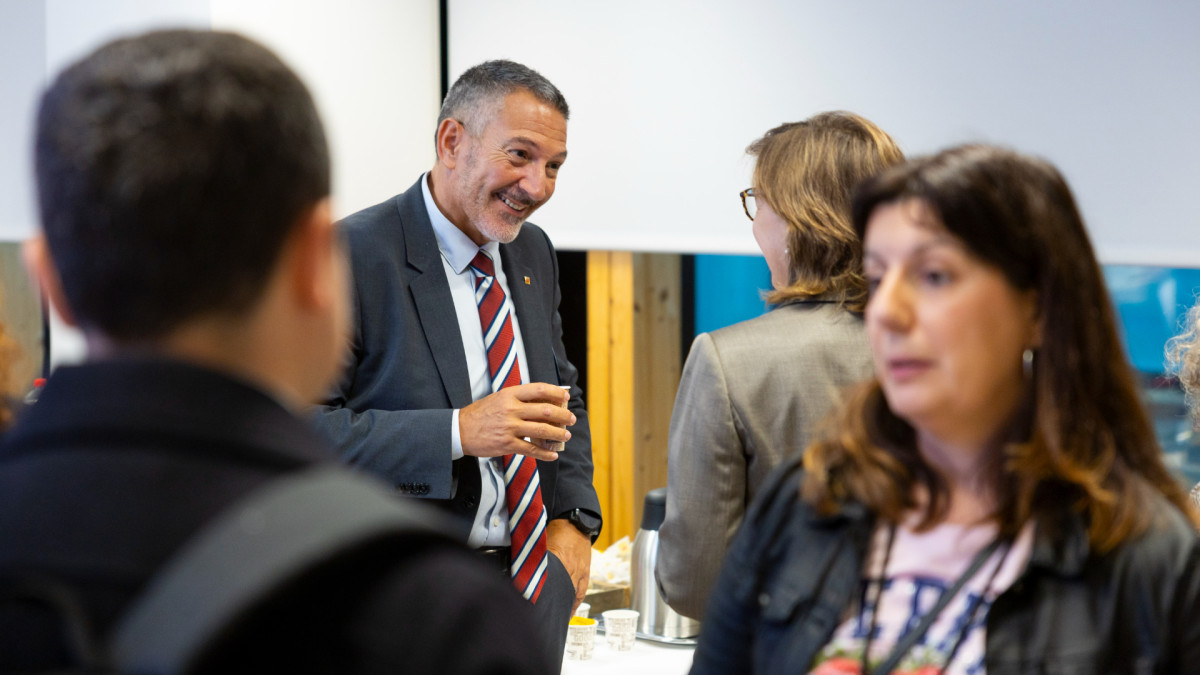
The event prompted an exchange of views on how to boost industrial competitiveness and attract new investment. Photo: Agenda Pública / BR&U Agency
From legislation to the factory floor
The Industrial Accelerator Act could become an important component of Europe’s new industrial policy framework, but its success will depend not only on the ambition of the law itself. It will also hinge on its scope—whether it encompasses entire value chains or only selected stages of production—, on clear criteria for identifying strategic sectors and regions, and above all on whether its measures can be translated into practice.
Regions are central to this endeavour. As Marc López Plana, director of Agenda Pública, observed, they are testing grounds for industrial policies, authorities capable of identifying regional strengths and the level of government at which many investments are transformed from plans on paper into real economic activity.
Europe needs an industrial policy that is broad enough to meet the scale of global competition, yet sufficiently targeted to recognise that industry cannot be built in abstract. It will take shape in specific places, drawing on local strengths and overcoming practical obstacles. Aspiring on a European scale, yet implementation will largely be regional.
With the support of