
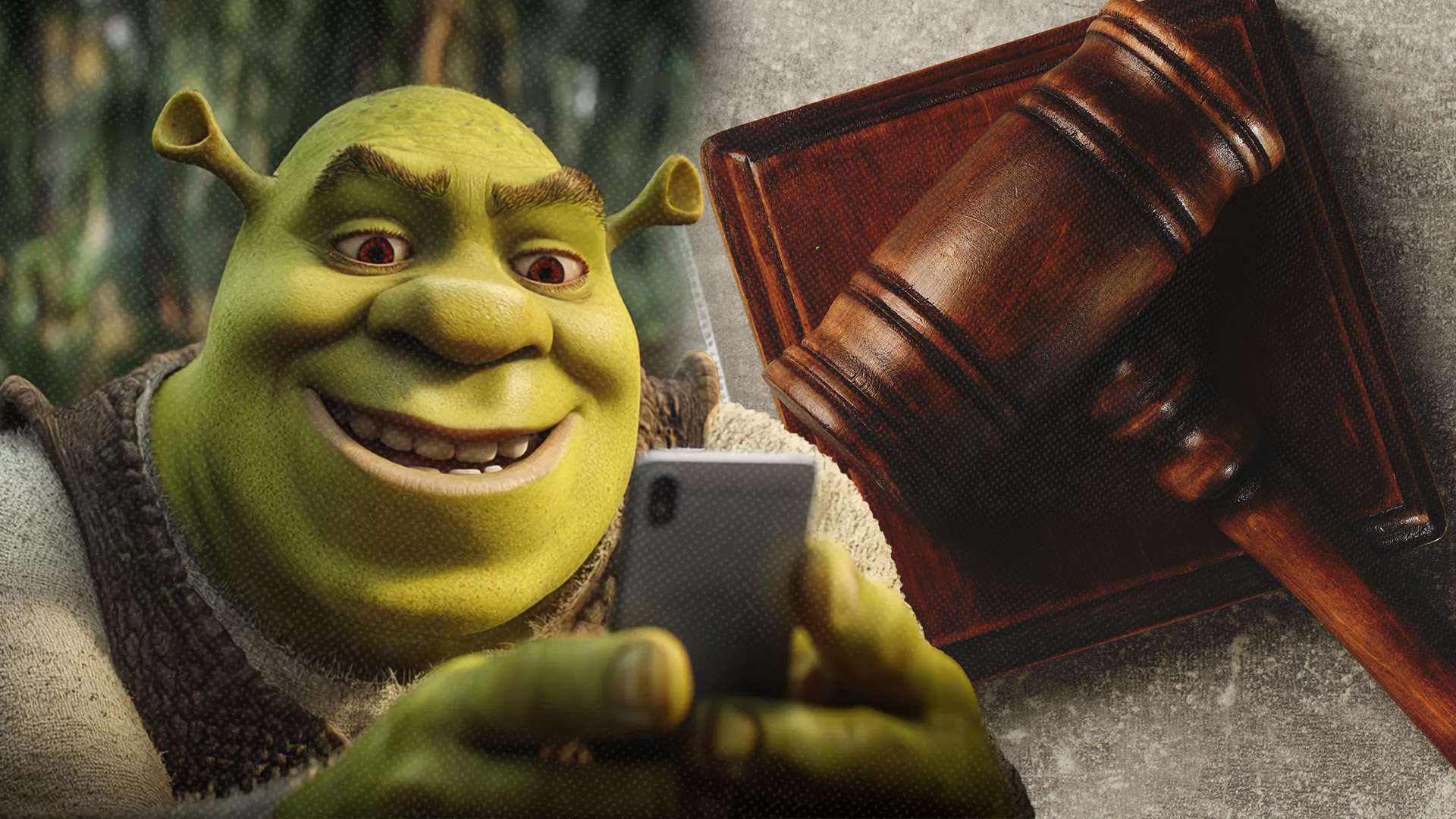
D.J. Byrnes was convicted of telecommunications harassment after dispatching a provocative Shrek image to a public official.
A text message featuring an explicit image of Shrek displaying his ogre anatomy hovered over an Ohio courtroom on Friday, during the prosecution’s closing arguments in a two-day trial that drew the attention of Ohioans, free speech advocates, and the national media.
The question, as prosecutor Matthew Lallo framed it, was whether a person should enjoy a degree of privacy or still be subjected to receiving such a message.
The message at the center of the case was sent by Ohio Substack writer D.J. Byrnes (a.k.a. “The Rooster“). In May, Byrnes sent the risqué image of Shrek to state Sen. Jerry Cirino (R–Kirtland). Signal Ohio reported that Cirino alerted the Kirtland Police Department, leading to Byrnes’ arrest on June 1. The outlet noted Byrnes spent 23 hours behind bars before posting bail on a misdemeanor telecommunications harassment charge.
According to The New York Times, Byrnes sent the “gloating text messages” after Cirino announced he would not pursue the role of state Senate president.
An accompanying text to Cirino stated, “Good to see you finally made your final humiliation public, Young Mussolini!” Byrnes’ message also read, “THE PATRIOTS CAUCUS sends its regards!!!!!!!!!!!”
During Byrnes’ trial, which began on Thursday, his defense team argued that the texts represented political statements rather than harassment. They emphasized Byrnes had repeatedly criticized Cirino in the past, and the messages were sent in the context of Cirino stepping away from his bid for the Senate presidency.
“The point is clear,” said Byrnes’ attorney during closing statements. “Shrek was exposing himself and so was Senator Cirino, finally laying bare the fact that he couldn’t clinch the presidency even though, months earlier, he had projected a wrap-up by March.”
On Friday, the jury returned a verdict for the prosecution, finding Byrnes guilty of telecommunications harassment. Byrnes was ordered to cover court costs and pay a $200 fine, reported The Ohio Capital Journal.
“This wasn’t a free speech issue; this was a case concerning a harassment statute that I believed he violated,” Cirino said after the verdict, according to the outlet.
On Monday, Axios reported that the judge barred Byrnes from presenting a First Amendment defense at trial, “leaving the defense to argue that Byrnes’ messages did not meet the statutory definition of harassment.”
Aaron Terr, director of public advocacy for the Foundation for Individual Rights and Expression, told Reason he was not surprised by the verdict given the “broad and vague language of Ohio’s telecommunications harassment statute.” The statute, Terr notes, “criminalizes sending even a single electronic communication ‘with purpose to harass, intimidate, or abuse’ the recipient,” which “sweeps in a substantial amount of constitutionally protected speech.”
“It’s easy to imagine the same law being used to prosecute social media users who reply to government officials’ posts with sharp or vulgar criticism,” he says. “If Byrnes appeals, he should—and likely will—challenge the law’s constitutionality.”
And the Shrek episode appears far from finished. According to Axios, Byrnes has “confirmed plans to appeal the ruling.” What began as a sensational “Shrext” may evolve into a significant free-speech question for Ohio’s appellate courts.
