
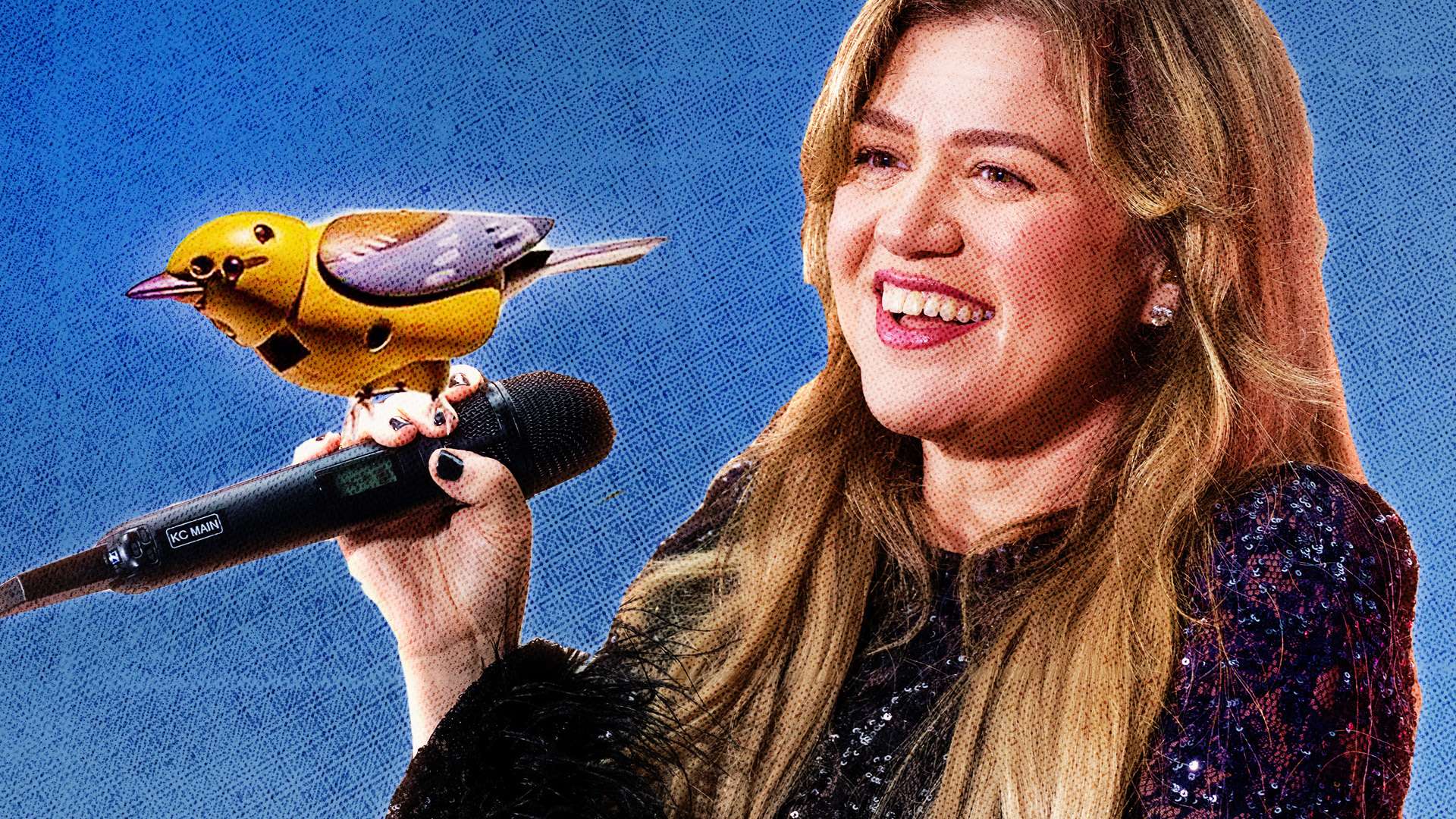
The pop icon’s quarrel with Art of Play—a Brooklyn toy shop—demonstrates how rapidly personal spats can balloon into a nationwide crisis. In this instance, there appears to be a single avenue out of the mess.
Pretty Woman is hailed as the supreme example of a romantic comedy. In the film, Julia Roberts portrays Vivian, a woman plying her trade in Los Angeles who stumbles into a weeklong escort engagement with a wealthy businessman. This prospect necessitates a fresh wardrobe, ideally one that covers less of her legs with thigh-high boots and more with actual clothing. Upon entering a store along Rodeo Drive in Beverly Hills, it quickly becomes clear that she is not welcomed.
She returns later—this time looking less like a downtrodden heroine and more like someone on a polo field—to deliver one of cinema’s most memorable lines. “Big mistake,” she informs the sales associate who rejected her, her shopping bags heavy with spoils. “Big. HUGE!”
Life imitates art; art imitates life. In the present day, we have a contemporary Vivian, updated for the 21st century: an American Idol winner shopping not for Chanel and Valentino but for a yellow animatronic bird (naturally). And this Vivian is not without a public presence online.
“Just drove all the way to Brooklyn to check out this store I thought looked really rad and had a few things in mind to buy and literally was looked at as if I couldn’t afford it and was told he could find something comparable for me,” the singer Kelly Clarkson wrote on X. “Wow, dude. You’re an idiot and just lost a huge sale. But y’all should go check out Art of Play in Brooklyn if you enjoy being treated like Julia Roberts [sic] character in Pretty Woman.”
Just drove all the way to Brooklyn to check out this store I thought looked really rad and had a few things in mind to buy and literally was looked at as if I couldn’t afford it and was told he could find something comparable for me. Wow, dude. You’re an idiot and just lost a…
— Kelly Clarkson (@kellyclarkson) October 10, 2026
At the time of this report, that message has racked up millions of views. It has sparked a news cycle, a formal response from Art of Play, a reply from Clarkson, a further rebuttal from the shop, and a chorus of negative online ratings from people who may never have set foot in the store. It serves as a stark reminder of how Vivian Ward’s reformulated moment—the moment when an unpleasant encounter with a rude employee becomes a national tale—can now anchor a microcosm of fame in the modern era, placing a small business under intense scrutiny.
To add a few clarifications for context: Clarkson reportedly desired the bird named “Molly,” which is affixed to the wall and not available for purchase. Clarkson contends that during their exchange she pointed to the price tag and asked whether it was for sale, only to be told that, while it was indeed for sale, the asking price was $15,000 and a comparable item could be found if she wished. The store disputes that exact sequence, noting that the conversation about sale and price did not unfold as described and that Molly itself is not for sale.
Here comes the plot twist. Art of Play states that Molly is permanently mounted to the wall and serves as a de facto mascot for their shop, but that a nearly identical automaton is owned by the creator of the devices, a gifted artist named Bliss Kolb who resides in Seattle. Kolb indicated he would consider parting with Molly’s twin for $15,000. The shop says it also explained all of this to Clarkson and even offered to show her an alternative singing-bird automaton…a potential purchase she could have taken home that day for a markedly lower price of $2,000. An absolute steal, if one accepts the offer. Yet, according to the narrative, Clarkson did not linger long enough to see it through.
Thus we end up with two overlapping, yet ultimately divergent, versions of a cultural moment—an avian feud that may well have been captured by a ceiling-mounted camera. It is an intriguing coincidence.
Let us pause to consider a couple of observations. First, how emblematic is it that Clarkson began by noting she “rode all the way to Brooklyn,” likely from Manhattan where she maintains a residence, as if she had crossed into some distant, almost mythic realm? There is a long tradition of melodrama in major American cities when crossing neighborhood borders—convincing a native Angeleno to come downtown for lunch in Koreatown is a tall ask, and Clarkson embodies the American pop icon archetype.
Second, why are we, as a nation, adjudicating a pop star’s quest for a talking robot? It feels almost ridiculous to insist on a canonical origin story for Molly—the bird that captivated national attention—when any one of us could share an equally mundane sibling tale. It is fair to assume the employee in question was not exactly beaming, though Brooklyn can cultivate a cool, brisk persona where reserved service sometimes reads as stylish. Still, did we truly need to mobilize millions around a toy store over a five-minute exchange? Could Clarkson not simply post a review online? (And yes, there are fake posts circulating; a few, like those from “Baba Baka,” urge readers not to patronize the store claiming the owner hurled slurs. Skepticism is warranted.)
What made Vivian Ward’s Rodeo Drive moment so gripping? It was the personal, intimate strike. She enters the shop with purpose—eye contact locked on the stylish clerk with the braided updo and the late-’80s, early-’90s vibe—and speaks her mind. She does not attempt to marshal all of Los Angeles to stage the takedown with her.
Clarkson is, of course, entitled to express herself as she wishes. Yet that alone doesn’t guarantee prudence. Her actions might backfire—despite an avalanche of online backlash, Art of Play has attracted thousands of new followers and could become a short-lived but notable destination, fueled by morbid curiosity. In general, though, volatile altercations and misunderstandings between individuals do not need to become seismic—and potentially ruinous—national events, as we have witnessed in recent years. We can press reset.
But this time, perhaps not. The moment has extended beyond the personal, drawing in national attention, and closure seems mandatory. Art of Play stands to release the security footage of the exchange. Was Clarkson more a Vivian Ward or a Veruca Salt? It’s time to roll the tapes!
