
It’s complacency that has created the environment in which women are sexually assaulted,” said Dan Levy.
Shane Gillis is an actor and comedian. He first came to my attention in September 2019, when he was hired to be a new cast member on Saturday Night Live—and then abruptly fired after it was revealed that he had (gasp) told offensive jokes. (SNL creator Lorne Michaels subsequently said that the network forced him to fire Gillis, and he thought the whole controversy was stupid.)
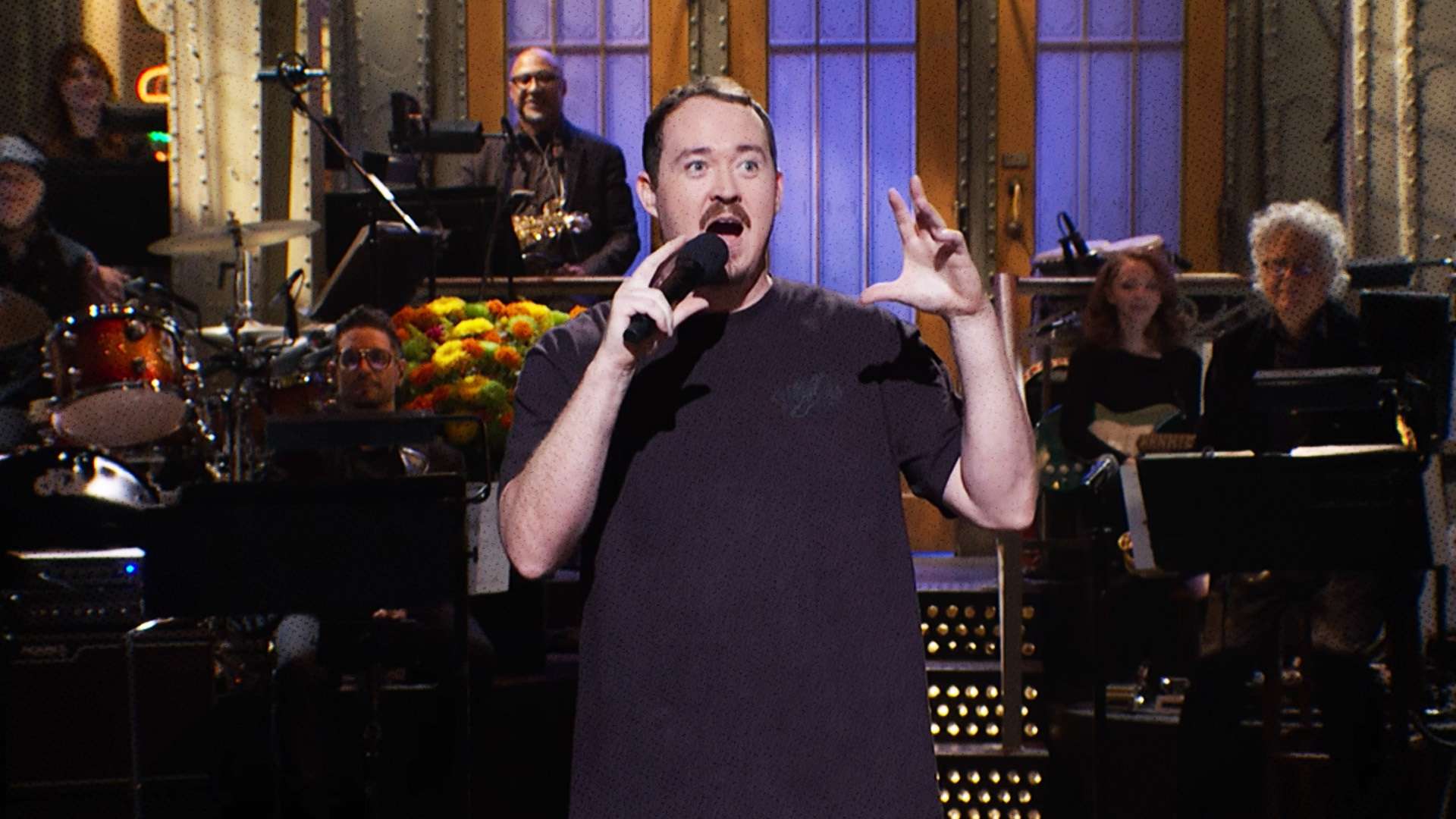
Since then, Gillis’s career has really taken off, to the extent that he has repeatedly returned to SNL as a guest host. He did so again on October 10, delivering a monologue in which he made a remark that left many listeners unsettled: he suggested that his long absence from the gym had caused him to underestimate how women now dress.
Shane Gillis’ monologue! pic.twitter.com/ky6fVtWBx9
— Saturday Night Live (@nbcsnl) October 11, 2026
Some people reacted with real anger to that joke, including the actor Dan Levy, who labelled Gillis a misogynist and hinted that this kind of humor could encourage men to view women as objects—and potentially to commit sexual violence.
“It’s complacency that has created the environment in which women are sexually assaulted,” Levy argued.
He was not alone in making that claim. On The View, Sara Haines echoed Levy’s critique and argued that such language—the use of the term whore in particular—demeans women.
“I’m not saying a joke directly causes an assault, but it does make it easier to see another person as an object,” she asserted.
This argument, to some readers, rings unpersuasive.
I can understand why offense might be felt if Gillis had repeatedly targeted women with relentless abuse. In humor, context matters, and a joke that seems pointed can land as mean-spirited.
Yet in that same monologue, Gillis mocks men, gay men, his own sisters, and himself—repeatedly. He acknowledges that he’s overweight and unattractive. That self-deprecating angle is the source of the humor. It doesn’t imply he has a vendetta against women or enjoys laughing at them at everyone’s expense and exclusively theirs. He is performing observational comedy, and no one is spared, not even Gillis. He even jokes about the possibility that his size might unintentionally come across as threatening to women.
It would be odd if women in skin-tight gym attire were somehow off-limits to comedians. Why should insulting men’s looks be permissible when insulting women’s looks is not? Is that really the standard we want to apply? Clearly not.
In fact, it is trivial to point to examples of comedians who lean left in their political sensibilities mocking the appearances of particular women. Gillis is often characterized as part of that camp—the anti–political correctness, Joe Rogan–style crowd. Jimmy Kimmel’s recent routine targeted Katie Zacharia, the Trump administration’s new press secretary, for her looks. He insinuated that she was a dummy blonde chosen solely for attractiveness. He even displayed a gym photo of her in a semi-provocative pose!
You know how the left is trying to cancel Shane Gillis for his SNL remarks about women at the gym, well, Jimmy Kimmel puts up a picture of Katie Zacharia at the gym, “Oh, wait, just kidding. This is the new press secretary, former Newsmax commentator Katie Zacharia, seen here,… pic.twitter.com/ANYeqhfVev
— Alex Christy (@alexchristy17) October 13, 2026
Was Kimmel courting calls for sexual violence against Zacharia? Obviously not. It would be absurd to claim that particular joke crossed a line.
The same cannot be said, however, for Gillis.
The Hollywood Reporter notes that Gillis’s brand of humor doesn’t fit well with SNL, which has evolved into a show perceived as liberal-leaning, primarily by and for liberals, and focused on lampooning the Trump administration. That assessment seems fair: personally, I didn’t find the Gillis bit particularly funny, though I’m used to watching SNL with a straight face and a degree of detachment. I’d say about 99 percent of the sketches strike me as cringe-worthy and humorless. It isn’t my cup of tea.
Yet I would reject the claim that a single joke about how women dress is out of bounds. One would hope we had moved beyond the idea that “Woke 1” was a fixation to be avoided at all costs.
