
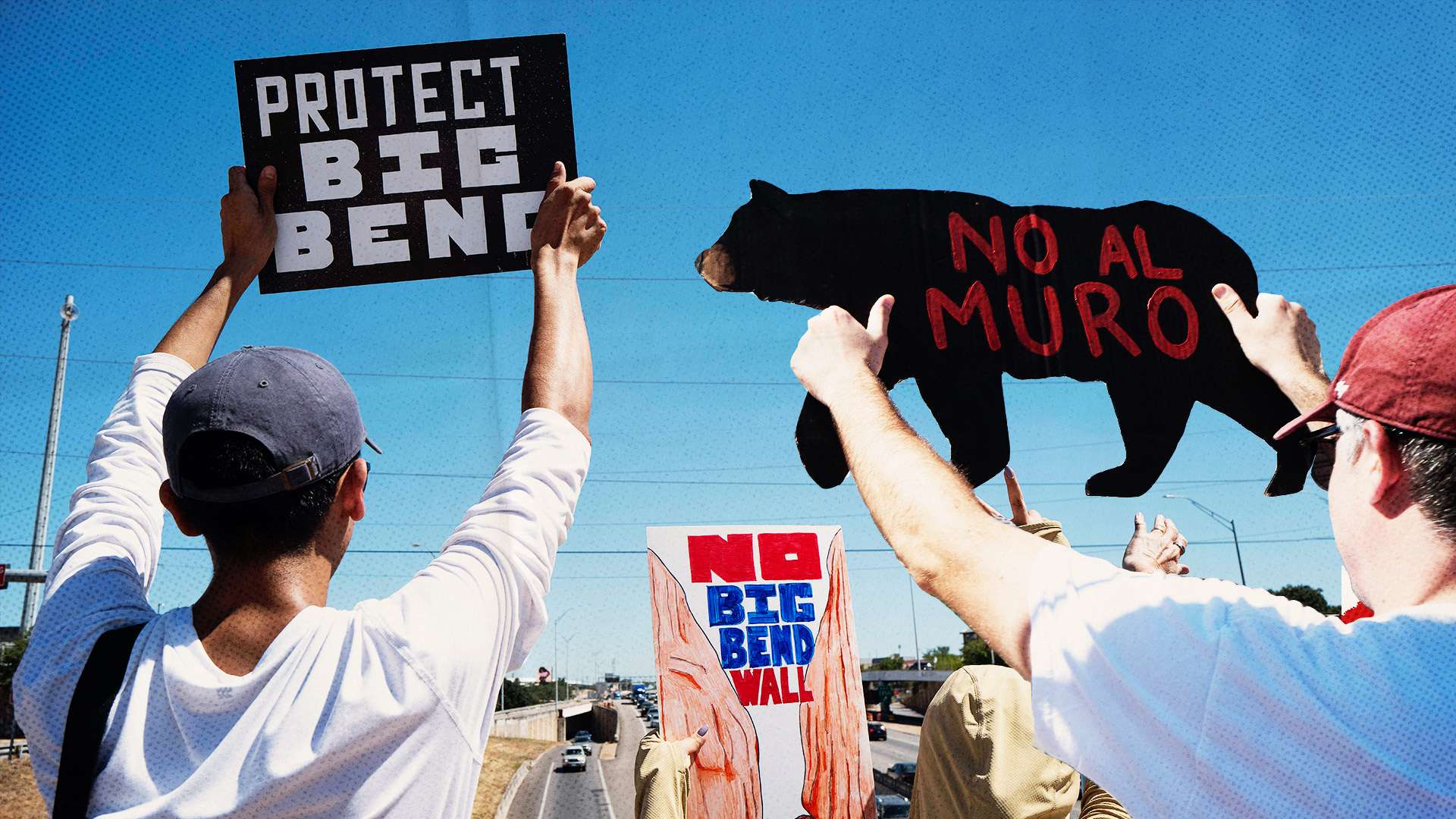
The Trump administration’s bid to accelerate the building of the president’s much-anticipated border barrier through Texas’s secluded Big Bend area has paused amid strong opposition, demonstrations, and lawsuits filed by landowners and conservation groups.
A federal judge on Wednesday published an opinion detailing why she granted a preliminary injunction that blocks border-wall work in the Big Bend region. U.S. District Judge Kathleen Cardone determined that the plaintiffs, including the Center for Biological Diversity and several longtime locals, had shown a real threat of irreparable harm if construction continued.
The administration aims to invest $7.5 billion in extra security infrastructure along a 500‑mile stretch of the U.S.–Mexico border that runs through the Big Bend area, which includes Big Bend National Park. The government began sending notices to landowners this summer informing them of its intent to acquire the necessary parcels, and it waived several environmental rules, enabling bulldozers to begin work inside the park by September.
Nevertheless, a number of groups and local landowners argue that the border-wall project would change their way of life and permanently scar one of the most rugged and pristine landscapes in the nation. The plan drew bipartisan criticism and public protests.
The injunction provides only a temporary pause for landowners like David Keller, an archaeologist who also guides river trips on the Rio Grande. The original expansion plans would have sliced through Keller’s 10-acre parcel near Redford, Texas, placing a 30-foot-tall barrier on the levee between the river and the remainder of his property.
Keller says the Trump administration severely underestimated how much anger its tactics and posture would ignite.
“It’s a level of arrogance— they’re accustomed to bulldozing over people,” Keller remarks. “They moved forward as if any resistance would be avoided, but they’re in for a wake-up call. And they’re getting it right now.”
Keller is a plaintiff in a separate DHS suit brought by Conserve Big Bend, a coalition comprising landowners, conservationists, river guides, researchers, and other affected parties.
Keller notes he has loved wild, open landscapes since childhood, and after seeing the region in the 1990s, he resolved to live and work there, a life he has maintained for a quarter-century. “It’s visually magnificent,” he says. “It’s incredible. It’s unlike any other place I’ve seen. It’s one of the last unspoiled areas remaining in the lower 48.”
He adds that it’s also the place where he expects to be laid to rest, though he’s unsure whether to say “plans” or “planned.” The proposed border construction represents an existential threat to the life he has built, he says, and if the wall goes up, he would likely relocate.
“I didn’t come down here to live in a cage,” Keller declares.
The border wall would not only block river access for farmers, ranchers, and outdoor enthusiasts along the river, but it would also obscure the view of Mexico and undermine “the whole atmosphere of the place, the cross-border culture we’ve developed,” Keller observes.
“The unrebutted evidence shows that the Big Bend Sector is, by a wide margin, the area with the lowest rate of migrant apprehensions along the entire U.S.–Mexico border, both in absolute numbers and per mile of border,” Cardone wrote. “Therefore, if the Big Bend Sector is deemed an area of high illegal entry, so is every other sector, and the waiver authority should apply to the entire U.S.–Mexico border.”
