
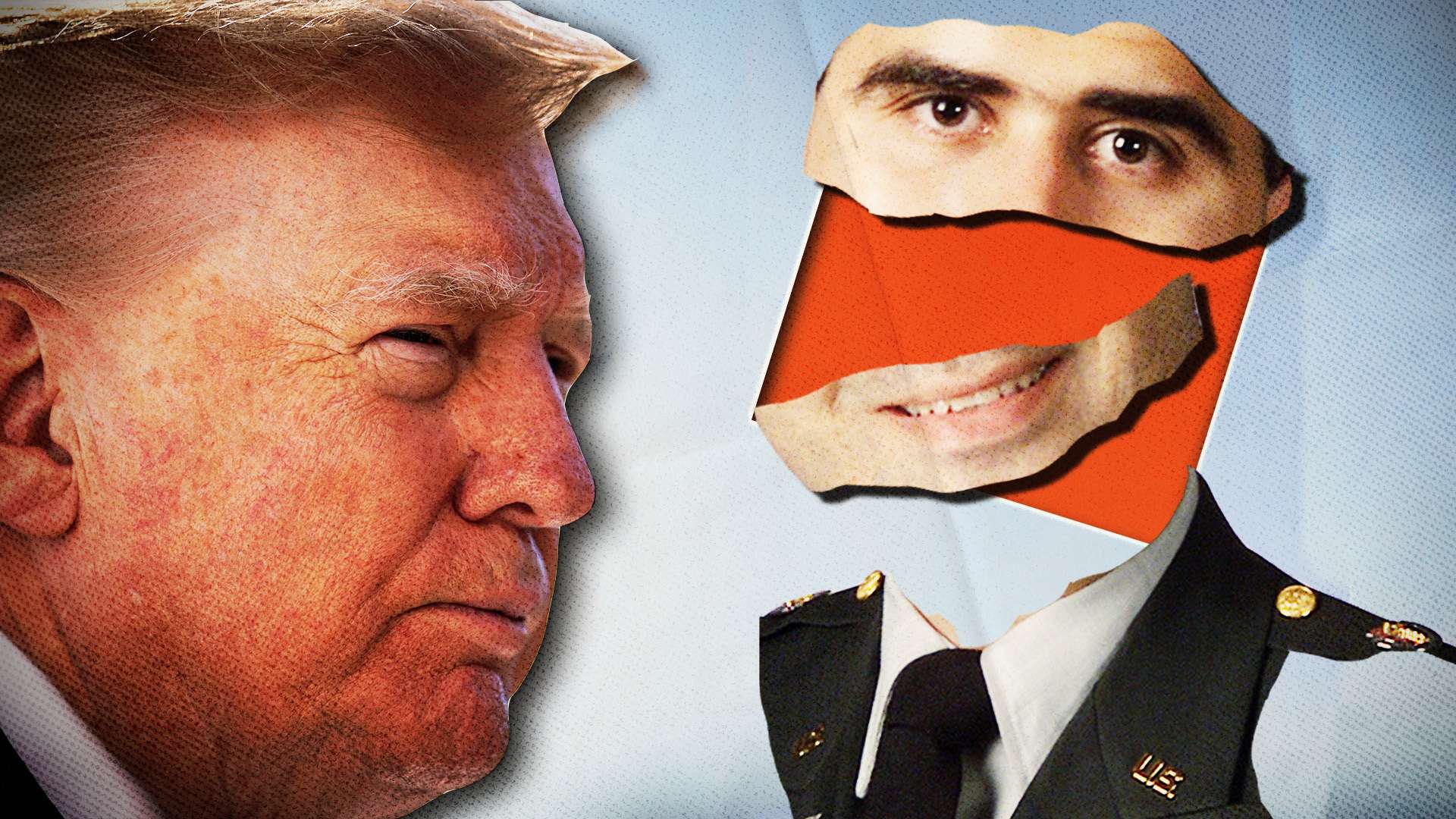
The Trump administration’s plans to livestream Nidal Hasan’s execution ran headlong into a deep-seated skepticism, dating back to colonial times, about displaying graphic state power in public.
President Donald Trump on Thursday canceled plans to live-stream the December 3 firing-squad execution of Nidal Hasan after the proposal provoked broad revulsion.
Defense Secretary Pete Hegseth announced last week that the U.S. government would broadcast Hasan, a former Army major who killed 13 people at Fort Hood in 2009, facing a death sentence handed down by a court-martial in 2013.
It would have marked the first public execution in the United States since a 1937 hanging in Missouri, though the most famous prior public execution occurred a year earlier in Kentucky. Rainey Bethea, a Black man, was hanged before an audience of roughly 20,000 in Owensboro. Two years later, Kentucky became the last state to ban public executions.
The livestream plan drew comparisons to Taliban practices. The U.S. Conference of Catholic Bishops condemned it as “a barbaric promotion of a culture of death.” In The Lamp, an orthodox Catholic journal, Matthew Walther argued that it would be the “first ever government-sanctioned snuff film in American history.”
Yet, Trump and Hegseth weren’t merely contending with liberal and religious sensibilities; they confronted a deep-rooted American aversion to bloody displays of state power that stretches back to the colonial era.
Lynn Novick, the director of Ken Burns’ forthcoming PBS documentary series Crime and Punishment in America, told Reason that public executions “haven’t been a regular part of American life since the Colonial time in the early years of the Republic, and there’s really good reasons for that.”
One of the many grievances voiced by colonists about oppressive British rule was England’s expansive criminal code, derisively called the “bloody code” for containing more than 200 capital offenses.
“In Colonial America, [an execution] was an everyday occurrence,” Novick notes. “There were executions all the time, and one of our scholars told us that most people would have seen someone executed in their lifetime.”
Proponents of excessive capital punishment also ran contrary to evolving Enlightenment theories that punishment should be proportional to the crime, not driven by revenge or bloodlust.
Perhaps more importantly, public executions tended to be unruly affairs that, instead of reinforcing state authority, inflamed the passions of mobs to dangerous levels. “In many cases, crowds would become very boisterous, riotous, angry, excited,” Novick explains. “There were sometimes violent outbursts at these events.”
Consequently, many of the Founding Fathers regarded frequent public executions as disruptive to the fragile social order. The early American republic moved away from sanguinary spectacle in favor of building a stable, virtuous citizenry and severing itself from Europe’s tradition of public torture and execution.
As Reason described in a recent cover story, this shift culminated in the invention of the American penitentiary in the early 1800s, marketed as a humane and rehabilitative alternative to the whipping post and gallows.
States transitioned from public to private hangings behind the walls of modern prisons in the late 19th and early 20th centuries, before adopting the electric chair. This change wasn’t driven solely by humanitarian concerns, especially in the South, where public executions often took on quasi-religious overtones, with the condemned declaring their ultimate triumph over death (and the state) through Jesus Christ.
“Executions had contested meanings,” Michael Ayers Trotti wrote in The End of Public Execution. “They were moments of justice, of state power; but they were also moments of religion, exceptional moments that transcended normal life.”
The primary reason public executions faded, though obvious to anyone with a pulse, is simple: it’s strange and dehumanizing to gather in a crowd to witness someone being killed, and to participate in the government’s display of its power to take a life.
Rachel Abbott, who witnessed Bethea’s 1936 hanging when she was five years old, told WKU Public Radio in 2016 that she endured nightmares about it for years afterward.
“I remember it well, but I didn’t want to,” she recalled. “I tried to get away from it because it was hurting me so bad. I started having me nightmares after I was older. It’s like his spirit was just hanging all around me. The first thing you’d know I’d start crying because I felt he wanted me to help him get buried, get sent back to his gravesite by his father. I still have tears running when I think of it.”
