
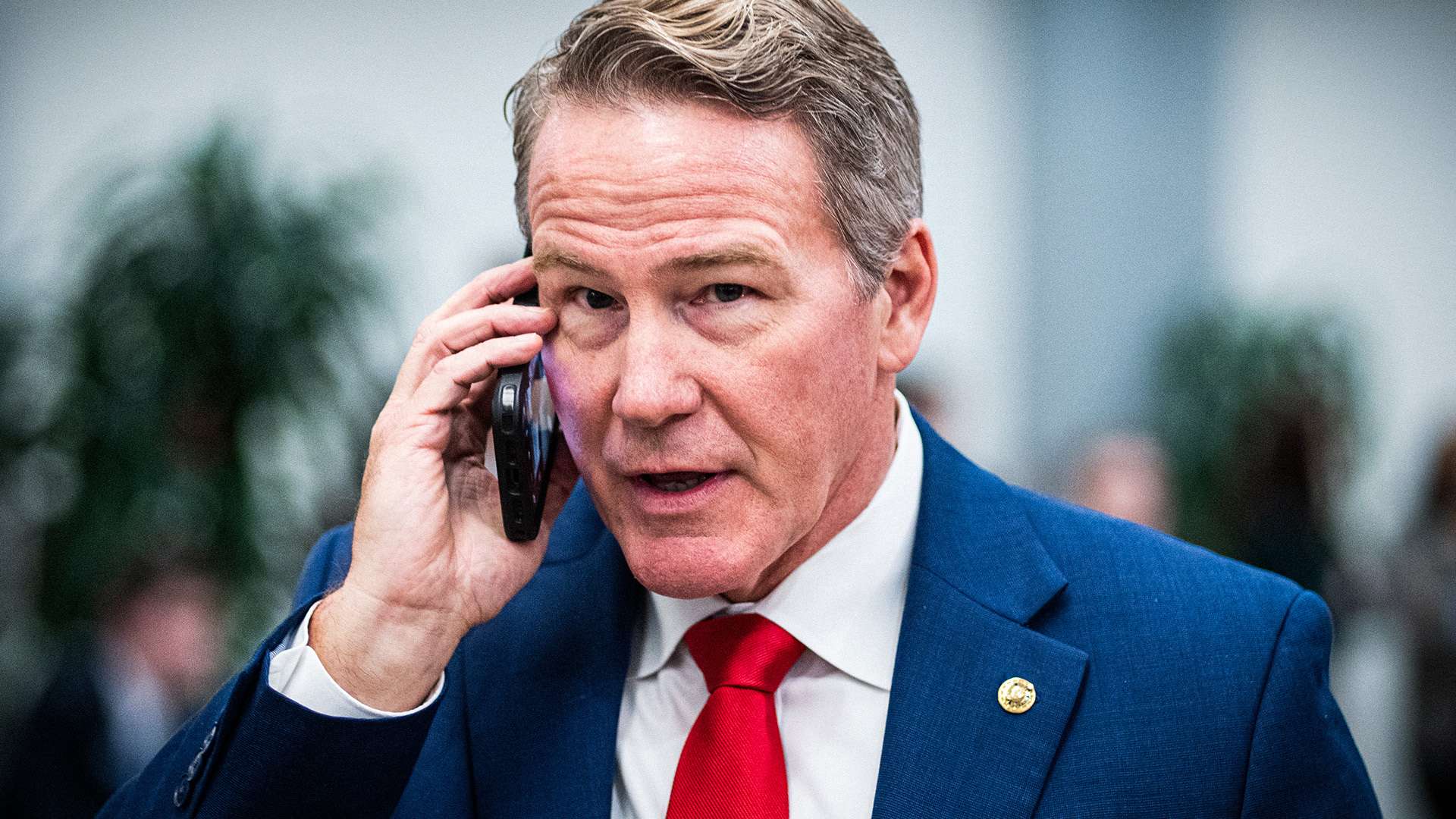
Can Republicans spend their way to electoral gains in Ohio? A report from The Washington Post indicates that GOP campaign committees have saturated Ohio with ads, tallying roughly $19 million in competitive races through October 12 in an effort to promote the tax policy once dubbed the One Big Beautiful Bill. Yet that messaging appears to be losing its grip as voters wrestle with tariff-driven price increases and tensions over Iran, which have driven up the cost of everyday goods. The advertising surge is notable for being the largest expenditure on a single issue in any state with closely fought races, and its goal is to shore up vulnerable Republican candidates in a state long viewed as safely Republican for much of the past decade.
Republicans across the Midwest—and the country—have experimented with distancing themselves from the Trump administration and its agenda; it remains to be seen whether this strategy will prove effective or merely come too late. In Ohio, though, most Republican hopefuls stay closely aligned with the former president.
Sen. Jon Husted, the Republican candidate challenging Democrat Sherrod Brown for a U.S. Senate seat in what polls suggest could be an extremely tight race, is seeing ads frame him as a ally of Trump’s policy priorities—highlighting positions such as ending taxes on tips, overtime, and Social Security, plus a $200 million investment in rural hospitals. Still, it’s uncertain whether this line will be enough to push voters past concerns about tariffs, inflation, and gas prices. A New York Times/Siena poll found that 79 percent of likely Ohio voters disapproved of Trump’s handling of gas prices. It’s hard to sell a tax cut when tariffs are effectively a tax on consumers every time they shop; Ohio voters may not be so easily swayed.
Gun laws in Oregon: In the wake of the tragic shooting at a Bend elementary school, where a 16-year-old killed three young children and a teacher, some parents with elementary-aged children are asking what laws could be altered to prevent such tragedies.
Yet The New York Times notes that Oregon already receives strong marks from gun-safety advocates for its firearm regulations. Organizations like Everytown for Gun Safety rank Oregon highly for the strength of its laws, pointing to recent measures that tighten storage requirements, ban untraceable ghost guns, and prohibit devices that convert semiautomatic rifles into fully automatic weapons. However, gift-giving laws remain comparatively lax, and this may reflect part of what happened: the 16-year-old’s mother appears to have purchased a Maverick 88 12-gauge pump-action shotgun for him, suggesting she may have gifted the gun to her son or that he obtained it from her. In Oregon, as in other parts of the American West and South, there has long been a tradition in which parents hand down rifles and shotguns to minors, a practice that complicates the prevention and policing of such incidents.
There is no law capable of completely preventing a theft of firearms, especially when the thief is a teenager living in the same home where the gun is kept. Nor is there a straightforward legal shield against parents who gift weapons to youths they misjudge as responsible. These realities are deeply unsatisfying.
Prosecutors could, of course, pursue charges against the parent in cases where a teenager’s actions lead to harm, potentially ranging from reckless endangerment to manslaughter or criminally negligent homicide—a felony punishable by up to 10 years in prison—according to the Times. Yet such prosecutions would require proof beyond mere parental awareness that a child was troubled; they would need evidence that the mother consciously ignored—or, in cases of criminal negligence, failed to recognize—a substantial and unjustifiable risk.
Scenes from New York: Mayor Zohran Mamdani announced on Monday that New York City will extend free childcare for 2-year-olds to Staten Island and the entire Bronx as the city moves to add 10,000 seats in the next school year. The New York Times explains why this plan may face challenges:
QUICK HITS
- For a change of pace, a provocative reflection on modern consumer culture: “I’d been meaning to slow down my vibrator for a long time, yet I kept it private, until I realized this isn’t just my problem. There’s a surge of egg-shaped suction devices featured in New York magazine, and BookTok creators are partnering with sex-toy brands for promotions. Yes, there’s even a bookmark that doubles as a vibrator,” writes Sarah Hepola for The Atlantic. “Does this push toward self-pleasure and self-care through a spectrum of gadgets really improve life, or is it simply another form of speed and efficiency in an already fast-paced world?”
- “Next year, I will give one of my SpaceX shares to every kid in America,” Elon Musk proclaimed on X yesterday. “This will be the first of many.”
- Mahmoud Khalil, a Columbia University graduate detained by Immigration and Customs Enforcement amid campus protests last year, appealed to the Supreme Court on Monday to block his deportation, reports The New York Times. Khalil, a legal permanent resident married to an American, became a prominent case in President Trump’s crackdown on pro-Palestinian demonstrations on college campuses.
- Is California’s new billionaire tax a net loss for state revenue?
- Try your hand at the discretionary review computer game—see how far you can advance as a developer in San Francisco!
