
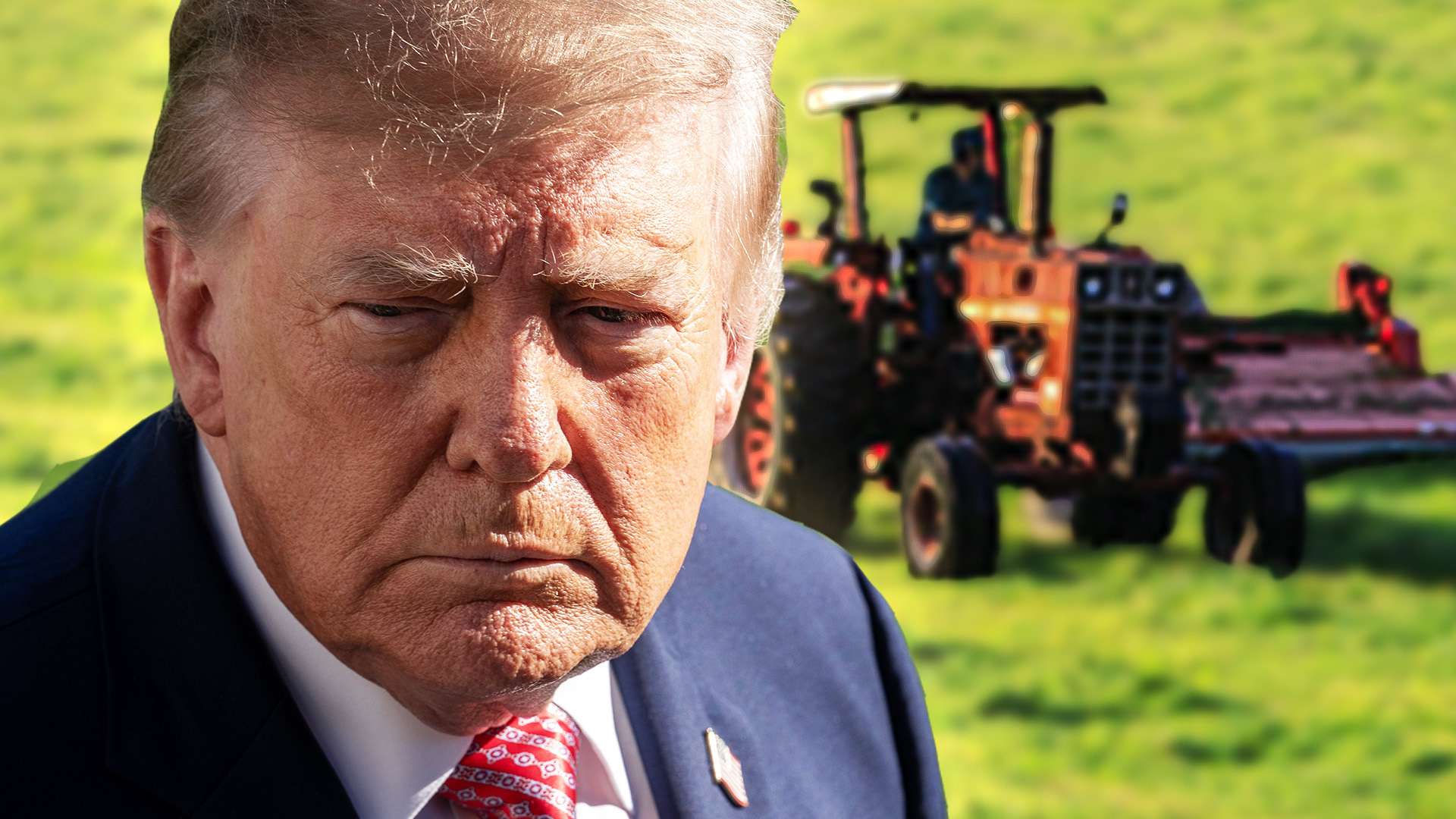
The newly unveiled Harvest Fuel Relief initiative stands as the most recent round of aid directed at farmers pressed by the president’s ongoing war and the tariff regime.
Earlier this week, the U.S. Department of Agriculture (USDA) announced it would allocate $8 billion in one-time payments to American farmers for this harvest season, aimed at cushioning temporary market volatility and higher input costs.
Support under Harvest Fuel Relief will be distributed according to a formula built on the USDA’s estimates for production, yields, and prices, delivering straightforward, proportional aid to growers. It will cover only a portion of the predicted losses for the 2026 crop year. The Farm Service Agency, a USDA division that manages credit and loan programs, will oversee the $8 billion as one-time payments, drawing from the Commodity Credit Corporation—a federal body empowered to borrow as much as $30 billion from the U.S. Treasury to back agricultural initiatives. Rates of payment will be announced in November, and the USDA notice hints at possible further disbursements for non-Title I commodities, including specialty crop producers and fishermen.
A fiscally questionable decision, the program comes at a time when farmers are feeling a significant price pinch. The dyed diesel American farmers and ranchers use is exempt from state and federal highway taxes, but that has done little to offset skyrocketing fuel prices. In September, the American Farm Bureau Federation projected that fuel expenses would reach $22 billion this year, up 29 percent from 2025. The Farm Bureau estimates that total production expenses will reach nearly $500 billion in 2026. According to its own predictions, the USDA doesn’t expect the situation to improve anytime soon.
In its most recent Commodity Costs and Returns report, published in June, the USDA anticipates that farmers and ranchers will face unprecedented production costs in 2027—surpassing the levels seen during the COVID-19-era supply disruptions—driven by higher prices for essential inputs such as fuel, fertilizer, seeds, machinery, and labor.
While the USDA attributes these increases to temporary market disruptions, critics argue that the root causes lie with the administration’s policies, including a conflict in the Middle East. By Tuesday, the hostilities involving Iran and the resulting shocks to world diesel supplies had raised the U.S. national average price by $2.70 per gallon versus a year earlier—a jump of about 74.6%, according to AAA.
More broadly, the Iran conflict is only one facet of a broader set of Trump-era policies that have increased costs across the board for Americans, farmers included. Tariffs on imported fertilizer, first imposed in 2020, have added to the challenge of obtaining essential supplies. The Farm Bureau estimates fertilizer expenditures for 2026 could reach a record $40 billion, a 15 percent rise from the prior year.
The $8 billion allocation forms part of a broader influx of taxpayer funds directed to farmers as compensation for damages alleged to have arisen from the president’s policies. In December, the USDA distributed $11 billion in one-time bridge payments to over half a million farmers across the country. And earlier this month, the department announced a record $13.8 billion in gross payments to agricultural producers intended to offset revenue losses.
During a Kansas appearance promoting the program, the president asserted that Kansans would experience a sharp drop in prices after the conflict concludes. Such a claim is probably overstated, especially in light of other controversial economic policies he appears determined to pursue.
Nevertheless, the underlying idea—that ending the war would aid farmers, ranchers, and consumers—should be considered on its merits, without resorting to further multi-billion-dollar government bailouts for a single sector.
