
Many court employees put in genuine effort, and a good number share a sincere desire to assist the public. Yet they operate within a framework that offers no reward for saving jurors’ time.
I know I shouldn’t let my anger take over. It isn’t healthy.
Just last week, I received a summons from New York state to serve on a jury.
I appeared, as required. It’s the law, and I felt bound to fulfill my duty.
A jury can shield the innocent from government overreach; ordinary citizens, not officials, determine guilt.
Yet performing our civic duty shouldn’t mean surrendering hours to bureaucratic indifference. Administering justice matters; simply sitting around doing nothing isn’t.
Over five decades in consumer reporting, I’ve watched profit-driven companies relentlessly improve and discover better ways to operate. They use computers, adjust hours, and shorten wait times.
If they don’t, we customers quickly switch to competitors who will.
But government bureaucracies—courts, the DMV, passport offices—face no market rivals. So their incentive to improve is weak.
State power is coercion.
My summons arrived as a paper notice in the mail.
Most businesses now communicate with customers instantly, by text or email. Airlines send boarding passes to our phones. Doctors text reminders. Restaurants alert us when our table is ready.
But government still relies on paper.
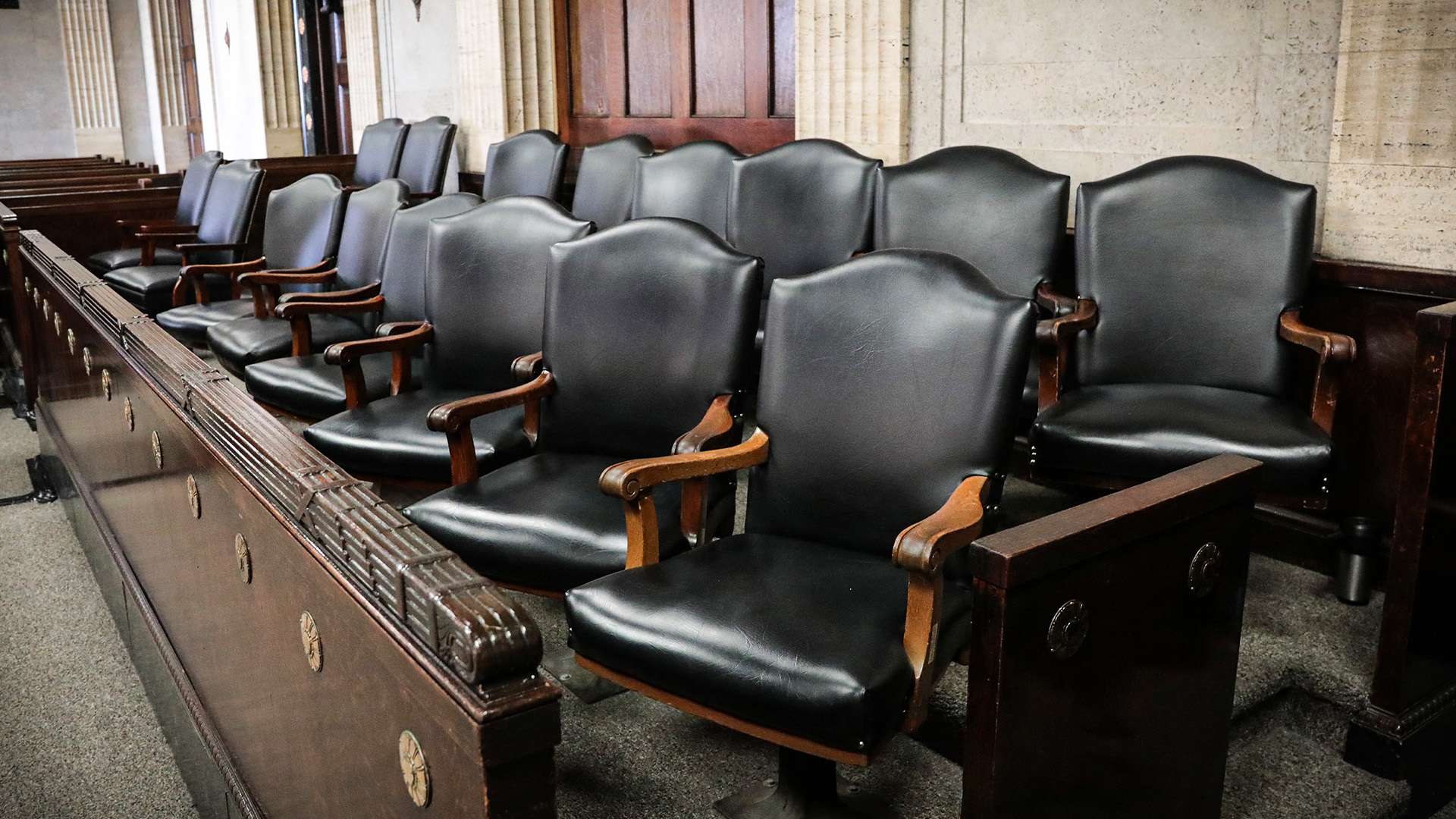
The summoned jurors arrive meekly at the courthouse and wait. And wait.
I’m aging, and staying hydrated matters. At least the place should have a water cooler and a drinking fountain. Oh, and neither one works.
We sit for another hour.
Eventually, a bored clerk drones on with lengthy instructions for filling out a form. Printed directions would be better—a video would be much better. But this is government, and bureaucracies have little incentive to innovate.
Finally, clerks select eighty of us to be considered for a criminal trial, and tell us to “Wait in the hall.”
We wait.
Then they tell us, “Go across the street to another building, and wait there.”
We go.
After an hour, we’re admitted into a courtroom, where another official says, “Come back Monday.”
Monday! This was the Thursday before. Imagine an airline telling eighty passengers, “Welcome to the airport. Your flight is in five days. Come back then.”
No airline would endure such a practice.
But courts operate without competition.
When the trial finally begins, a stenographer types away, recording what is said. Modern computers can transcribe speech instantly, accurately, at almost no cost, but New York taxpayers still pay someone to type every word.
Meanwhile, e-commerce and retail push efficiency: Amazon tests faster delivery, supermarkets install self-checkout machines, and banks let us deposit checks simply by photographing them with our phones.
Market competition protects your time while bureaucracies waste it.
No. 1: Spend your own money on yourself. Then you’re very careful about both cost and quality.
No. 2: Spend your own money on someone else. You’re careful about the cost, but don’t care as much about the quality.
No. 3: Spend someone else’s money on yourself. You care less about cost, but still value quality.
No. 4: Spend someone else’s money on someone else. You don’t care about cost OR quality.
That’s what government does.
Some court workers work hard, and many want to help people. But they’re stuck in a system where saving people’s time brings them no rewards.
In my case, 80 prospective jurors sat around for at least six hours, just waiting—that’s 12 40-hour work weeks lost. Some had to hire babysitters, reschedule doctor’s appointments, tell their bosses they’ll try to make up the work at night. Some lost income. Some missed opportunities.
For just one case. Multiply that by thousands of cases: countless hours of human progress vanish.
Why not stagger arrival times? Let jurors wait at home until needed? Use text messages to call people in?
Because innovation takes effort. So courts don’t bother.
They act as if wasting our time is free. It’s not.
COPYRIGHT 2026 BY JFS PRODUCTIONS INC.
