
For the first time in many decades, Spain has a substantial economic advantage over Germany, France and Italy: industrial electricity prices are significantly cheaper than in those countries. In 2024 it was 21% lower than the European average, according to Caixa Bank Research, and it is expected that over the coming decade it will remain far below the levels of the major European economies.
“Spain has a great potential to continue increasing renewable-origin electricity at low prices: there is a commitment to raise renewables to 81% by 2030”
The differential is the result of the rise in gas prices in Central Europe after Russia’s invasion of Ukraine, but above all due to Spain’s strong commitment to renewable energies which in 2024 already generate 57% of the total electricity produced, whereas in 2017 this percentage was only 32.5%. We also have enormous potential to continue increasing renewable electricity at low prices, to the point that we have committed to raising renewables to 81% by 2030 in the National Integrated Energy and Climate Plan (PNIEC).
Our new competitive advantage takes on strategic value in the current geopolitical context when, as the IMF headlined, industrial policy is back. After decades in which the dogma was that the best industrial policy was the one that did not exist, the United States, China and the European Union have exponentially multiplied the number of actions and subsidies supporting their industries. Draghi summarized it last August: “where markets used to be trusted to guide the economy, today there are broad industrial policies” in a speech in which he urged Europe to take urgent measures: “European governments must define in which sectors to focus industrial policy. They must remove unnecessary barriers and review the permitting structure in the energy sector. They must agree on how to finance the gigantic investments needed in the future, estimated at around 1.2 trillion euros per year.”
“Open strategic autonomy, the new paradigm of continental economic policy, has as priority to recover industrial capacity and produce independently and autonomously basic materials, but above all those critical technologies that will define our future
The open strategic autonomy, the new paradigm of continental economic policies, has as its priority to recover industrial capacity and to produce independently and autonomously basic materials, but above all those technologies that will define our future. The objective is for the European Union to take the lead in some of the key technologies and continue supporting the decarbonization of its industry, even the heavier sectors. Masks, technology and, of course, also weapons to defend themselves autonomously from Russia.
Los retos de España y su red eléctrica
Spain has become a preferred territory for industrial localization and investment proposals, national and international, for new industries, technology and energy are multiplying, with green hydrogen projects and data centers taking a leading role. In addition to the new deployments, the essential decarbonization of traditional sectors is added, from the petrochemical hubs of Tarragona, Huelva and Castellón to the blast furnaces of Asturias or the Basque industry.
The novelty is that the critical element that decides whether an industry ends up settling in the territory is the availability of electricity capacity. Key industrial decisions have moved from the Ministry of Industry to the Secretary of State for Energy, who together with Redeia (the former Red Eléctrica) determines whether they can connect to the grid and, therefore, whether the investments are viable. In recent days the new textile fibre factory that Altri planned to install in the interior of Galicia was ruled out, not because of social response or environmental impact, but because the Ministry of Ecological Transition has prioritized investments with greater social and environmental effects. The best way to continue the industrial policy is to analyze the successive “ad hoc” changes to the Planning of the Electric Power Transmission Network.
“The paradox we face is that there are too many industrial projects relative to the capacity of the grid. The number of requests for connections has quintupled”
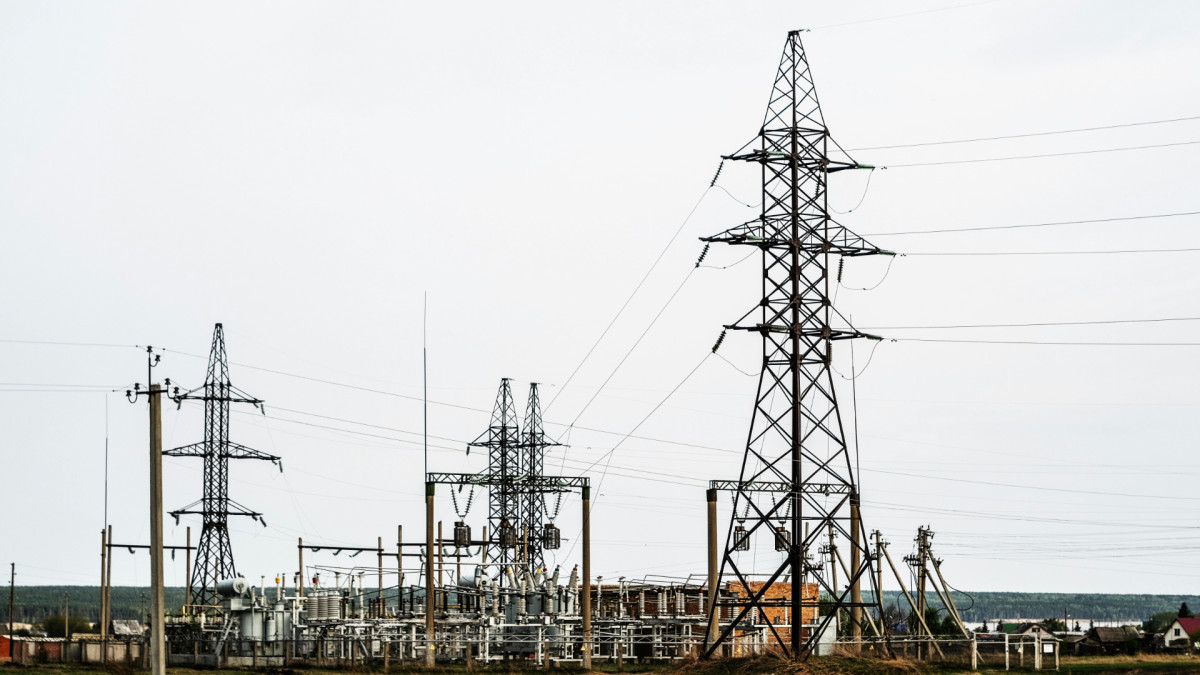
The paradox we face is that there are too many industrial projects relative to the capacity of the grid and its access nodes. The number of requests for connections to the electricity grid has quintupled, and each one of them also requires more power than before. Our electricity networks, the power poles, those structures that are almost always a nuisance in the landscape, have become key elements of the ecological transition and the renewed industrial geography that is being drawn in Europe and in Spain after the pandemic.
The moment is critical due to the urgent need to undertake large investments in the grid to facilitate the installation of new industrial projects and to avoid the second failure of the industrial revolution in Spain, recalling that classic essay by historian Jordi Nadal. But it is equally important to manage intelligently a scarce asset like grid access and select those innovative projects with the capacity to generate employment and spillover effects across the economy. Not all of the proposed projects have the same impact, and many of them are merely containers or almost real estate initiatives, disguised as cutting-edge industry. In the selection process we have a lot at stake.
There are some non-trivial keys to the incipient reindustrialization process that deserve successive reflections in Agenda Pública, and one no less is the rapid recovery of a strong public intervention in the productive economy without governance and intervention instruments having been adapted, nor the mechanisms of transparency and accountability. Who and how is decided that a project is prioritized, strategic or transformative (fashionable words)? They are not minor questions
