
The government says it’s protecting children, but the new rules could push adult smokers back toward cigarettes and push the trade into the shadows.
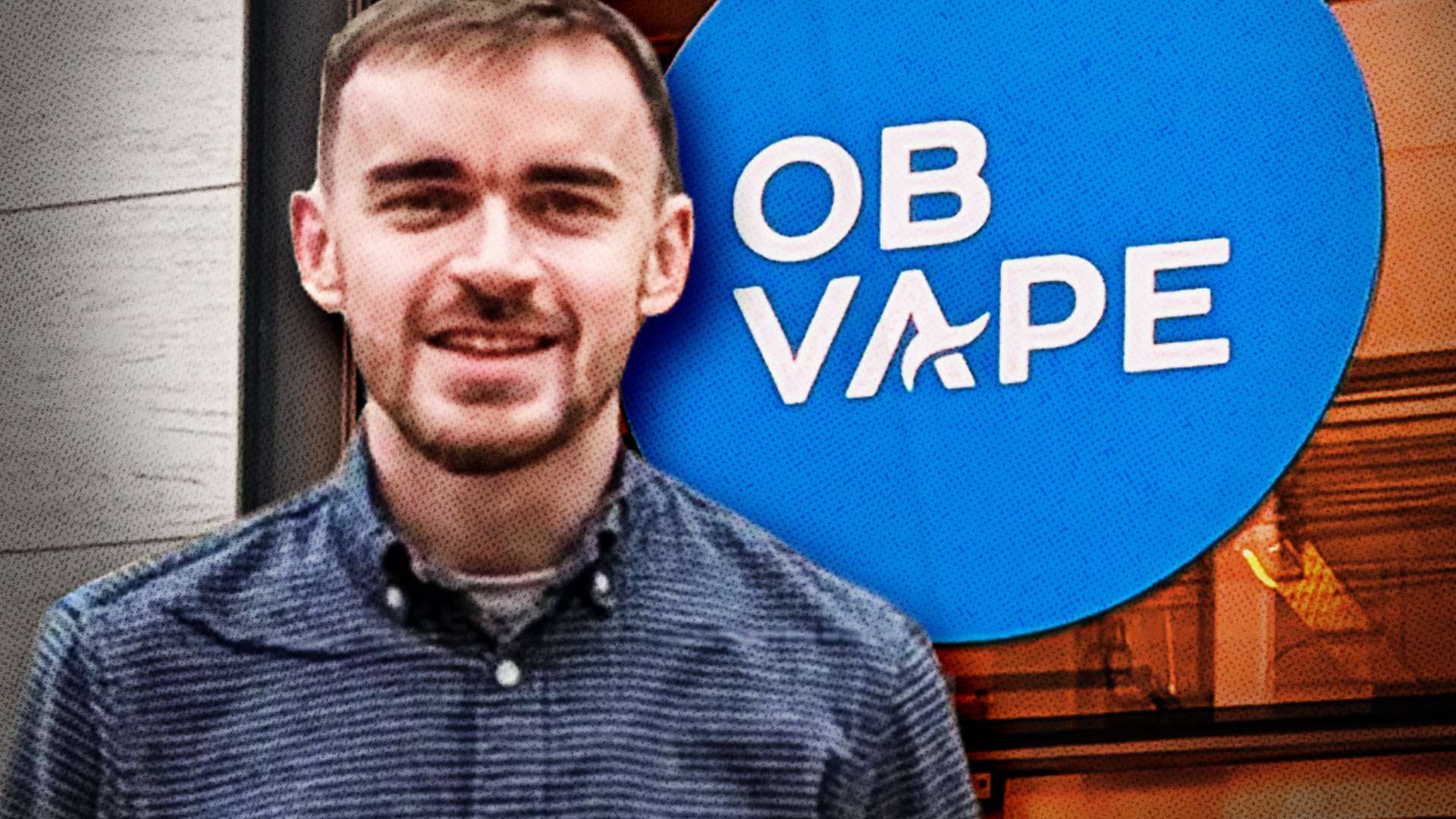
“Am I living in a fucking parallel universe here or something?” asks Eoin O’Boyle, a 28-year-old Irish vape shop owner who now faces the risk of losing his livelihood. “When there’s a policy that makes sense, the government somehow does the opposite.”
Last Wednesday, Ireland’s Seanad approved the final stages of a sweeping public health bill that bars the sale of vaping products with flavor names other than “tobacco” or “unflavored.” The legislation also caps what colors and imagery can appear on devices and packaging, bans in-store and online advertising, and requires most retailers to keep vaping products out of sight from customers.
In a familiar move, Irish politicians urge the public to consider the children. “We are facing a marketing-driven, increasingly aggressive industry pushing attractively packaged, addictive products that entice young people,” public health minister Jennifer Murnane O’Connor said in a statement. “We are responding decisively with measures intended to shield our youth from current and future threats.”
Ireland’s Taoiseach, Micheál Martin, has described vaping as “almost worse than cigarettes,” calling it the “revenge of Big Tobacco.” Yet studies from Public Health England, Cancer Research UK, the Royal College of Physicians, and numerous other bodies show that vaping is far safer than smoking and serves as a highly effective aid for quitting.
“The government is making a reckless move,” says O’Boyle, who runs OB Vape in Drogheda. “It will lead to more deaths and it’s unbelievably frustrating.”
O’Boyle picked up smoking at 12 and quit at 18 by turning to vapes. “I loved smoking. I really did,” he recalls. His mother and brothers also quit cigarettes by vaping. While studying enterprise computing at Dublin City University, O’Boyle worked part-time at a vape shop and saw a chance to build his own enterprise. In 2019, he borrowed a small amount to open OB Vape, hoping to create something akin to an Apple Store for vaping. He says he repaid the loan within six months and has since helped roughly 22,000 customers quit smoking.
Now, however, O’Boyle fears the business he has spent nearly eight years building could vanish. “I never expected to be in a position where I would have to close my business through no fault of my own,” he says.
The health bill marks another chapter in Ireland’s ongoing vape restrictions. In 2023, the country banned sales to minors, followed by advertising limits the next year, and an e-liquid tax scheduled for 2025.
These steps were designed to curb vaping among under-18s. While Ireland’s teenage vaping rate has fallen since 2019 and sits below the European average, teenagers can still access these devices. Official data show: 32 percent of Irish youths aged 15–16 have tried vaping, 16 percent had vaped in the past month, and 7 percent vaped daily. By comparison, only 2 percent smoked daily, and a 2024 report found the share of teens who had ever smoked dropped from 73 percent in 1995 to 24 percent in 2024 (the lowest figure on record).
Looking at adults, smoking remains common across the country. The 2025 Healthy Ireland Survey indicates that 17 percent of the population smokes, with 13 percent doing so daily and 4 percent occasionally.
For those who smoke, vaping ranks among the most effective methods to quit. An August review by Cochrane examined 80 randomized trials involving almost 30,000 participants and found that nicotine e-cigarettes help people quit more effectively than traditional nicotine replacement therapies like patches or gum. The review concluded that vapes yield roughly four additional quitters per 100 people and labeled vaping a “proven and viable option.” Government data even indicates that half of current vapers in Ireland are former smokers.
Ireland’s flavor ban could hinder adults who are trying to quit. O’Boyle argues that flavors are essential for moving smokers away from tobacco flavors and toward cessation. “People don’t want to be reminded of tobacco,” he notes, estimating that around 96 percent of his customers opt for non-tobacco flavors, including menthol and fruit varieties like pineapple.
These observations align with broader research. A 2020 study published in JAMA Network Open found that adults who started using non-tobacco flavors were more than twice as likely to quit smoking compared with those who used tobacco flavors. A 2025 study of 886 smokers, published in Nicotine & Tobacco Research, suggested that non-tobacco flavors were preferred and might be even more effective at helping people stop.
“Without flavors, my business would vanish, and the country’s smoking rates would climb,” says O’Boyle.
Even as the government bans the legal sale of flavors, the illicit market could gain ground. After the Netherlands prohibited non-tobacco vape flavors in 2024, a survey showed that 47 percent of existing vapers continued to use illegal flavors. Of those, more than a third obtained them from overseas shops, while others sourced them from friends, websites, or social media. In Australia, a 2025 government study found that 93 percent of vapers acquired products from illegal channels. Retailers like O’Boyle will be forced out of business, but the unregulated demand will almost certainly be met by the black market.
“The restrictions the government plans to impose, and those already in place, threaten not just my business but the wellbeing of Irish people,” O’Boyle warns.
