
Democrats’ apparent attempt to mislead Alaska voters about who is who in the Senate race is something that deserves strong condemnation. Nonetheless, the far broader harm comes from the habitual falsehoods and manipulations politicians employ by tapping into voters’ gaps in knowledge about public policy.
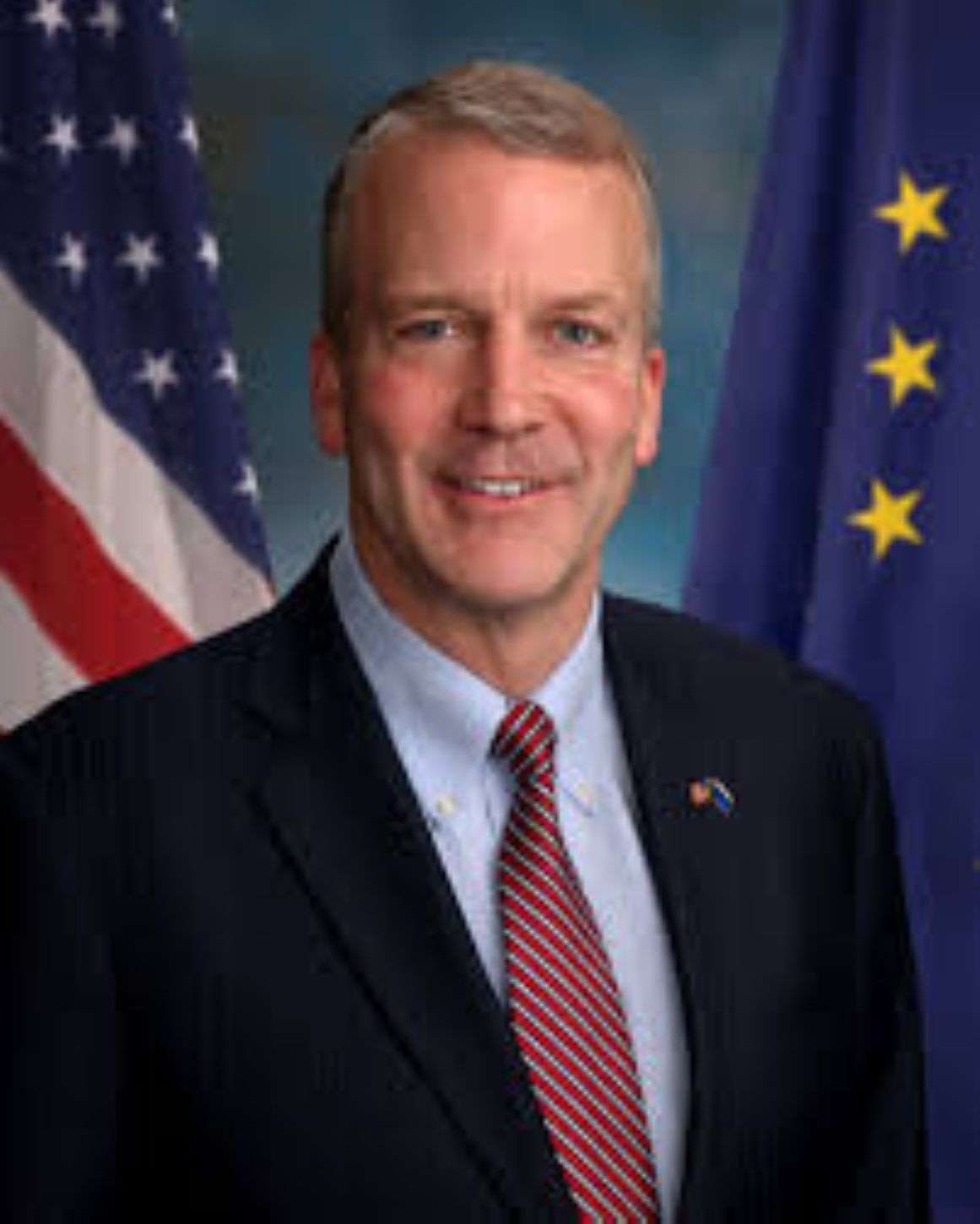
A recent article in the New York Times details an episode during Alaska’s 2026 Senate contest in which Democrats supposedly tried to confuse voters by presenting a second candidate whose name closely resembled that of the Republican incumbent, thereby potentially drawing some support away from him. The sitting senator is Dan S. Sullivan, while the competing candidate bears the name Dan J. Sullivan. The Times notes that some facts remain disputed, and it isn’t entirely clear whether Democratic candidate Mary Peltola was aware of, or approved, the maneuver. Still, it appears that at least some aides and other Democratic operatives may have been involved. Before proceeding further, it is essential to condemn the act itself: attempting to steer voters toward the “wrong” candidate through name similarity is not how a healthy democracy should function. And the fact that political actors elsewhere—some Republicans among them— engage in various “dirty tricks” does not justify this particular tactic. In past writings, I have explained why this kind of action may not be illegal and why the Trump administration’s suit to prevent certification of the Alaska results should fail. I continue to hold that view. A legal scholar like Rick Hasen (a prominent expert in election law) recently underscored in a thoughtful post that the Times’ disclosures do not alter the legal assessment. Yet legality does not automatically render an act legitimate.
That said, it is important to avoid letting this issue overshadow more fundamental concerns. It is worth keeping the issue in perspective and recognizing that there are many other forms of deception and exploitation of voter ignorance that are far more consequential. Confusion arising from candidates with nearly identical names is relatively unusual, and cases where it determined an election outcome are almost unheard of. I am not aware of any such case, though I am open to correction on that point. The Alaska example, however, seems unlikely to be an exception to the general pattern.
In the initial stage of Alaska’s ranked-choice election, which reduces a field to four finalists, only about 2.5% of ballots were cast for Dan L. Sullivan. Mary Peltola led the incumbent by a much larger margin—8.1 percentage points. Even if every single vote cast for Dan L. Sullivan could be attributed to name confusion, which is not a reasonable assumption, it would be unlikely to flip the result. Moreover, Alaska’s ranked-choice framework mitigates some of the risk: those who voted for the “wrong” Sullivan might rank the “right” one second, and when the first Sullivan is eliminated, those ballots would transfer to the other. Additionally, as the ballot explicitly lists Dan S. Sullivan as the “incumbent,” that should further reduce confusion. The episode has already received extensive publicity, which arguably attenuates any remaining likelihood of error. It remains theoretically possible that confusion could sway a result if voters who chose Dan L. Sullivan failed to rank the other Sullivan second or misunderstood how the ranked-choice process functions. Some ballots may also be marked carelessly, despite safeguards. Nevertheless, the probability that such mistakes would decisively alter the outcome appears remote. Taken together, this kind of issue seems a relatively minor concern.
By contrast, the broader problem of political deception—especially lies about policy issues and manipulation of voter ignorance—stands as a much larger mountain to climb. I have touched on this in relation to the Alaska dispute, noting Donald Trump’s conspicuously misleading conduct, from his early campaigns in 2016 through later episodes surrounding the 2020 election and beyond. Yet more conventional politicians also lie or distort facts, even if not to the same degree. For instance, President Obama’s widely documented pretense under the Affordable Care Act that “if you like your health care plan, you can keep it” is a famous example that earned Politifact’s Lie of the Year for 2013. That misrepresentation nevertheless helped Obama win reelection in 2012. I do not claim that exploiting confusion about names is categorically worse than misrepresenting policy issues such as crime, immigration, or health care.
Ultimately, both kinds of deception—exploitations of voter confusion about names and broader misrepresentations that distort policy—arise from the same root: the exploitation of widespread voter ignorance. Because of a blend of “rational ignorance” (the disincentive to seek out political information) and “rational irrationality” (the lack of incentive to evaluate information impartially), most voters know little about government and public policy and therefore frequently misread or undervalue the information they do possess. This vulnerability invites deception and manipulation, and it incentivizes political figures to lie or distort the truth. I would add that lies and distortions about policy issues affect a far larger number of voters and exert far greater influence on electoral outcomes than does confusion over candidates’ names. A few recent examples illustrate this: Trump’s policy program of tariffs and mass deportations would likely have raised prices, a fact that swing voters would have cared about in 2016 and 2024; polling indicated that rising prices were a central concern for key swing voters, and Trump may well have lost if it had become clear to those voters that his promised price reductions would not come to pass. He might also have fared worse if GOP base voters had recognized that he lied about the 2020 election, among other issues. In 2012, Obama could have lost if swing voters had realized, in hindsight, that his assertion about the ACA was inaccurate. Across the board, effective lies or distortions about policy have become widespread and frequently shape electoral outcomes. Even when they do not flip the final decision, they influence the policy choices that candidates pursue in power.
In the discussion laid out in my book Democracy and Political Ignorance, I show that political parties and their strategists recognize the prevalence of voter ignorance and often craft policy agendas with an eye toward exploiting that ignorance. The result is that even the less objectionable candidates, or those who shade their deceit more than others, can appear unacceptably harmful. Cornell Law School professor Michael Dorf concedes that lying about policy issues is egregious, but argues that producing confusion about a candidate’s name is worse because it resists counter-speech. I would argue the opposite. People can mobilize counter-speech to challenge lies about policy, but rationally ignorant voters frequently disregard counter-evidence, preferring to stick with their preexisting biases. Many policy questions demand substantial time and effort to understand. By contrast, it is much easier to recognize that there are two Dan Sullivans in the race and to take steps to avoid voting for the wrong one. Counter-speech does not have to be intricate or lengthy to be effective in such a case.
In Alaska, the remedy for confusion is straightforward: remember to vote for Dan S. rather than Dan L., or simply rely on the designation “incumbent.” And in line with my broader message about voter ignorance, I do not think we can or should combat it by punishing liars or censoring misinformation. There is no simple, universal cure. I have proposed a spectrum of approaches in prior writings—Top-Down and Bottom-Up Solutions to the Problem of Political Ignorance and in Democracy and Political Ignorance—that might eventually help, even if none solves the problem entirely. Among the ideas I have floated is the notion of paying voters to increase their knowledge, perhaps through a Voter Achievement Test with rewards for high scores. I recognize that any effective approach will require time, and that no single fix will suffice. The first step toward a solution is acknowledging the breadth of the problem: voter ignorance is widespread, and it is essential to prioritize the most consequential forms of ignorance and exploitation. On that scale, ignorance about policy issues should carry far more weight than confusion about candidates’ names, which remains a comparatively minor concern.
