
Plus: Hackers breach Binance, Harvard student journalists expose a Trump administration official, and more…
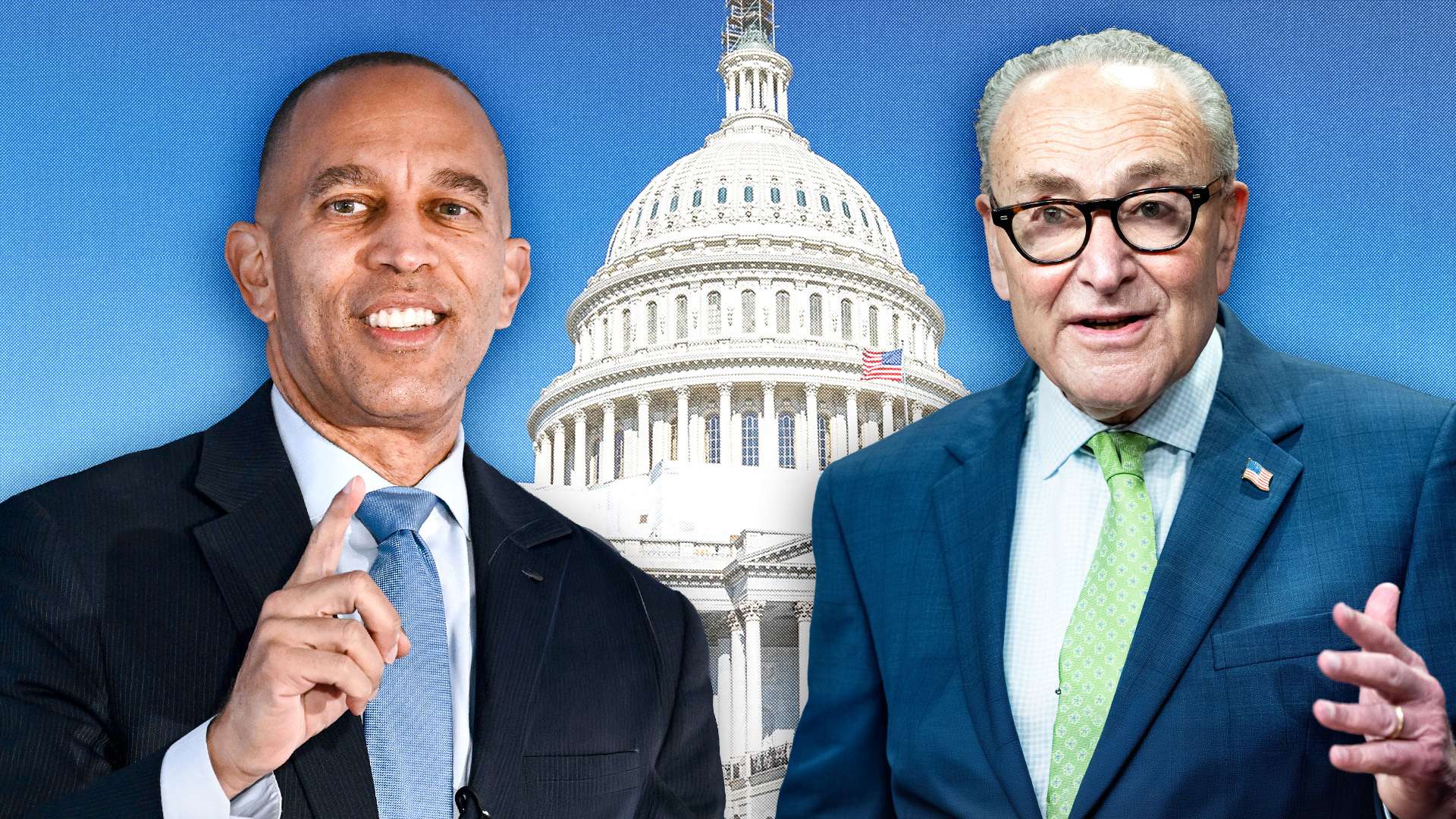
With the GOP seemingly on track for a substantial drubbing in the upcoming midterm vote, it hardly feels premature to pose the next major question:What steps will the Democrats take once they hold a legislative majority?
The New York Times notes that Democrats intend to press forward quickly on four issues that enjoy broad backing within their ranks, and are straightforward enough to skip prolonged committee review and head straight to the floor.
Two of these proposals are genuinely constructive: terminating President Donald Trump’s tariffs and bringing the war in Iran to an end (or directing Trump to “obtain congressional authorization to continue it”). Both would reassert the proper scope of congressional authority in domains where Trump has broadened executive power with harmful consequences.
The remaining goals, however, include undoing Medicaid spending reductions embedded in the so‑called One Big Beautiful Bill Act and extending certain Affordable Care Act subsidies that lapsed last year. Achieving either would demand increased federal outlays at a moment when the government is already running roughly $2 trillion in annual deficits and the national debt is at record levels.
Yet this likely sketch captures what a Democratic-controlled Congress might look like in the coming years: a blend of essential reforms aimed at countering Trump’s expansive state—while also pursuing elements of the Democrats’ own big‑government agenda.
The Reason Roundup Newsletter by Liz Wolfe Liz and Reason help you make sense of the day’s news every morning.
Over at National Review, John Puri lays out an exhaustive catalog of “truly alarming” policies Democrats could pursue after the midterms, ranging from bypassing the filibuster to take on more debt, arbitrarily curtailing commerce, dispersing taxpayer funds to political allies, and promising “free” money for all. Let’s hope none of that comes to pass (again).
More seriously, there are also likely to be major investigations into corruption and other misdeeds within the executive branch. Trump’s relatives and Secretary of Defense Pete Hegseth are expected to be among the principal targets. Hegseth could be subjected to impeachment—which would make him only the third Cabinet secretary in history to face such a penalty, according to The Atlantic.
It’s easy to understand why Hegseth would be seeking a exit strategy.
Of course, there are numerous caveats. Most notably, Trump will remain in the presidency—and could veto anything the Democrats pass through Congress. The Senate’s filibuster rules also loom large. Even a vigorous blue wave is unlikely to yield a clean 60-seat majority.
While they may dream ambitiously, Democrats will confront real limits on shaping policy. They will enjoy relatively fewer obstacles to halting, reversing, and probing Trump’s unlawful and corrupt actions—and that, to me, is precisely where their focus should lie.
Scenes from Washington, D.C.: “On Sept. 16, Leo J. Terrell threatened to choke a Justice Department intern with a computer charger.”
That line opens a sharp and meticulously sourced denunciation from The Harvard Crimson regarding Terrell, the erstwhile talk radio host and Fox News contributor who now leads the Justice Department official overseeing the Trump administration’s crackdown on elite colleges (an effort framed as safeguarding against antisemitism but widely seen as a pretext to mobilize federal funds in a culture-war battle).
The incident with the computer charger “was just one of several episodes recounted by Billa and three other interns, all of Jewish heritage,” the Crimson notes. “Terrell marginalised them from the rest of the department, scolded them over minor errors, and repeatedly threatened their positions or career prospects.”
When not berating staff, Terrell seems to be living in a delusion of grandeur. A planned 15-city media tour planned to anchor his pre-midterms push “would have put him onstage with musicians, comedians, and athletes.” So far, one event has taken place: an October 14 gathering at a Southfield, Michigan synagogue where he spoke as the keynote.
QUICK HITS
- Hackers drained about $6.3 billion in bitcoin from Binance. A separate hacking attempt targeted Polymarket on Thursday.
- ProPublica has “catalogued every instance we could locate of an immigration official detaining a citizen during this presidency—over 500 cases from Inauguration Day through October 21, 2026.”
- Publicly held federal debt has surpassed the size of the U.S. economy for the first time since World War II. Unlike that era, today’s growth is propelled largely by entitlement spending, suggesting a continued climb.
- In related findings, five states carry more than $30,000 in debt per person, per a new Reason Foundation report (publisher of Reason): New York ($37,006), New Jersey ($35,100), Connecticut ($33,189), Illinois ($31,582), and Hawaii ($30,759). Taken together, state and local governments in America owe upwards of $6 trillion.
- If you’ve ever yearned for a Mothman-themed license plate, it’s now an option in West Virginia.
- Patrick Stewart, the iconic actor whose career spanned from Shakespeare to galactic voyages, has died at 86.
In lieu of flowers, memorial contributions may be made to:
Johns Hopkins Alzheimer’s Disease Research Center Fund https://t.co/luC5CdcWDy
Alzheimer’s Foundation of America Caregiver Resources https://t.co/zvNptfyuNdPhoto Credit: Tommy Garcia pic.twitter.com/XNncEVq56X
— Patrick Stewart (@SirPatStew) October 29, 2026
