
With only one day left before the US midterm elections, a test for the Trump administration, and in the wake of Israel’s parliamentary polls, which yielded unprecedented representation for Arab parties and heightened the possibility of an anti-Netanyahu government if another ballot can be avoided, one conclusion stands out: developments in the Middle East and the Gulf have shaped, and will continue to influence, elections just as they have affected markets. Europe is no exception.
“Events in the Middle East and the Gulf have shaped, and will continue to shape, elections just as they have affected markets”
In recent years, European institutions and citizens have sought to respond, through multilateralism and the defence of international law, to Israel’s disproportionate response to the terrorist attacks of 7 October, the genocide in Gaza and the challenge of rebuilding the territory. Since 28 February this year, however, unilateral US and Israeli strikes against Iran, carried out without the approval of the United Nations Security Council, have opened up another source of concern. Civilians have paid the price with their lives — including victims of the Iranian regime, which we have condemned — while ordinary people have borne the economic consequences of the war. Neither ceasefire agreements nor negotiations have so far succeeded in reopening the Strait of Hormuz, through which a fifth of the world’s oil consumption and a third of its fertilisers passed before the conflict. Since then, the European Union has paid over €100 billion more for energy imports, without receiving anything extra in return. The situation has been made worse by a new front: the Houthi offensive.
The Houthi offensive
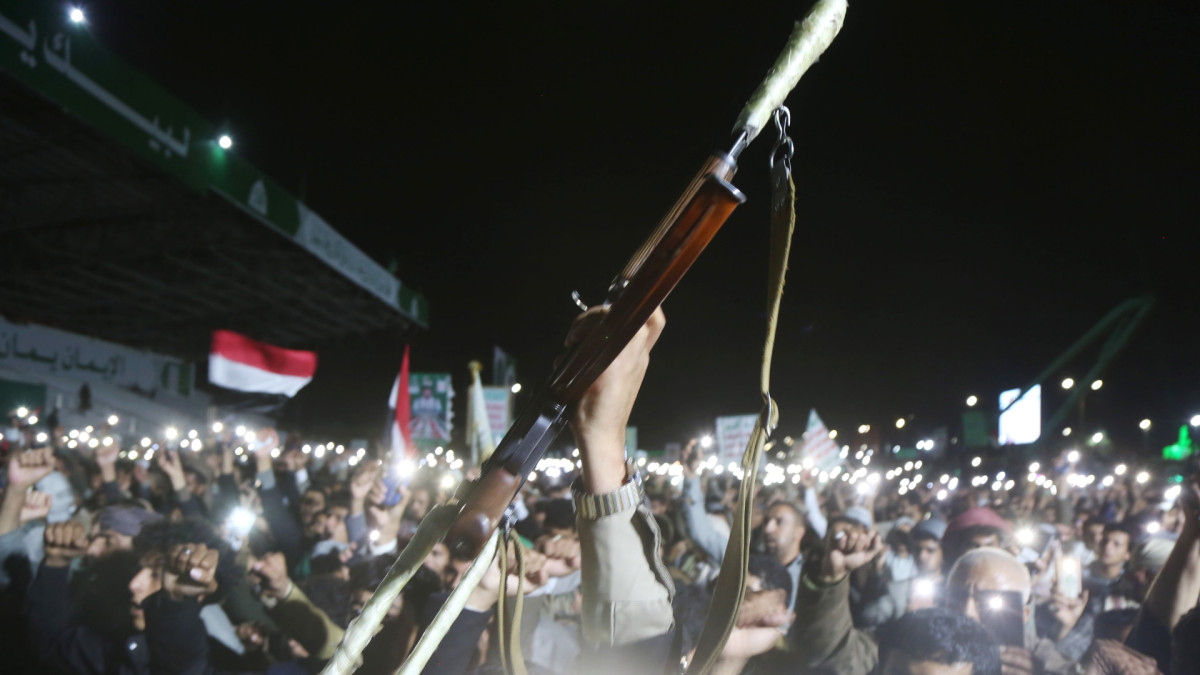
Since July, Yemen has faced a dangerous escalation that is also directly affecting Saudi Arabia. Yemen is divided between the Houthis — an Iran-backed armed group whose Zaydi religious tradition is closely related to Shia Islam — and the internationally recognised government, which has used Aden as its temporary capital since the Houthis seized Sanaa. The Houthis have advanced along the country’s western coast, taking control of Bab el-Mandeb, the strait that had become the main route for Saudi oil exports through the Red Sea as an alternative to Hormuz. Their territorial offensive has reignited the world’s largest humanitarian crisis, leaving 1,574 people dead, more than 6,939 injured and 200,000 displaced since the escalation began. It also threatens the fertiliser trade and the food security of millions of people.
“Their territorial offensive has reignited the world’s largest humanitarian crisis, leaving 1,574 people dead, more than 6,939 injured and 200,000 displaced since the escalation began”
Saudi Arabia has also faced missile and drone attacks by the Iran-backed militia on critical infrastructure, including Aramco’s oil facilities, as well as residential areas and even the holy cities of Mecca and Medina. Among the most serious was the attack on King Khalid International Airport in Riyadh on 10 October, which killed 13 people, both Saudis and foreign nationals, and injured hundreds more. The Houthis have declared Saudi airspace an operational zone and imposed a naval blockade on the kingdom through attacks on Saudi oil tankers in the Red Sea. Saudi Arabia now faces an unprecedented security threat, so serious that Netanyahu has offered to help defend the country. The kingdom has rejected the offer and continues to refuse to sign the Abraham Accords without recognition of a Palestinian state. The United States, meanwhile, has condemned the attacks and ordered the departure of its diplomatic personnel as it considers a possible intervention against the Houthis — in any event, only after the midterm elections.
How is Europe responding?
At the Foreign Affairs Council meeting on 12 October, the European External Action Service and High Representative Kaja Kallas expressed solidarity with Saudi Arabia and Yemen and called for the expansion of the ASPIDES maritime operation. We support that call. The attacks have forced the postponement of the second Gulf Cooperation Council (GCC)–EU summit, which had been scheduled for 24 October in Riyadh. Negotiations on strategic partnership agreements and free trade agreements between the EU and Gulf countries are also continuing, but the situation is likely to delay progress on both fronts.
In the European Parliament, we have sought to go further. At the initiative of the Socialists and Democrats Group, Parliament adopted by a majority a resolution on the escalation of Houthi attacks and their implications for regional security, which I helped negotiate. Alongside its condemnation of Houthi attacks on Gulf countries and Israel, and of the resulting humanitarian and trade crisis, the resolution explicitly calls on the Council to add the Houthis to the EU’s list of terrorist organisations, on which they do not currently appear. For this to happen, a formal request from a member state or Kaja Kallas herself would need the unanimous support of the Council. Such a designation would weaken one of the most powerful Iranian-backed proxies operating today, whose coordination is crucial to Hezbollah’s activities in Lebanon.
“The resolution explicitly calls on the Council to add the Houthis to the EU’s list of terrorist organisations, on which they do not currently appear”
The resolution also stresses the need to strengthen diplomatic and defence cooperation with Gulf countries, particularly on maritime security, to address the impact of the crisis on European energy supplies, and to ensure continued humanitarian assistance and accountability for violations of international humanitarian law in the region. Finally, as we have repeatedly done, we call for the publication of the EU’s Middle East Strategy, a commitment in the European Commission’s 2026 work programme that remains unfulfilled “because of the situation in Iran”, in the High Representative’s words.
Parliament has consistently been ahead of the Commission in calling for action in the region, acting in accordance with international law and the demands of citizens. We called for Iran’s Islamic Revolutionary Guard Corps to be added to the EU’s terrorist list — a measure subsequently adopted — and for sanctions against Israeli settlers, later imposed on violent settlers. We have also demanded the suspension of the EU–Israel Association Agreement and an end to trade in products from the occupied Palestinian territories, in line with our support for a two-state solution, as well as the activation of the EU Blocking Statute to protect the International Criminal Court from Trump’s sanctions. These last three measures remain under consideration.
Despite the EU’s limitations in foreign affairs and the powers retained by member states, we must take the lead in adopting firm positions on today’s geopolitical challenges. Otherwise, Europe will be confined to reacting to events and will bear reputational and economic costs that neither its citizens nor the European project can afford. That is what happens whenever the Middle East is in turmoil and others dictate the course of events.
