
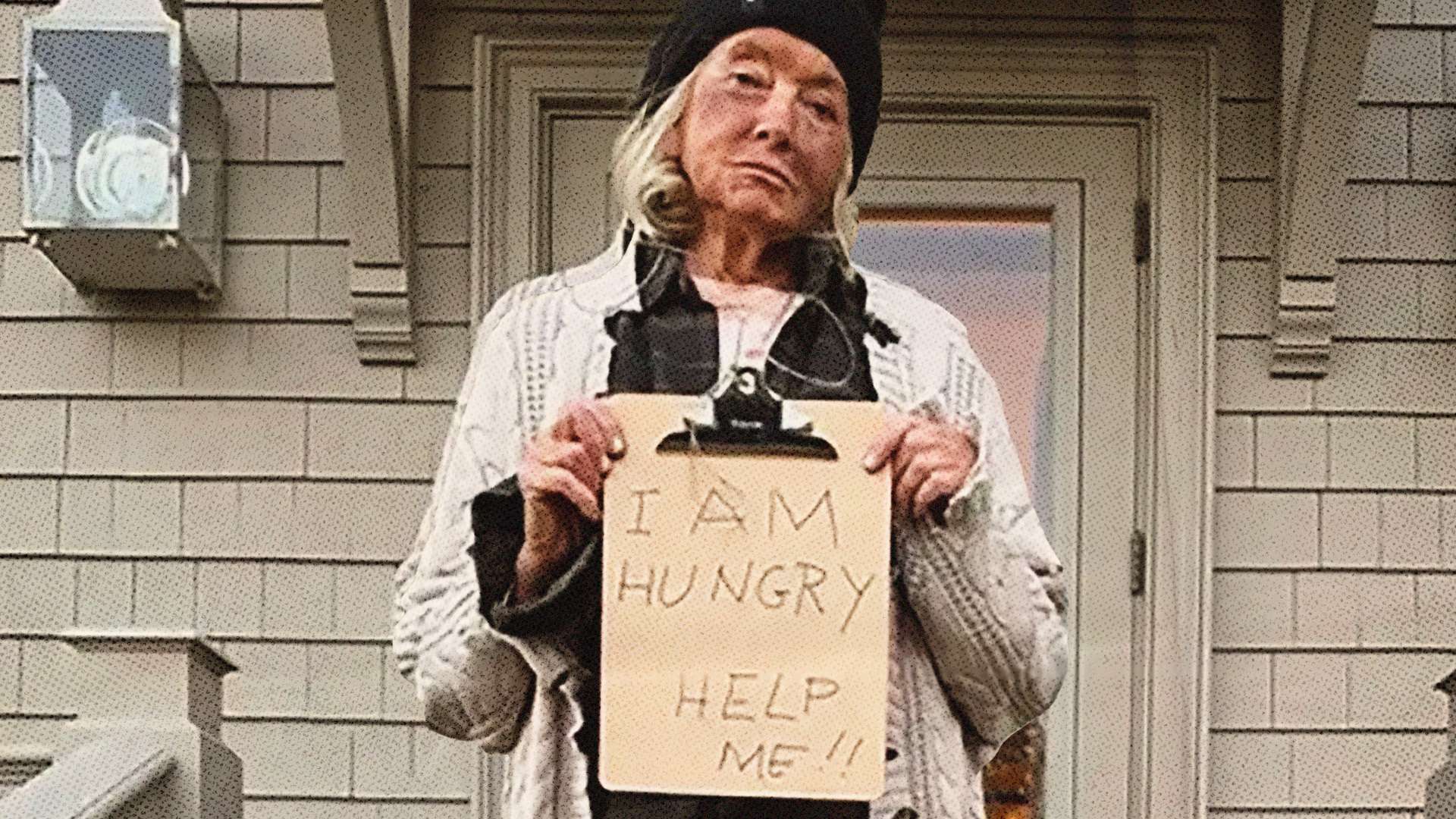
Many watched with disbelief as one of the planet’s wealthiest figures appeared in a costume resembling a vagrant. Yet some argued that the pairing felt oddly appropriate.
Martha Stewart isn’t broke, some quipped, even as she appeared to adopt a penniless persona—disheveled, hungry, and with a keen eye for candles still on offer. The gag landed amid Halloween chatter, a season when a person of enormous means can slip into the guise of someone far less fortunate.
On Halloween 2026, one of the globe’s richest individuals—the first self-made female billionaire—took to the public square in the guise of a homeless woman, her face smeared with dirt and a sign begging for food. The look unfolded in an Instagram carousel that also showcased her flameless Halloween candles, sold through QVC. Even in this deviation, she appeared unmistakably herself.
The stunt did not endure. It quickly became fodder for online commentators who bristled at the disparity between Stewart’s wealth and the deprivation she portrayed, with critics noting the incongruity between privilege and poverty. “A rich person pretending to be poor? In this economy?” became a common refrain.
Stewart removed the post and sought to set the record straight. She explained that the costume aimed to “raise awareness about a very serious issue”—homelessness. She added that the topic remains one of America’s most daunting and enduring crises, and that she cares deeply about it, supporting charities dedicated to addressing this social epidemic through time and resources.
It’s unlikely there’s a person who is unaware of homelessness, though one could imagine exceptions. If awareness were the objective, perhaps she could have dressed in a construction vest and bound herself in red tape while citing statistics, much as she tosses off facts about her salads. I might even have bought one of the candles.
There’s always next year. But this year’s moment had already passed. How might Stewart seek redemption?
On one side, perhaps nothing. An apology seldom placates the most outspoken critics and can sometimes amplify the backlash.
On the other hand, perhaps nothing, again. Halloween costumes exist to let the wearer inhabit a role they are not. By definition, a costume facilitates a departure from one’s ordinary self. Martha Stewart isn’t homeless. She’s famed partly for gardening, yet I still picture dirt leaping from her face as she tends blooms—because that is who she is. That said, it doesn’t erase the misery endured by those without homes, nor does it lessen the call for compassion toward them.
If that is the line we are to draw, perhaps Halloween itself should be reconsidered, since it’s hard to imagine the tradition surviving such scrutiny. This year’s fashion of controversy touched Elizabeth Holmes—founder of Theranos and convicted of fraud—who was a popular choice despite allegations that she fleeced investors of vast sums. People have dressed as Jeffrey Dahmer, a byword for serial murder; some have even dressed as Satan himself (albeit with a theatrical twist). The writer of this piece chose a provocative disguise on the way to a hypothetical slaughter. Are we truly drawing the line at homelessness?
Stewart, naturally, isn’t a stranger to controversy. Nor is she unfamiliar with being misunderstood. Her most notable blemish—the 2004 criminal conviction—was not for insider trading, as many assume; she did not go to trial for that accusation. The conviction centered on deceiving investigators.
Most importantly, she has demonstrated a remarkable capacity for rebound. Stewart achieved what many deemed impossible: reclaiming her image as America’s immaculate hostess after a stint in federal prison. This arc differs from the usual path associated with a persona built on flawless desserts and perfectly timed dinners. Yet that is Martha Stewart. Her legacy intertwines identities that appear to clash yet somehow converge into a singular, unlikely whole; prison khakis resting beside crisp aprons in a single wardrobe. In that sense, perhaps no costume suits her more aptly than the one she chose this year.
