
Experts doubt that the president’s agenda was a decisive driver of that historic drop.
New survey results released last week indicate a pronounced fall in violent crime from 2024 to 2025, a trend that matches FBI figures published last summer. Although the Trump administration has sought to claim credit for this favorable development, there are multiple reasons to question such assertions.
In August, the FBI reported an 18 percent decline in the national homicide rate from 2024 to 2025, a drop without precedent. Data compiled by the Council on Criminal Justice (CCJ) show that the 2025 rate is the lowest recorded since at least 1900, and projections suggest the rate may reach a fresh historic low this year.
“We have the numbers down because of what the federal government’s doing,” President Donald Trump stated during an August 14 address at the Nassau County, New York, police academy. “Everyone knows we’ve done an amazing job.”
Four days later, a White House press release reinforced that message. “President Trump Delivers the Largest Drop in Violent Crime in American History,” the headline proclaimed.
Trump “backed law enforcement, empowered the FBI to pursue predators instead of political targets, and rejected the failed Democrat lunacy that left communities reeling,” the White House boasted. “The results are clear: fewer murders, fewer victims, and safer streets.”
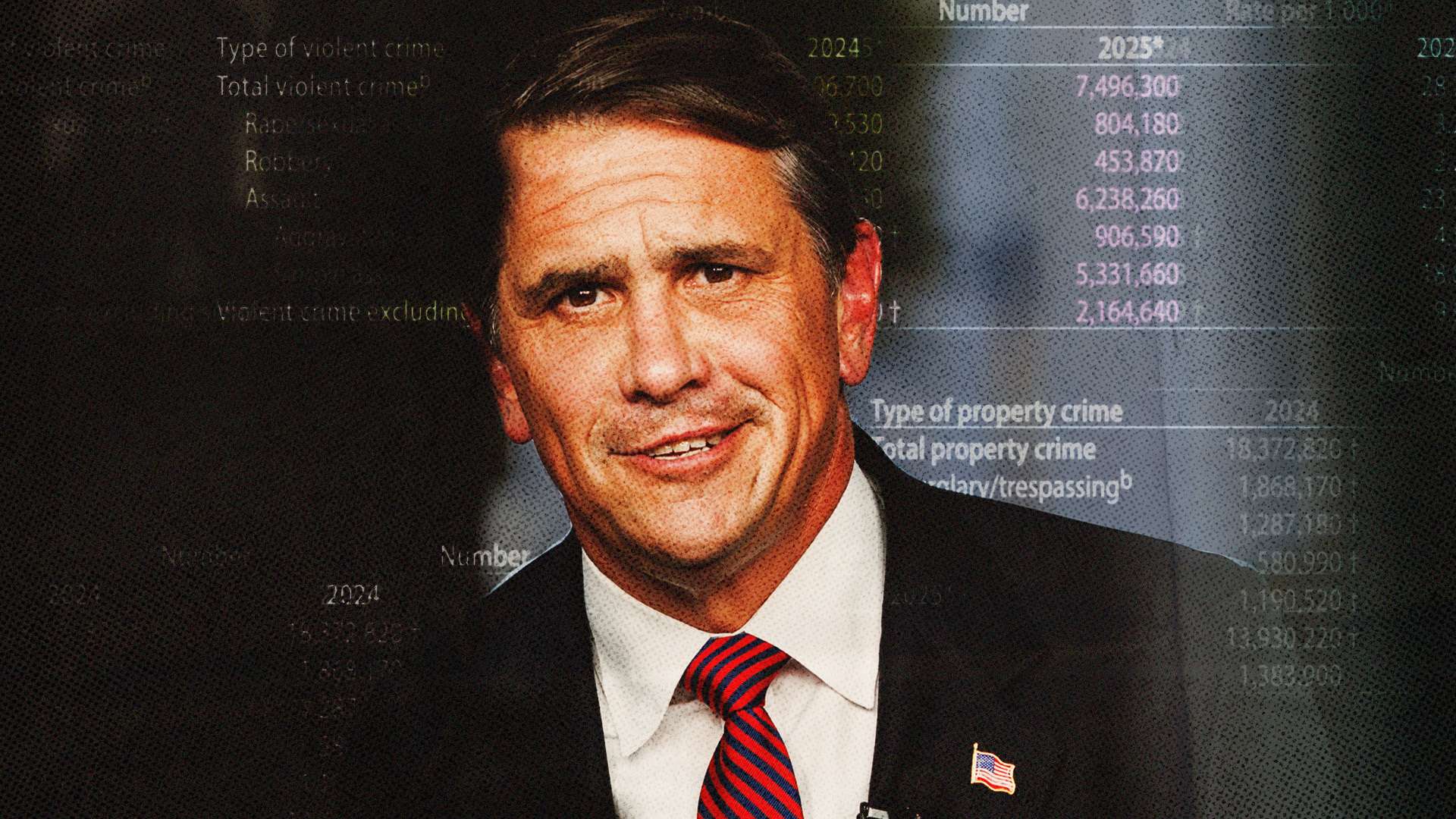
That narrative continued after the Justice Department released the preliminary results of the 2025 National Crime Victimization Survey the following week. The 2025 victimization rate for nonfatal violent crime, excluding simple assault, stood at 7.4 per 1,000 Americans aged 12 or older, a 25 percent decrease from 2024.
“President Trump Delivers Historic Drop in Violent Crime,” the White House proclaimed. “Violent crime PLUMMETED in 2025 compared to 2024,” Attorney General Todd Blanche asserted. “This is what happens when you have an administration [that] prioritizes the safety and security of Americans and our communities.”
Yet the reality is inconvenient for Trump: the downward trajectory in violent crime began in 2023, two years before he took office. And if Trump merits credit for sustaining that trend, doesn’t he also warrant some accountability for the substantial 2020 spike in homicides that occurred during his tenure?
The fact remains that such inferences are not warranted without additional evidence. Presidents have a limited role in law enforcement, which is primarily a state and local responsibility, and crime rates are shaped by a multitude of factors beyond federal policy.
In September, the CCJ assembled a panel of 48 crime experts to evaluate four dozen potential explanations for the recent homicide decline. None of the experts believed that the federal policies highlighted by Trump played a major role.
Not a single expert identified Trump’s National Guard deployments as contributing a “major” factor, and only one perceived a “limited” impact. No one ranked that factor among the top five contributors. Likewise, no one cited heightened immigration enforcement as a leading contributor, though two participants noted a “limited” role.
The CCJ did not specifically query the panel about FBI arrests, another explanation touted by Trump. The survey did inquire about improvements in homicide clearance rates, which 11 percent of the experts treated as a top contributor. But given that the FBI accounts for a relatively small portion of violent-crime arrests (about 8 percent in 2025), it seems unlikely that the FBI’s role in reducing homicides was as substantial as suggested by the president.
More abstractly, the experts weighed the potential impact of “presidential public safety signals.” Three participants credited that factor with a “limited” impact, and none regarded it as a top contributor.
The factor most strongly endorsed was the easing of pandemic-era social and economic disruption, with 57 percent of the experts deeming it a major contributor. Other factors that scored relatively high included the expansion of community violence prevention programs, the broader use of “focused deterrence” aimed at high-risk individuals and groups, greater local government capacity, and increases in public safety and support services relative to demand.
These assessments are still evolving, and firmer conclusions will require further study. One conclusion, however, seems clear: Trump’s policies fall far short of explaining the recent declines in violent crime.
© Copyright 2026 by Creators Syndicate Inc.
