
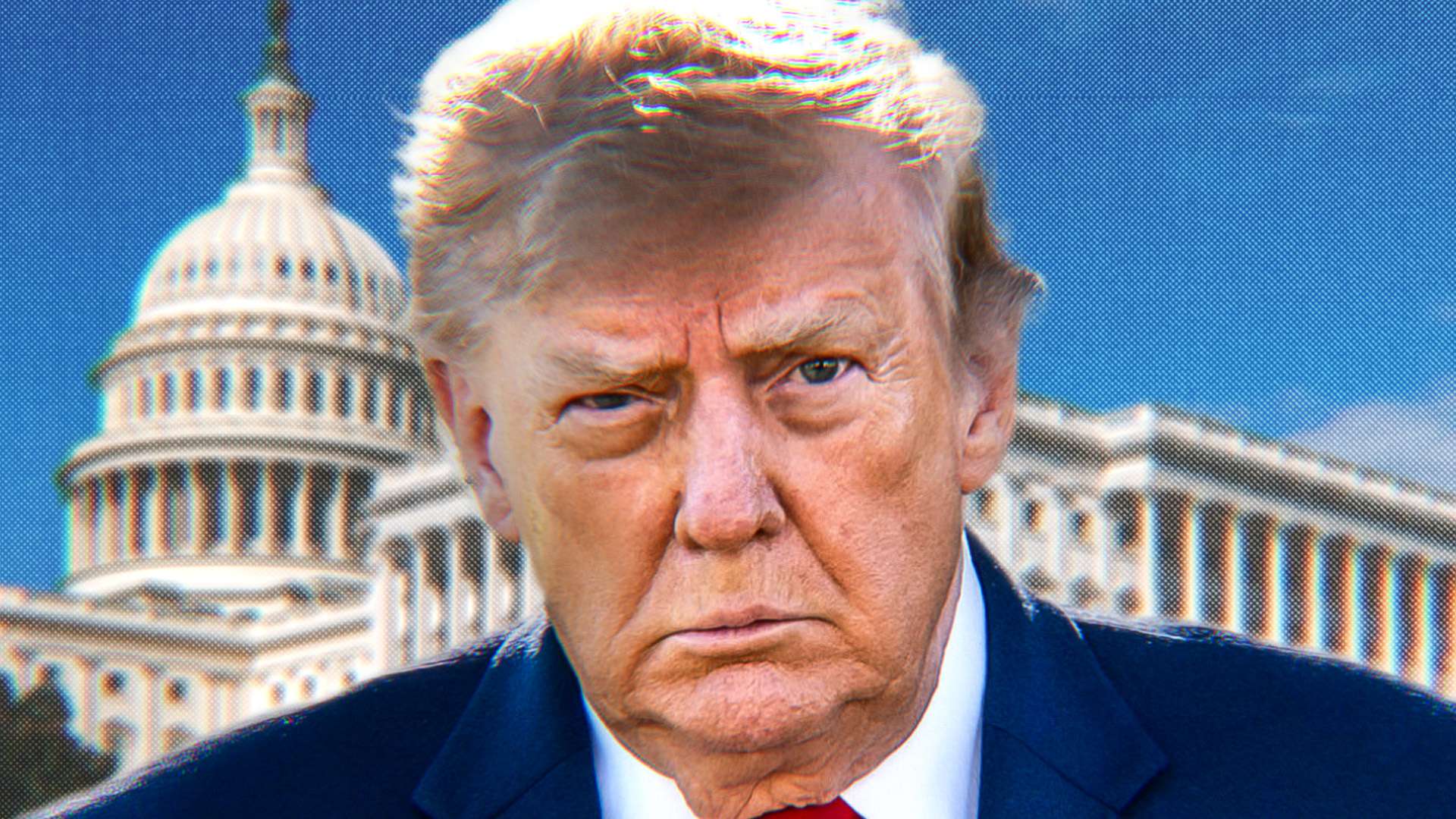
There is little reason to expect the state to shrink, and that prospect signals troubling news.
Interpreting the midterm elections as anything other than a sharp, unambiguous rebuke of President Donald Trump and the MAGA program—tariffs, unprecedented peacetime government involvement in private industry, brutal mass deportations, extraordinary levels of personal corruption, and the latest obsessions with the male body and algae—would be both implausible and unwise, regardless of one’s ideology. Despite historically low approval ratings, Trump urged voters to “pretend I’m on the ballot” and faced the consequences.
Vice President J.D. Vance, the anticipated successor to Trump’s tarnished and greasy throne, is laboring to argue that the sole reason Republicans “lost is the war.” In a lengthy post on X, the teller of grandiose tales cites two anonymous sources—”the smartest data guy” and “one of the smartest people I know in politics”—to claim that none of the many other measures the Trump administration took to raise costs and make everyday life feel more precarious contributed to a massive defeat. It’s true that the confrontation with Iran remains a sprawling, unfinished disaster and, arguably, a departure from Trump’s campaign pledge to avoid foolish wars. But it aligns entirely with the president’s “L’État, c’est moi” style of governing.
Certainly, Vance’s reluctance to confront basic reality isn’t new. While promoting a false story about Haitian migrants eating cats in Springfield, Ohio, in 2024, he said, “If I have to create stories so that the American media actually pays attention to the suffering of the American people, then that’s what I’m going to do.” Just before the midterms, he adjusted his rhetoric slightly, this time asserting that he’d seen a story about “illegal immigrant Somalis who are coordinating to flood the polls and drown out your vote.” And when the Republican candidate for governor of Ohio, Vivek Ramaswamy, faced widespread condemnation for running a vile, misleading, and ineffective ad featuring Democratic challenger Amy Acton’s estranged mother, Vance wasted no time in declaring he was “a little bit disgusted” by Republicans who criticized their own party member.
That is the worldview that endured a severe blow in the midterms, and if Trump and Vance—or their MAGA peers—cannot or will not acknowledge that their losses stemmed from the consequences of their agenda, that remains their problem.
But who or what emerged victorious in the midterms? This is where the situation becomes deeply troubling, especially for supporters of limited government, reduced spending (notably debt-financed), and lighter regulation.
The Democrats lack a cohesive program, and the Republicans who managed to keep their seats share the same reality. Yet one thing is clear: no one in politics is even hinting at shrinking the overall size, spending, and reach of government. It seems likely that, as Joe Biden did after taking office in 2020, Democrats will retain many or most of Trump’s tariffs. Who among them has proposed restoring government stakes in the tech companies that Trump leveraged? While relatively few campaigned on a straightforward “Medicare for All” platform, many are pushing a “Medicare for More” agenda aimed at the people.
The only certainty is that the federal government will almost certainly spend more money next year than this year. In the fiscal year that ended in September, federal outlays totaled about $7.4 trillion, a 6 percent rise from the prior year. The deficit stood at $2 trillion, up 12 percent from 2025.
“Keep your eye on one thing and one thing only: how much government is spending,” Milton Friedman advised decades ago. He understood that relentlessly increasing the national debt stifles economic growth and yields nothing but misery. The defeat of Trump and his MAGA program is a positive development, but if it fails to alter the economics of everyday governance, the midterms will become another squandered chance to steer the country in a different direction.
