
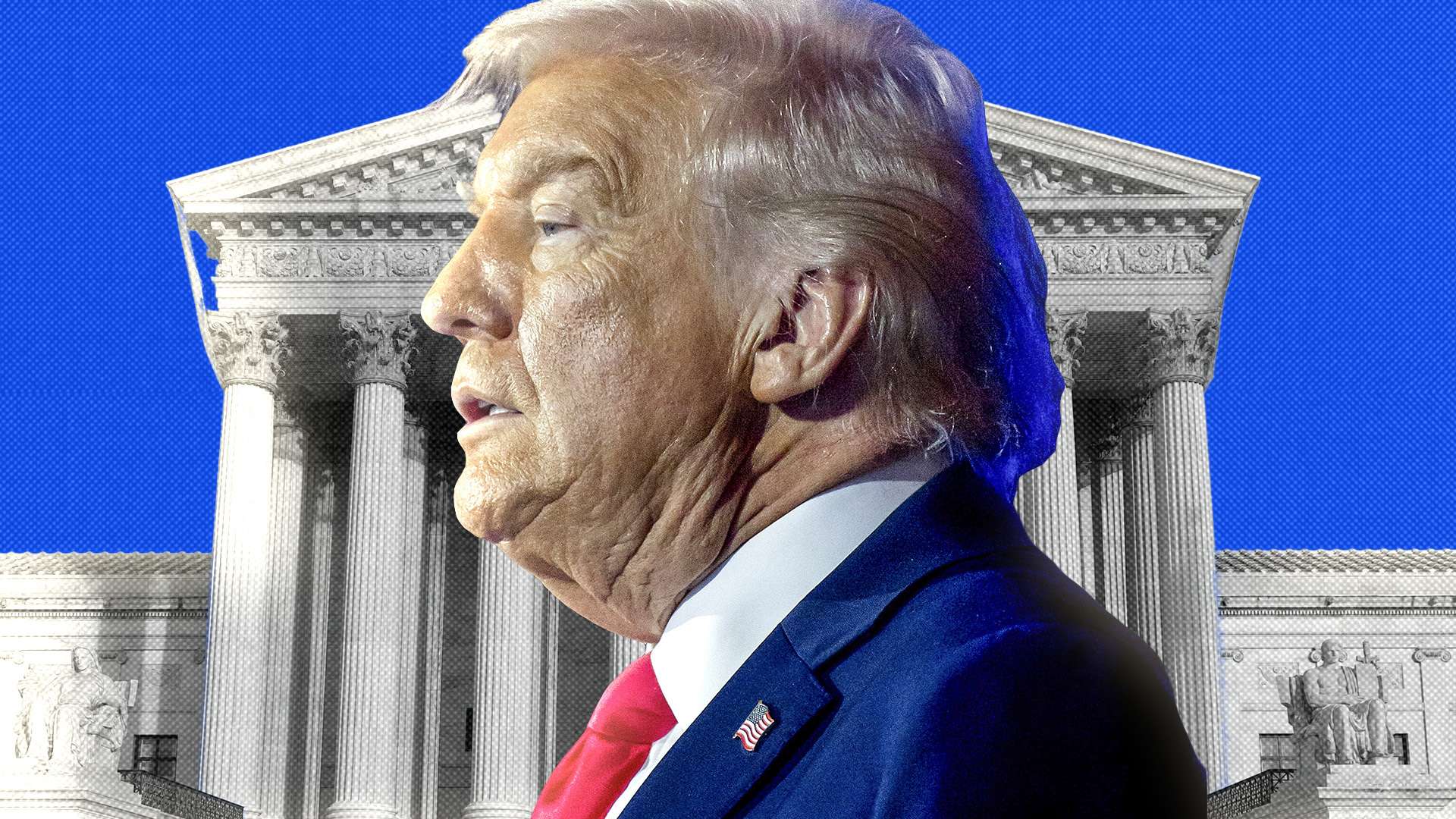
The Senate’s new Democratic majority is unlikely to approve any Republican judges.
In a recent issue of this newsletter I asked whether Justice Samuel Alito might come to regret repeating the same mistake that Justice Ruth Bader Ginsburg made, who famously declined to retire from the U.S. Supreme Court while the Democrats held the Senate and Barack Obama was president. By stubbornly staying on the Court until her death in 2020 at age 87, Ginsburg effectively opened the door for her successor to be selected by President Donald Trump and quickly confirmed by a Republican-led Senate. That dynamic paved the way for conservative law professor Amy Coney Barrett to take Ginsburg’s place on the Supreme Court.
After this week’s midterm landslide for the Republicans, we may soon have the chance to see whether Alito’s judicial tenure ends on a similarly Ginsburg-like note.
You’re reading Injustice System from Damon Root and Reason. Get more of Damon’s commentary on constitutional law and American history.
The Republicans lost big almost everywhere in Tuesday’s midterm elections, but the loss of the Senate may prove to be the most painful of all in the long run, as it will give the Democrats the power to block any judicial nominee that Trump puts forward in the next two years (once the new Senate has been officially seated).
Alito, who is 76 years old, seemingly intends to remain on the bench for as long as possible. But will it be long enough to ensure that a Republican is president and the Senate is back in the hands of the GOP when he finally does decide to retire? The combination of a Republican-held White House and Republican-held Senate may not even be electorally possible thanks to this week’s results until 2032. And when you happen to be in your mid-70s like Alito is, that’s a long time to wait while you cross your fingers and hope for the best against the vagaries of ill health or sudden accident.
Ditto for Justice Clarence Thomas, who is no spring chicken himself at the age of 78. I can’t imagine Thomas relishing the thought of a Democratic president picking his replacement. But time and fate may give him no say in the matter. As the great existential philosopher Sturgill Simpson put it, “life ain’t fair and the world is mean.”
One thing seems clear enough: There is less than zero chance of the new Democratically controlled Senate approving any Supreme Court nominee that Trump puts forward in the waning years of his second term. Indeed, the Senate’s Democratic majority may not approve any Trump nominee to any judicial post, preferring instead to leave the federal courts under-staffed until a new slew of liberal jurists can be safely appointed.
If a vacancy does unexpectedly arise on the Supreme Court sometime in the next two years, I would not expect it to be filled until after the 2028 election.
In Other Legal News
The Supreme Court heard arguments this week in St. Mary Catholic Parish v. Roy, a case that asks whether a Catholic preschool’s right to the free exercise of religion is infringed when a state denies it the ability to participate in the state’s universal preschool program because the school won’t accept LGBTQ families.
Judging by the oral arguments, the Catholic preschools who brought the case stand a good chance of prevailing. While the Supreme Court’s three Democratic appointees seemed skeptical that any kind of rights violation had occurred, a majority of the Court’s Republican appointees seemed to think otherwise, and that would be enough votes to decide the case in favor of the Catholic schools. A decision in the case is expected by late June 2027.
