
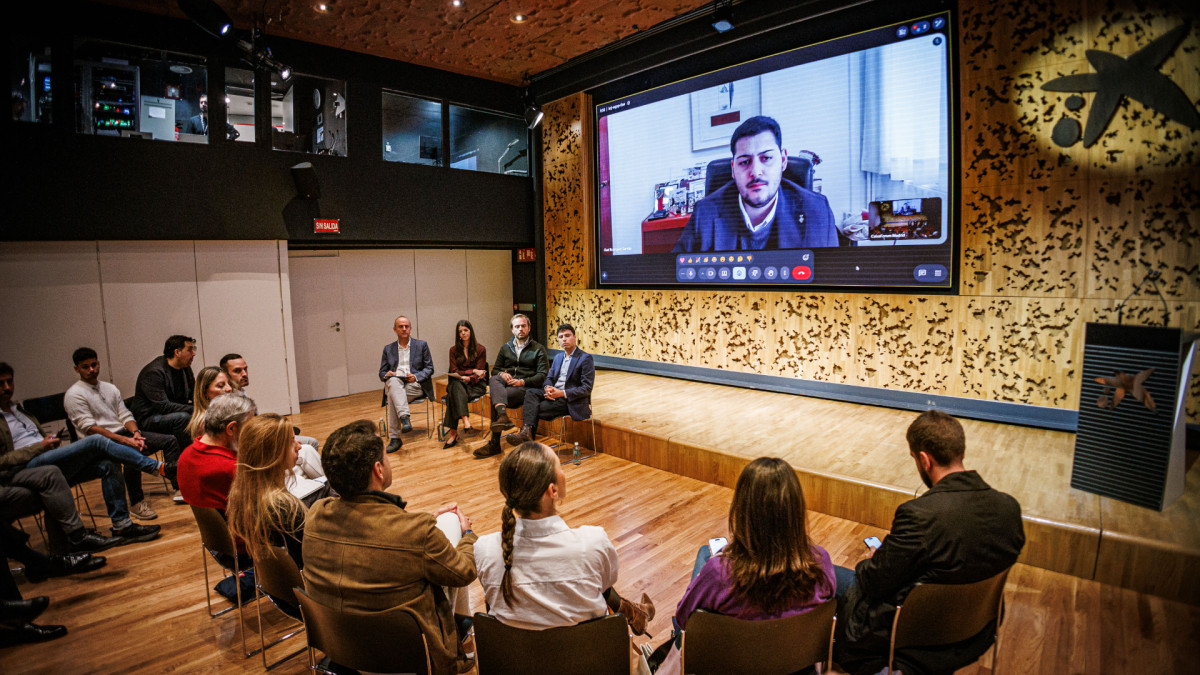
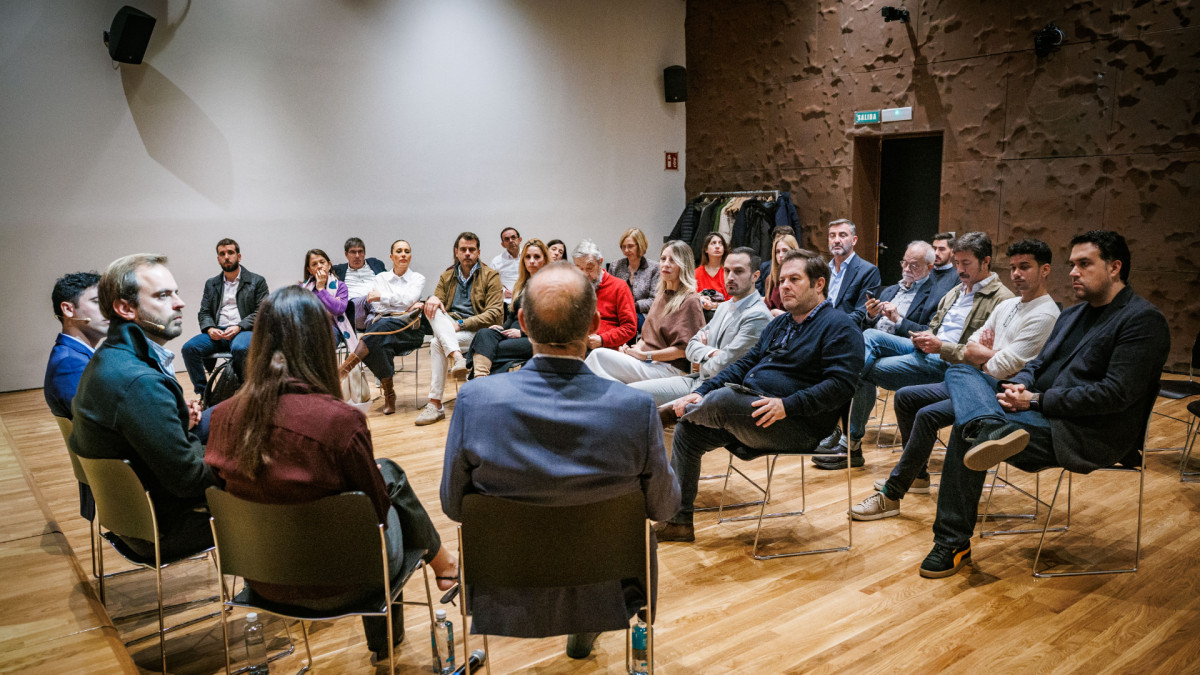
The debate about Spain’s demography is often trapped in a static image: a rural area suffering depopulation versus expanding large cities. Yet, territorial reality reveals much more complex dynamics and inequalities among municipalities. To approach these different realities, the micro-space More people, less inequality? Spain’s demographic challenge, organized last Thursday, November 5, by Agenda Pública with the collaboration of the Fundación “la Caixa”, brought together three mayors of municipalities with very different demographic characteristics: Alberto Escribano from Arganda del Rey (Madrid), with about 60,000 inhabitants; Gael Rodríguez from Portbou (Girona), around 1,100; and Kike Collada from El Recuenco (Guadalajara), with barely 80 registered residents.
These three realities gave rise to shifting the demographic debate onto the terrain of public policies and the decisions that those governing these municipalities must make. Alongside them, Santiago Fernández Muñoz, professor of Human Geography at Carlos III University of Madrid and partner of Science & Innovation Link Office (SILO), contributed an academic perspective to open the discussion on the country’s main demographic challenges. The gathering, moderated by Clara Esteban, consultant for Agenda Pública, also featured specialists in demography, sociology and economics, business representatives, and third-sector participants. Far from reaching easy consensus, the discussion highlighted that there is a lot left to talk about in this field: there are those who consider it very difficult to reverse certain demographic trends and advocate focusing efforts on adaptation, and there are also those who demand redistribution through political decisions on investment and productive activity to foster rootedness.
“There are those who consider it very difficult to reverse certain demographic trends and advocate focusing efforts on adaptation”
Municipal heterogeneity sets the pace for these inequalities. While the smaller nuclei face technical-management difficulties and suffer the loss of essential services, towns located in metropolitan rings deal with housing pressures and a rising demand for services. The central question is not only the population’s evolution but also how burdens and resources are distributed across the different territories.
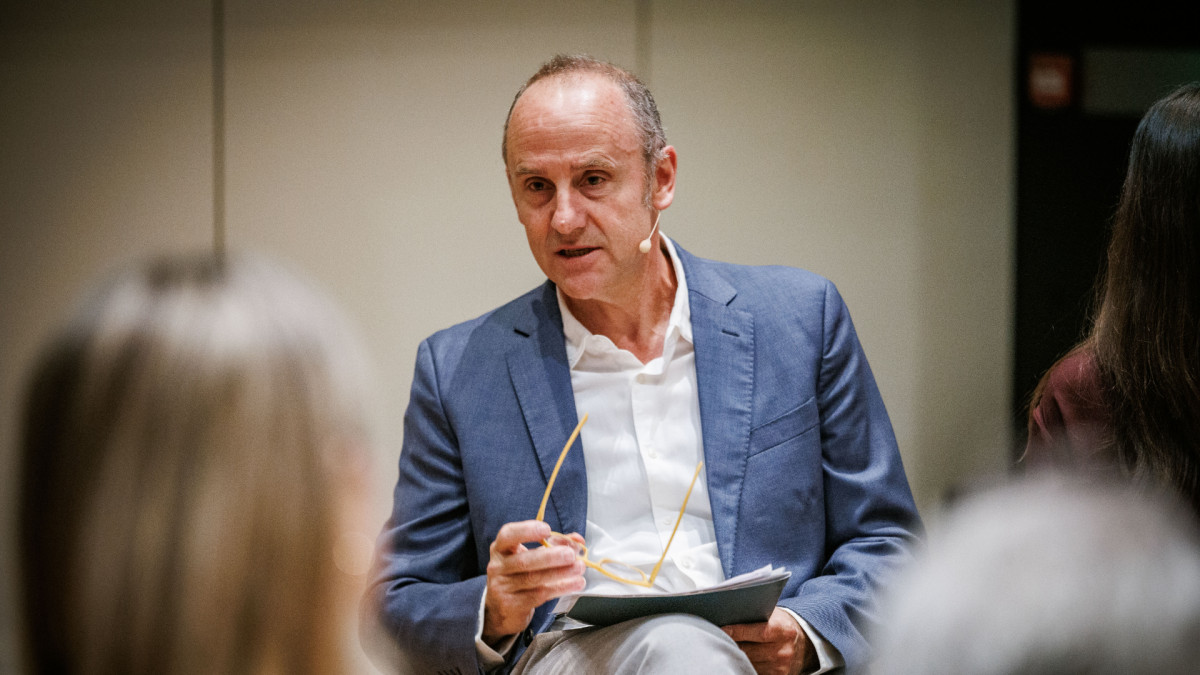
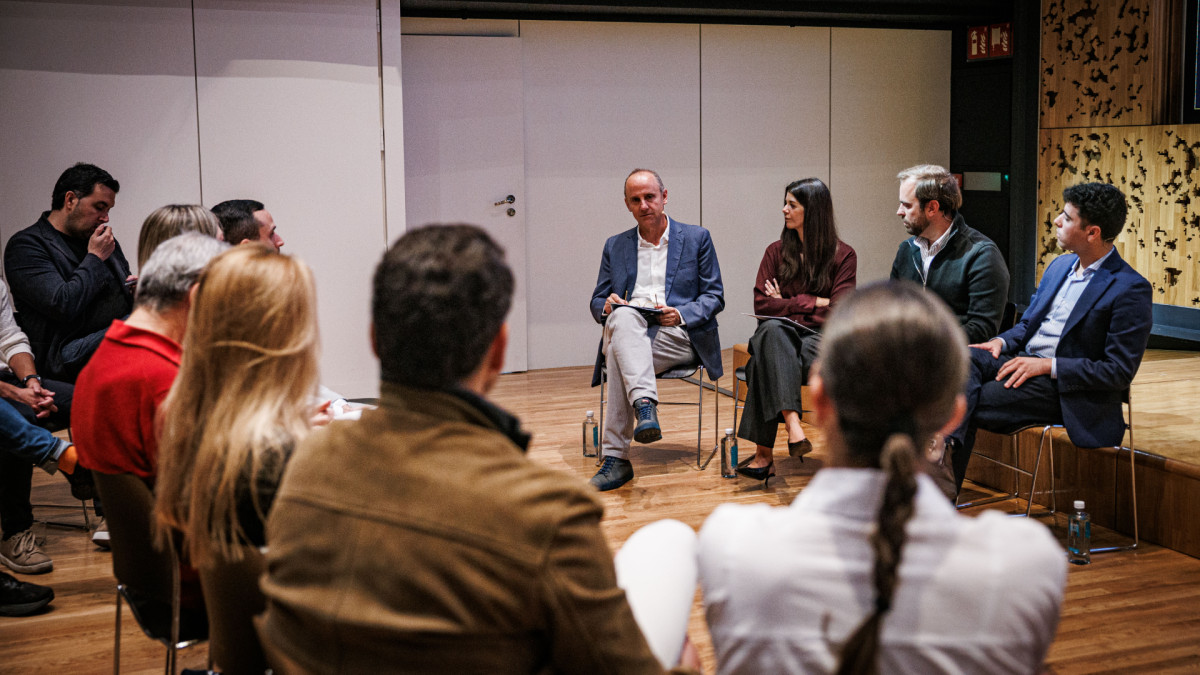
Santiago Muñoz Fernández, Clara Esteban, Alberto Escribano and Kike Collada, alongside Gael Rodríguez, gathered for a new micro-space. Photo: Agenda Pública / Tania Sieira
Between Depopulated Spain and Crowded Spain
The boundary between the countryside and the city is far from clear-cut. Kike Collada rejected the term “Depopulated Spain” because he believes it paints two isolated worlds and proposed the concept of “Crowded Spain”. According to the mayor of El Recuenco, both spaces maintain a relationship of interdependence in which each assumes opposing problems: some due to population deficit and others due to excess. In small towns, councils must manage numerous competencies with limited technical and financial resources, in addition to addressing the needs of a population that fluctuates throughout the year. For her part, Irene Martín, head of projects at the Red Española de Desarrollo Rural (REDR), called to move away from the exclusively negative narrative around the rural environment, while insisting on making visible the specific challenges of small municipalities, whose residents want to live there from Monday to Sunday and not merely as seasonal holiday destinations.
“The countryside and the city maintain a relationship of interdependence in which each assumes opposing problems: some due to population deficit and others due to excess”
On the other hand, urban peripheries suffer directly from concentration effects. The mayor of Arganda del Rey, Alberto Escribano, explained that his municipality, with 61,000 inhabitants and a major industrial zone, does not suffer depopulation but faces intense housing pressure. The sociologist from the Universidad Complutense de Madrid (UCM) Olga Salido introduced a nuance about population movements: the idea that the countryside still expels and the city absorbs does not fully describe reality. Metropolitan towns like Arganda or Fuenlabrada also receive population from other urban cores, in movements related to housing prices and living standards. This interdependence extends to the natural and energy resources provided by rural areas that are fundamental for the country as a whole.
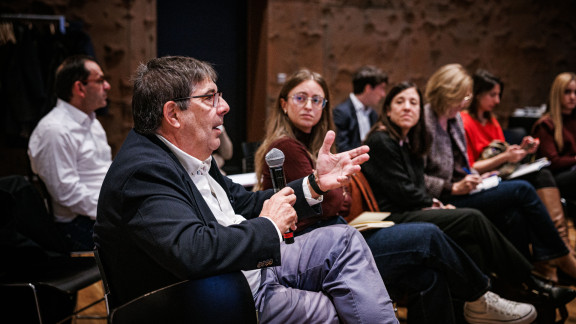
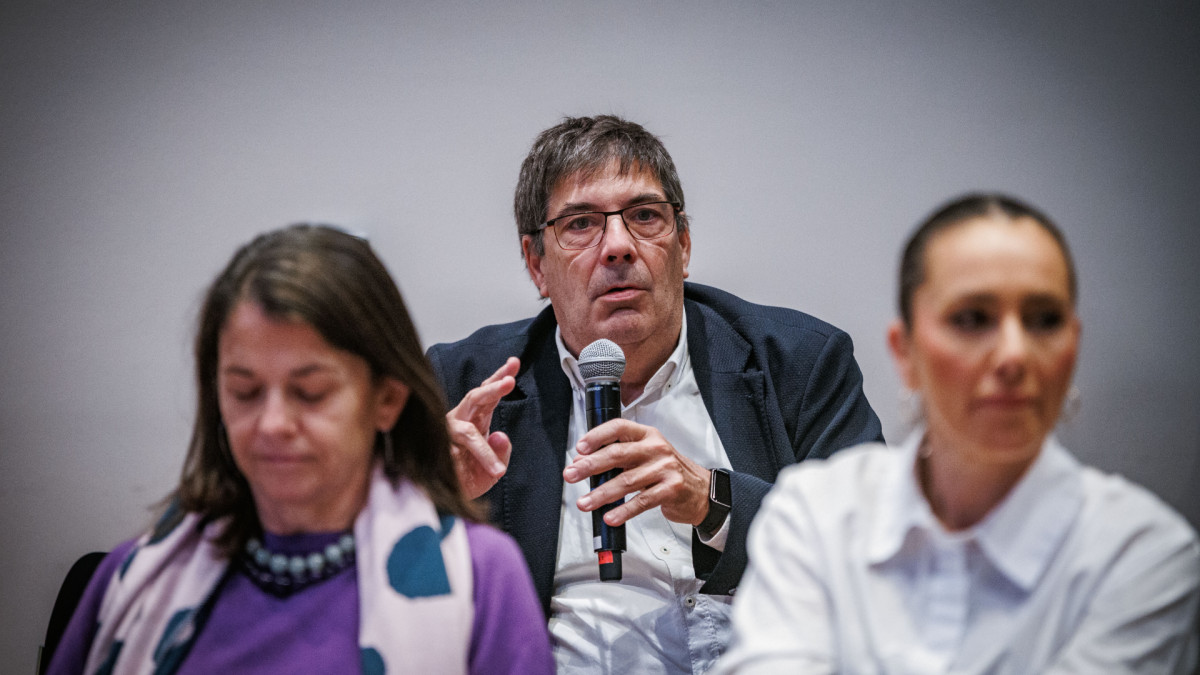
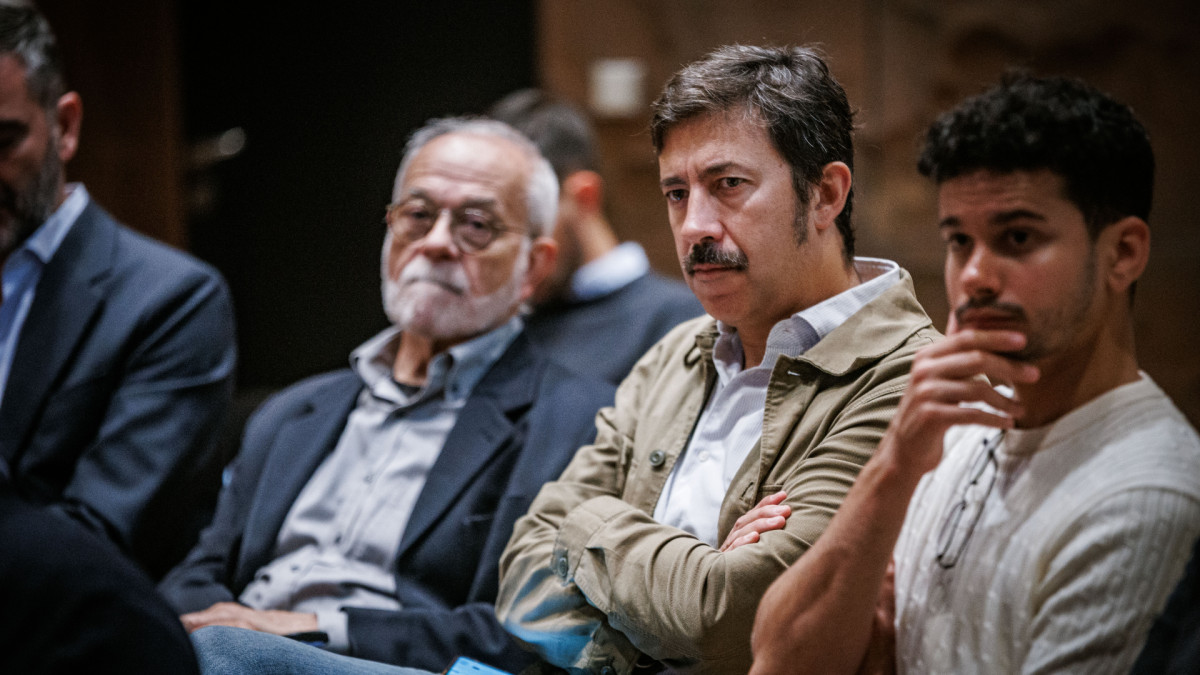
The economist Pep Ruiz participates in the debate. Photo: Agenda Pública / Tania Sieira
Immigration, Birth Rates, and Aging
Spain’s demographic evolution presents singular contrasts. Jesús M. De Miguel, professor of Sociology at the University of Barcelona (UB), recalled that Spain combines one of Europe’s highest female life expectancies with one of the world’s lowest fertility rates. The country faces a generational-replacement problem, with a threshold around 2.1 children per woman, well above current levels. De Miguel linked this to the risk of greater inequality and even suggested that “the best demographic policy maybe is not to have a demographic policy, just governance,” while not renouncing to develop territorial policies.
With births declining, migrant flows have helped sustain population growth. Fernández Muñoz emphasized that, thanks to immigration, numerous rural municipalities have stopped losing inhabitants, altering a downward trend that seemed difficult to reverse. The economist Pep Ruiz provided an illustrative figure: about a third of births in Spain are to mothers born abroad, a proportion that underscores the importance of immigration in the country’s demographic evolution.
“Thanks to immigration, numerous rural municipalities have stopped losing inhabitants, altering a downward trend that seemed difficult to reverse”
Nevertheless, immigration’s capacity to offset aging and low fertility has its limits. Héctor Cebolla Boado, titular scientist at the Consejo Superior de Investigaciones Científicas (CSIC), recalled that a large part of births linked to the migrant population respond to its age structure, younger on average, but warned that this contribution does not by itself solve demographic challenges: migrants also grow older. Moreover, Cebolla noted that fertility rates are falling globally. For the researcher, demographers face a kind of “collective depression” in the face of a lack of solutions capable of easily changing these trends, which invites seeking a balance between prevention and adaptation to ensure the population’s well-being.
Infrastructure and Territorial Cohesion
The role of infrastructure as a driver of territorial rebalancing generated varied interpretations. For decades it was argued that new connections would foster the country’s cohesion, but their effects have not been uniform across all territories. Some participants questioned the national transport policy: in their view, the ongoing extension of the AVE high-speed line and motorways has primarily benefited central cores and, notably, Madrid, reinforcing concentration of activity. Professor Fernández Muñoz argued that the construction of high-speed lines should have been halted long ago, a decision clashing with both parties’ electoral platforms and with public demand.
“The ongoing extension of AVE and motorways has benefited mainly central cores and, notably, Madrid, reinforcing the concentration of activity”
Local experience shows distinct effects. While Arganda’s mayor argued that the arrival of the subway was one factor that allowed his town to grow from under 20,000 to over 60,000 inhabitants and to integrate into regional economic dynamism, other infrastructures have displaced activity in certain municipalities. Javier Nadal, from the advisory council of the Spanish Foundations Association (AEF), recalled the impact of constructing some motorways: towns that had thrived thanks to traffic on the old national roads lost part of that activity when travel started using the new roads.
The gap is especially visible in conventional rail and proximity transport. Gael Rodríguez described his border municipality’s situation, historically tied to significant railway activity. Rodríguez lamented the loss of economic activity related to the train and the lack of investments in concrete projects to re-activate the territory. He called for “creating a future, hope, and rootedness” through a distribution of investments that takes into account each municipality’s characteristics. “What Madrid needs is not what a 50,000-inhabitant city needs,” he argued.
Joining this argument, economist Pep Ruiz drew attention to the need to connect intermediate towns as well: “Institutional focus has traditionally been on linking large capitals,” he explained, but the network between Barcelona and Tarragona or between Girona and Barcelona “hosts a web of cities and municipalities with their own needs” as well. Collada, for his part, described how the lack of alternative public transport options in smaller municipalities makes private cars a necessity for many daily trips.
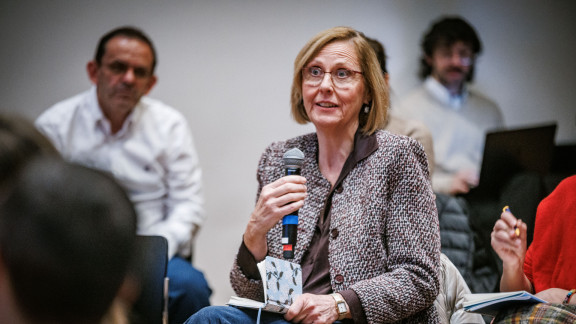
Olga Salido, full professor of Sociology at the Complutense University of Madrid. Photo: Agenda Pública / Tania Sieira
“Roof, Work, and Salary”
Access to housing and the maintenance of basic services mark a substantial portion of the differences across territories. The possibility of remaining in a municipality or settling there depends on concrete material conditions, which are not always guaranteed by lower population density or land availability. The Portbou mayor argued that the decision to have children requires future prospects: “To have children, the first thing you need is hope: for that you must have a roof, a job, and a salary.” Rodríguez argued that the high housing costs in large cities hinder this life project, while small municipalities can offer rootedness opportunities if they have economic activity and employment.
“To have children the first thing you need is hope: for that you must have a roof, a job, and a salary”
Ensuring public services in dispersed areas raises, however, a significant budget debate. The Madrid City Councilor Antonio Giraldo argued that “urbanization in itself is not a negative thing, humans are city beings” and maintained that urban concentration allows reducing certain costs through economies of scale. Providing services in scattered nuclei requires a greater financial effort, which opens a discussion on public spending priorities and the resources available to sustain different territorial models.
Added to these difficulties is the disappearance of certain private services, such as bank branches or local shops, which also shape daily life in small towns. During the meeting, digitalization-related alternatives were proposed, though questions about their feasibility and limitations also arose, such as online pharmacies. Irene Martín advocated strengthening comarca hubs as centers for service provision, without neglecting exploring other formulas to guarantee the basic needs of the smallest municipalities. Among them she highlighted on-demand transport and digital tools to facilitate access to certain health services, with territory-closer management and the backing of regional and national administrations.
Toward a New Territorial Policy
Designing a renewed territorial policy also means taking advantage of the resources available in each municipality and studying how they can contribute to the development of their surroundings. The energy transition appeared in the debate as one of the opportunities for rural areas. Kike Collada urged that the benefits associated with photovoltaic installations and other energy resources have a positive impact on the zones that host them, within a vision that recognizes the interdependence relationships among municipalities. Moreover, the mayor argued that forest management should not be viewed solely as a cost, but also as an investment. In this sense, he contrasted funds allocated to decarbonization policies with the environmental impact of large fires and called for a broader look at territorial management.
“Forest management and forest resources should not be understood solely as a cost, but also as an investment”
In the urban-structure plane, Antón Gómez-Reino, international director of the Nortempo Foundation and a contributor to Agenda Pública, questioned models of concentration in large metropolises: “Economies of scale generate opportunities, but also harms in the environmental and urban spheres,” he argued. He also spoke out against “the Madrid of ten million” and defended the usefulness of rethinking the growth of large cities, citing the Atlantic Galician axis as an example of an alternative territorial articulation.
In this discussion, medium-sized cities emerged as a possible response to some of the current imbalances. Antonio Giraldo suggested that in Spain urbanization should not be understood as a bet on large metropolises, but on a network of intermediate cities capable of combining economies of scale with quality of life. A view with which Escribano agreed, who also highlighted the role these populations can play in the evolution of the territorial model.
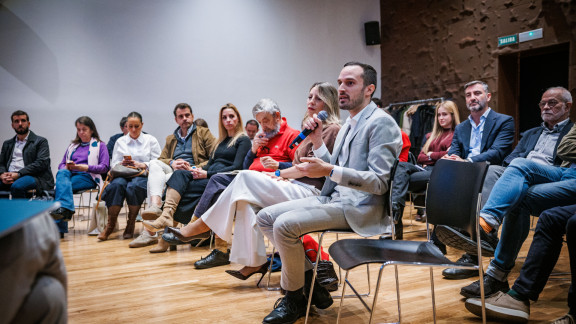
The Madrid City Councilor and urban planner Antonio Giraldo shared his view on the tension between cities and the rural realm. Photo: Agenda Pública / Tania Sieira
The Tension Between Reversing Inertia and Adapting to Change
The micro-space left open a question that runs through any demographic policy: can public authorities alter population trends and urban concentration? And on the other hand, what portion of their efforts should be directed at adapting services, institutions, and investments to a changing reality? The specialists’ contributions highlighted the difficulties in reversing phenomena like low fertility or aging, while municipal experiments showed that political decisions can also contribute to creating economic opportunities and fostering rootedness.
Both perspectives do not have to be incompatible. As raised during the meeting, managing demographic change requires recognizing differences between territories and acting on the conditions that determine their development. Housing, employment, infrastructure, and public services are part of that answer, although there is no one-size-fits-all formula. The challenge is to adapt policies to a differently demographic Spain, without renouncing to harness the resources and opportunities of each territory to build a more cohesive country.






Previous Next
In collaboration with the Fundación “la Caixa”
