
He deserves it for his role in starting an unconstitutional war and perpetrating over 200 murders.

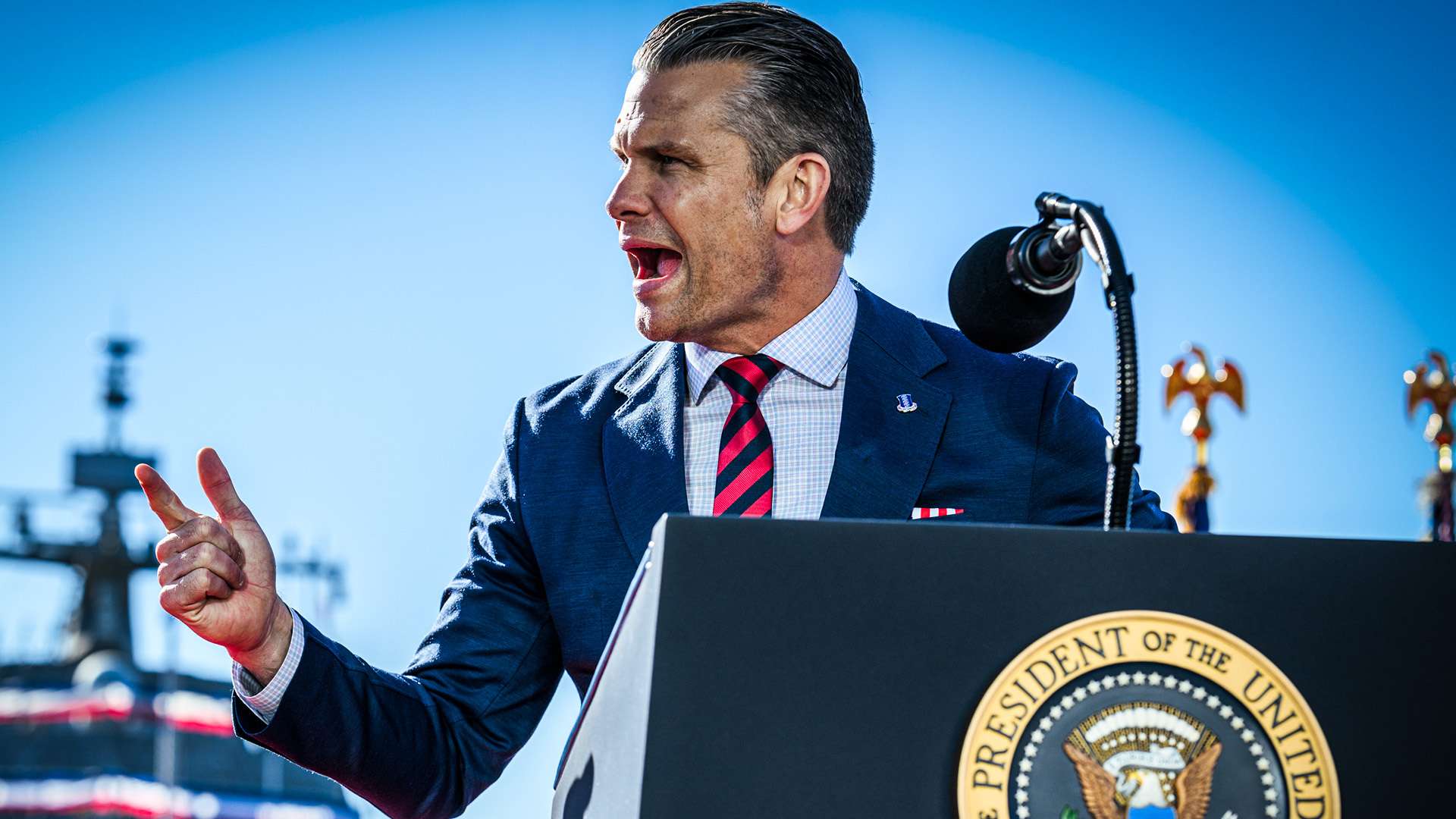
Representative Thomas Massie, a Republican stepping away from Congress, plans to file an impeachment resolution against Defense Secretary Pete Hegseth. The incoming Democratic Speaker, Hakeem Jeffries, has publicly indicated strong support for pursuing the move. This combination makes it highly probable that the measure will advance. If not immediately, it could come to fruition once Democrats assume control in January after their sizable midterm victory. Hegseth is deserving of impeachment, with at least two principal charges: involvement in initiating an unlawful war and responsibility for more than two hundred killings.
On September 15, Massie laid out eight impeachment articles against Hegseth (a more detailed account is available in his description). The two most persuasive are as follows:
Article I — Conducting Hostilities in Violation of the War Powers Resolution of 1973, Section 2(c): Accuses Secretary Hegseth of waging the Iran campaign without a formal declaration, lacking statutory authorization, without an attack on the United States, and without an imminent threat. It contends that the war was illegitimate from its inception…
Article V — Extrajudicial Killings: Charges Secretary Hegseth with replacing maritime law enforcement with unauthorized lethal targeting of individuals suspected of drug trafficking, resulting in at least 221 deaths. It also addresses denial of surrender, additional strikes on survivors, failure to rescue shipwrecked people, and the creation of artificial legal authorities for the campaign.
Massie’s Article V stands out as the most damning, in my view. Hegseth is a chief architect of the Trump Administration’s program of “drug boat” strikes in the Caribbean and the Pacific, a campaign that has now claimed an estimated 244 lives, almost all of them civilians (Massie’s September tally of 221 is now surpassed).
I have previously explained why these strikes are illegal (see here and here). But don’t rely solely on my judgment, or even that of other libertarian or left-leaning scholars like Brian Finucane. Consider the assessment of John Yoo, a former Bush Administration official and a leading advocate for expansive executive power in foreign policy and national security. If one illegally orders the deliberate killing of civilians—especially outside the context of war—that amounts to murder. And that is precisely what Pete Hegseth has done.
This would hold true even if those killed were all presumed drug traffickers. However, the evidence suggests that most were not bound for the United States and many were not transporting drugs at all. Some, for instance, were fishermen.
The Constitution permits impeachment and removal of executive branch officials for “high crimes and misdemeanors.” It does not require one to be a lawyer or legal scholar to recognize that involvement in over 200 murders qualifies as a “high crime.”
Hegseth is also a central figure in the ill-fated Iran War. In prior writings, I have argued that this conflict violated both the Constitution and the War Powers Act of 1973, requiring congressional authorization, which Trump and Hegseth neither sought nor received. The war’s illegality is a major reason for its ongoing difficulties, as the absence of broad public and congressional support deprived Trump of the political stamina needed to sustain the effort after the initial strikes failed to deliver a rapid victory.
Launching and pursuing an illegal war might not constitute a criminal offense in every jurisdiction (though it arguably should). Yet significant non-criminal abuses of power are impeachable under the Constitution’s Impeachment Clause and its original understanding. See analyses by Gene Healy of the Reason Foundation (formerly at the Cato Institute), and respected conservative legal scholars Michael Stokes Paulsen (here, here, and here) and Keith Whittington. There are few stronger examples of illegal power abuse than initiating a large-scale unconstitutional war.
To be fair, Trump and Hegseth are not unique in provoking unlawful wars; Barack Obama did so as well, with controversial actions in Libya and against ISIS (which I condemned at the time). Obama arguably deserved impeachment, too. But the fact that he escaped accountability should not excuse Hegseth. On the contrary, past laxity underscores the need to reestablish deterrence to prevent future wrongdoing. Moreover, the Trump-Hegseth war is on a far larger scale and has produced far worse outcomes than Obama’s campaigns.
The only plausible objection to impeaching Hegseth is that the effort might fail and backfire politically. Yet the Iran War is deeply unpopular, making such a political risk unlikely to backfire. The politics of the drug-boat strikes is more controversial. The administration will likely defend the actions by arguing the victims were drug dealers, but this can be countered with substantial evidence showing many were not headed for the U.S. or even involved in trafficking. Testimony from the families of those killed could illuminate the human cost and sway public opinion against Hegseth and the administration.
Hegseth enjoys little support on Capitol Hill, which could make it feasible to secure the 11 or more GOP senators needed for a conviction (the Democrats will hold a 54-56 seat majority in the next Congress, subject to ongoing vote counts in close races in Alaska and Mississippi). But even if he were acquitted, the impeachment process would still serve a useful purpose by signaling seriousness and drawing further public attention to the administration’s alleged criminal behavior.
Obviously, the primary mastermind behind these unlawful actions is not Hegseth alone, but Trump. The latter reportedly issued the illegal orders, and Hegseth likely helped influence them in the first place. Nonetheless, it remains crucial to sanction officials for following illegal orders, a principle underscored by the Nuremberg precedents. Hopefully, the moment will come when Trump himself faces consequences for his numerous illegal actions, as well. As with Hegseth, the sole legitimate argument against impeaching him is political, not legal or moral.
Massie’s impeachment resolution also lays out several additional charges against Hegseth. While many of these have merit, they are generally less weighty than the main charges discussed above. I will not attempt to evaluate the remaining charges here.
UPDATE: In 2020 I critiqued the “slippery slope” argument against impeaching presidents for abuses of power that aren’t strictly criminal. Those points apply even more strongly to any argument against impeaching appointed officials like Hegseth. In their case, there is no claim that they enjoy a popular electoral mandate.
