
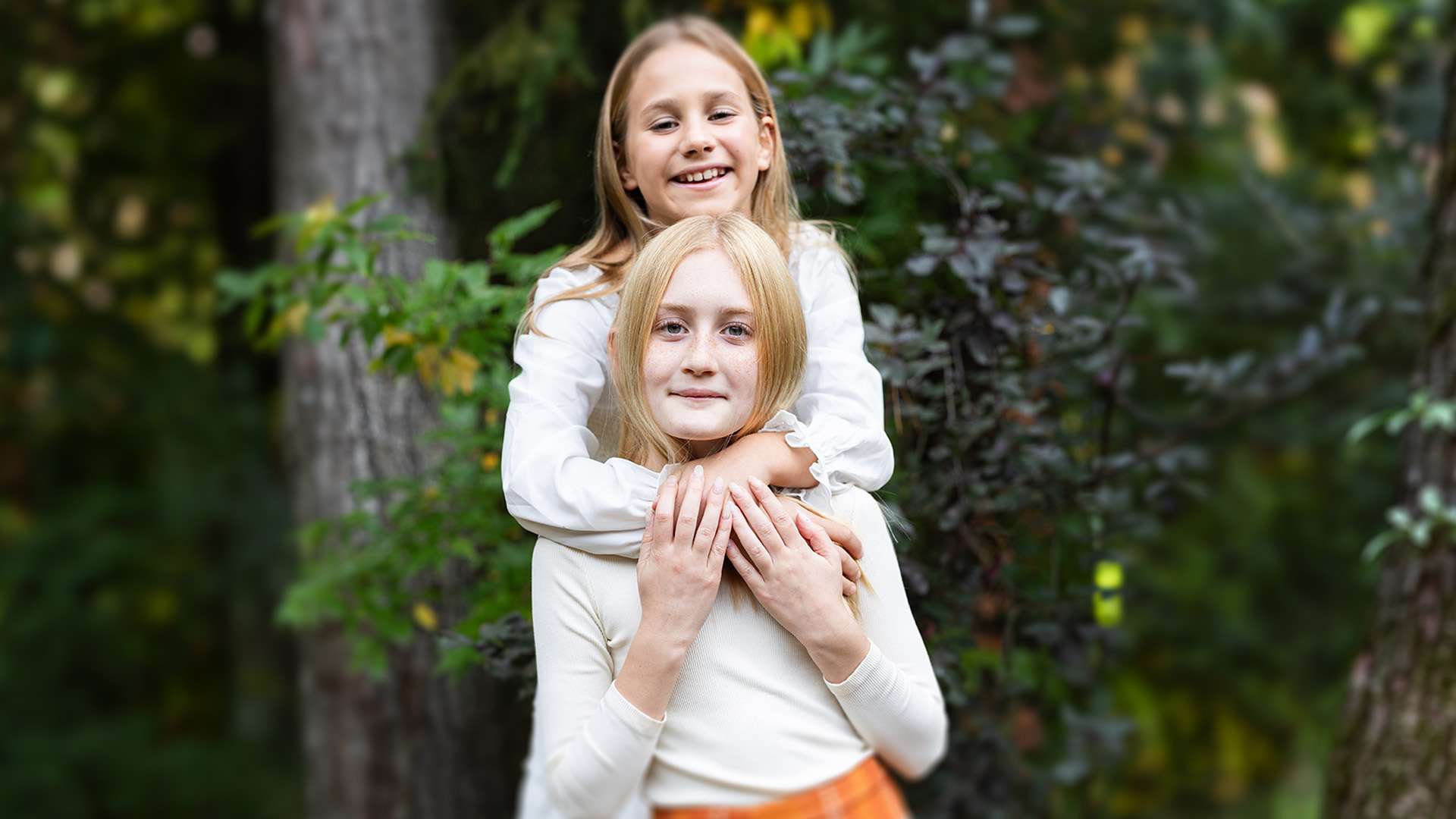
A 12-year-old puts forth a persuasive case for unfettered play.
In a small Massachusetts town, middle school students are championing their right to linger on the playground after classes.
In an op-ed published in the local newspaper, the Carlisle Mosquito, 12-year-old Caroline Dailey explained that she and her peers enjoy staying outside after school hours to play.
This is generally a commonplace activity, especially in an era where the alternative tends to be retreating indoors to a screen. But “during the second week of school,” she notes, “that changed. The superintendent appeared, gave a whistle, and informed us that middle school students could no longer remain on the plaza after dismissal. At first, we thought he was joking.”
Yet it wasn’t a joke. A rule that had lain dormant for years—recently revived by the acting superintendent—now requires the playground/blacktop area to be free of middle schoolers until the elementary students finish for the day (the middle schoolers begin earlier and are released at 2:30, while the younger children depart at 3:05).
Officials argued that outdoor frolics could distract those still inside the classrooms, and there is no one on duty to supervise them.
As a result, the administration suggested that the older students relocate for a half-hour and then return.
During a hearing on the matter, Carlisle School Committee Chair Scott Jamison floated the idea that “parents could lead hikes to various destinations,” according to a Mosquito reporter’s account by Cynthia Sorn. But Sorn also notes that nearby gathering spots where students used to congregate—two shops and the library—are currently closed (the library is undergoing renovations).
In her op-ed, Dailey writes that, “For as far back as I can remember”—an age-appropriate remark from a twelve-year-old—“Carlisle kids have lingered after school to spend time together. We discuss homework, we laugh at something a teacher said, we complain about the cafeteria’s salmon odor, we play Nine Square, and we simply hang out.”
The “hooligans,” as some might call them, note that this is “one of the few times we can just be together without a class, practice, or organized activity.” They can converse, play, and decide what they want to do next.
Peter Gray, a Boston College professor who has spent decades researching the links between free play, autonomy, and mental well-being, believes these moments are among the most vital—educationally speaking—for children. He remarks that these middle schoolers are doing exactly what they should do—demonstrating to themselves and others that they can govern themselves. “That’s what growing up is all about,” Gray says.
Meanwhile, Dailey launched a petition urging the administration to examine options for keeping the playground open for the kids, with clear expectations that misbehavior would not be tolerated. It collected 200 signatures on its opening day (the middle school has 285 students). By now, the petition has drawn support from 469 people.
In his letter to parents, the superintendent explained that his concern lies with supervision, not conduct. The district has a duty of care for students who remain on school property, but there is no staff assigned to supervise the plaza, playground, or fields after school.
But what if the children could supervise themselves, as children have done since time immemorial? Or perhaps the school could borrow one adult from the office or classroom to supervise, akin to a lifeguard? Or recruit a volunteer?
About a month ago, the administration granted the students a testing area behind the school. “It’s a concrete space just outside the gym door,” explains Brooke Mackintosh, mother of three Carlisle middle schoolers. “It’s roughly the size of a large office.” The buses and delivery trucks pass nearby. Her twins enjoy the spot, while her eighth grader and his friends now ride to nearby Concord to play. (That’s a sizable group—about 15 of them.)
Simultaneously, Dailey and the middle school’s “Beyond the Bell Committee” drafted another petition, this one requesting a 30-day trial during which students could demonstrate they can play outdoors for less than an hour without disrupting or altering life as we know it. They’re willing to confine themselves to a portion of the playground so as not to block any younger students.
The superintendent recently met with Dailey and a few others to discuss this proposal, asking them to return with a plan addressing injuries and disciplinary issues. (Reason contacted the superintendent’s office for comment, but received no response.)
The petition highlights that the “Portrait of a Carlisle Graduate” encourages students to become “resilient learners, responsible individuals, caring citizens, advocates for fairness, creative problem-solvers, independent thinkers, and effective communicators and collaborators.”
In presenting petitions, engaging in town meetings, drafting op-eds, and respectfully engaging with adults on all sides of the debate, the organizers assert, “We believe we have already demonstrated these qualities.”
