
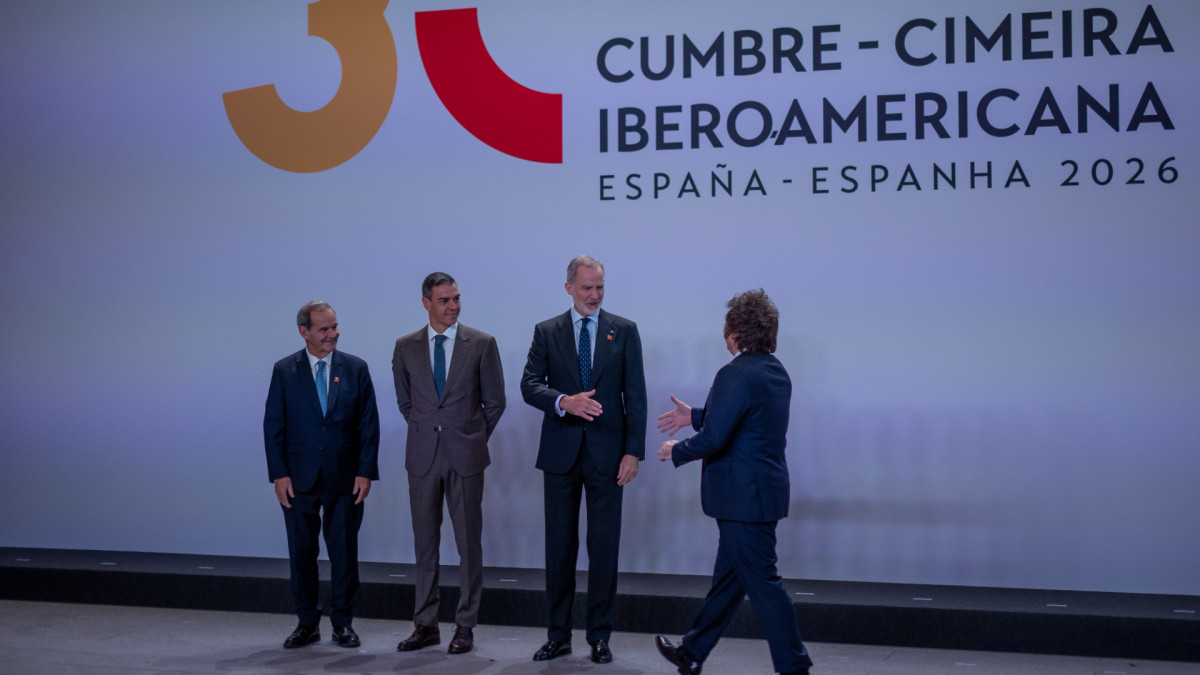
The XXX Ibero-American Summit (Madrid, November 4–5, 2026) can be read as the summit for relaunching a valuable instrument that has now reached 35 years of life, distinctive for gathering the Spanish- and Portuguese-speaking states of Europe and the Americas, with the involvement of all of them without any distinction of political regime. Following the failure of Cuenca (Ecuador) in 2024, which saw scant attendance from heads of state or government and ended without a final consensus declaration by the 22 countries, Madrid reclaims three things: a noticeably stronger presence of leaders, a final consensus declaration, and a cooperation system with follow-up and evaluation mechanisms that are more demanding.
It was not a full-fledged summit. Brazil and Mexico were absent at the highest level; four countries dissented from concrete paragraphs, including the particularly notable paragraph 4, which rejects coercion and the application of measures contrary to international law and the UN Charter; and regional polarization was visible in the plenary. Yet the takeaway is positive and Spain’s role as host and as Pro Tempore Secretariat has been effective.
Ambitious objectives remain: that the Community incorporate into its agenda the momentum for regional integration, strengthen its role as a bridge with Europe, and complete the consolidation of the Ibero-American institutions that the Lagos Report already proposed back in 2013.
Context
Madrid arrived with the obligation to revitalize the Ibero-American system. Thirty-five years after the founding Guadalajara Summit (1991), the Ibero-American Conference came from its nadir. The XXIX Summit closed without a final declaration consensus by the 22 countries, although nineteen countries adopted the Cuenca Declaration and a Program of Action was approved. The impasse mainly stemmed from disagreements between Argentina and Cuba and was unprecedented since 1991. Very few heads of state attended: Ecuador’s Daniel Noboa was the only Latin American president present.
“Madrid reclaims three things: a clearly stronger presence of leaders, a final consensus declaration, and a cooperation system with more demanding follow-up and evaluation mechanisms”
Moreover, Washington has reactivated a hegemonic reading of the Monroe Doctrine, the region is fragmented, and several governments have aligned themselves with the Trump Administration. The Real Instituto Elcano warned in January 2026 that Washington’s policy and the region’s political evolution constrained Spain’s and Europe’s room for maneuver, and saw the Summit as an opportunity to revitalize the Ibero-American space. Finally, the Summit took place less than a month before Spain’s general elections on November 29, which added readings of domestic politics.
Participation: clear improvement, with weighty absences
Madrid brought together the 22 countries and maximized high-level presence compared with Cuenca. According to SEGIB, all were represented at least by their foreign ministers. Ten delegations were headed by their head of state or government. Among them were Javier Milei (Argentina), José Antonio Kast (Chile), Laura Fernández (Costa Rica), Bernardo Arévalo (Guatemala) and Nasry Asfura (Honduras).
The figure fell short of the Secretary General of Ibero-America, Andrés Allamand’s, forecast of over fourteen presidents attending on October 27. The most notable absences were Lula da Silva, freshly reelected president of Brazil on October 25; Claudia Sheinbaum, president of Mexico, a country that propelled the creation of the system together with Spain; and Delcy Rodríguez, acting president of Venezuela, subject to EU travel restrictions but potentially waivable to attend international summits.
The absence of the two major Latin American countries weighs heavily given their demographic and economic significance. The presence of Milei, who did not attend the opening or the gala dinner and equated socialism with fascism in the plenary, showed that the forum still brings together governments that are deeply divided, which in turn is also a strength.
The Madrid Declaration: consensus recovered
The main political achievement is that there is a declaration. The Madrid Declaration, comprising 20 paragraphs, was adopted by consensus two years after the Cuenca impasse. The Declaration includes the following:
- Governance reform (paragraph 5): strengthening the meetings of foreign ministers to steer the Community between summits, shared leadership, and fewer duplications with other forums.
- Strategy for Ibero-American Cooperation 2027-2030 (paragraph 8): approval of the new strategy, with five sectoral objectives.
- Ibero-American Disaster Risk Reduction and Civil Protection Network (paragraph 9): with a multi-hazard early warning system, a regional response mechanism, and a fiduciary fund. Spain plans to contribute one million euros to a support fund for the network, in collaboration with CAF.
- Ibero-American Alliance on Artificial Intelligence (paragraph 10): voluntary participation coordinated by SEGIB, to strengthen the region’s technological and cultural sovereignty.
- Ibero-American Charter on Academic Mobility (paragraph 11): facilitates exchanges, transcript transfers, double degrees, and postgraduate programs, but without automatic degree recognition.
- Ibero-American Charter on Care and Support (paragraph 12): a guiding instrument for voluntary affiliation.
- External projection (paragraph 17): Angola, India, and Turkey join as associate observers and the Caribbean States Association as an advisory observer.
The consensus was achieved with a flexible approach: countries could note their dissociation in footnotes without blocking the whole agreement. Those footnotes reflect the region’s divisions:
Table 1
Dissociations of the Madrid Declaration (2026)
| Country | Dissociation | Subject of the dissociation and clarifications |
|---|---|---|
| Argentina | Paragraphs 4, 10, 11 and 12 | Coercion, AI alliance, academic mobility and care. Interprets gender as referring to the sexes female and male, in line with Article 7.3 of the Rome Statute. |
| Paraguay | Paragraphs 4 and 10 | Coercion and AI alliance. Interprets gender equality in accordance with Article 48 of its Constitution. |
| Colombia | Paragraph 4 | Rejection of coercion and of measures contrary to international law and to the UN Charter. |
| Costa Rica | Paragraph 4 | Rejection of coercion and of measures contrary to international law and to the UN Charter. |
Source: self-edited from the Madrid Declaration (2026).
The paragraph 4, which rejects coercion and measures contrary to international law, is the most contested. Although the text mentions no one explicitly, the paragraph can be read as an allusion to the Trump Administration. The Declaration does not expressly mention the embargo on Cuba. The foreign ministers of Brazil, Cuba, Mexico, Uruguay, and Nicaragua condemned it at the ministerial meeting, according to several media outlets.
The 2027-2030 Strategy and a more demanding evaluation system
The Cooperation Strategy for Ibero-America 2027-2030 continues the planning of cooperation after the Four-Year Action Plan 2023-2026 and is the most relevant technical instrument of the Summit. It focuses action on five sectoral objectives: education, culture, knowledge and innovation; equality, cohesion and social development; environmental sustainability; democracy, institutions and the rule of law; and productive transformation for sustainable development.
Its main organizational novelty consists of five Alliances, one for each objective, coordinated by SEGIB and comprised of participating countries, Ibero-American organizations, programs and networks, open to other actors. Each Alliance will feature a public digital platform with its planning, members and projects.
The clearest improvement lies in monitoring and evaluation (chapter 6 and section 5.3). Four-year plans were already oriented toward results and included annual reports and mid-term evaluations. The Strategy strengthens the measurement of results and the tracking of its contribution to public policies:
- Annual monitoring report on implementation and results, plus a mid-term and a final evaluation.
- Quantitative and qualitative indicators of compliance for each strategic objective, defined with Cooperation Managers, and specific indicators for transversal approaches.
- National traceability: a monitoring framework with process and outcome indicators to assess the cooperation’s contribution to public policies, taking into account each country’s capacities.
- Evidence-based management: theory of change, risk and assumption analysis, institutionalized protocol for using evaluations and publishing results.
- Link between budget and results: a mechanism will be designed to incorporate financial information into reports and evaluations.
- Political accountability circuit: the SEGIB will report annually to National Coordinators and Cooperation Officials, who will be responsible for assessing the results. Their meetings will have a specific agenda point to analyze them. A Consultative Committee will also be created.
- Co-responsibility: participants in each alliance will provide information on progress in line with the commitments they have undertaken.
Two cautions. Much of these measures remains to be implemented. Countries still must approve the protocol detailing the governance of the alliances, the roles of the Consultative Committee and the body of cooperation officials, and the coordination with sectoral ministerial initiatives. Moreover, the Strategy preserves flexibility and the various levels of national involvement.
A relaunch summit
Madrid was not the summit of unity, but it was the summit for relaunching an instrument that, after 35 years and thirty summits, remains the only forum that brings together all of Ibero-America with its political diversity. In a world that is reordering itself around spheres of influence, maintaining this space and delivering concrete results is already an asset. Being a geopolitical actor alongside the EU and facing the new empires would be ideal, but the enormous ideological fractures prevent it.
“Madrid was not the summit of unity, but it was the summit for relaunching an instrument that, after 35 years and thirty summits, remains the only forum that brings together all of Ibero-America with its political diversity”
The relaunch has been primarily technical and cooperative in areas with low ideological content, such as academic mobility or disaster management. For the Community to gain political weight, the agenda for the next summit in 2028 should incorporate three lines that today barely appear in the Declaration:
- Boost regional Ibero-American integration. The Declaration extols the ideals of unity and integration from the Panama Anfiictiónico Congress, but it lacks concrete commitments. The Community could serve as a space for convergence among subregional processes (Mercosur, Pacific Alliance, Central American Integration System, Andean Community) in areas such as mobility, digital and energy interconnection, or regulatory harmonization.
- Strengthen the bridge role with Europe. Spain and Portugal are the natural link between the EU and Latin America, and the moment is favorable with the provisional implementation of the EU-Mercosur Interim Agreement since May 1, 2026. The Community should coordinate its agendas with those of the EU and CELAC, as the Strategy itself anticipates promoting cooperation agreements with the European Union and CELAC, and taking advantage of the presence of several European states among its observers.
- Consolidation of Ibero-American bodies. The Lagos Report, requested at the Cádiz Summit (2012) and the basis for the renewal approved in Veracruz (2014), urged greater coordination, articulation and integration of the Organization of Ibero-American States for Education, Science and Culture (OEI), the Ibero-American Social Security Organization (OISS), the International Youth Organization for Ibero-America (OIJ), and the Conference of Ministers of Justice of Ibero-American Countries (COMJIB) under the Conference. Veracruz agreed to formally incorporate the four bodies into the Conference and established the Strategic Direction Committee. The Madrid Declaration recognizes the need to deepen synergies and avoid duplications. The new Alliances and the Consultative Committee are a step, but they do not replace a pending institutional rationalization.
Finally, Spain’s role has been notable. As Pro Tempore Secretariat, it organized 25 ministerial meetings and preparatory forums for senior authorities, delivered tangible results to the Summit already negotiated, and achieved a consensus text with governments openly at odds with the Spanish government, such as Argentina. It also managed to keep the forum as a state space: the Crown acted as host and added value as always, and the king closed the Summit by presenting it as a counterpoint to a time of blocs and rivalries. The Pro Tempore Secretariat passes now to Honduras, which will host the XXXI Summit in 2028.
