
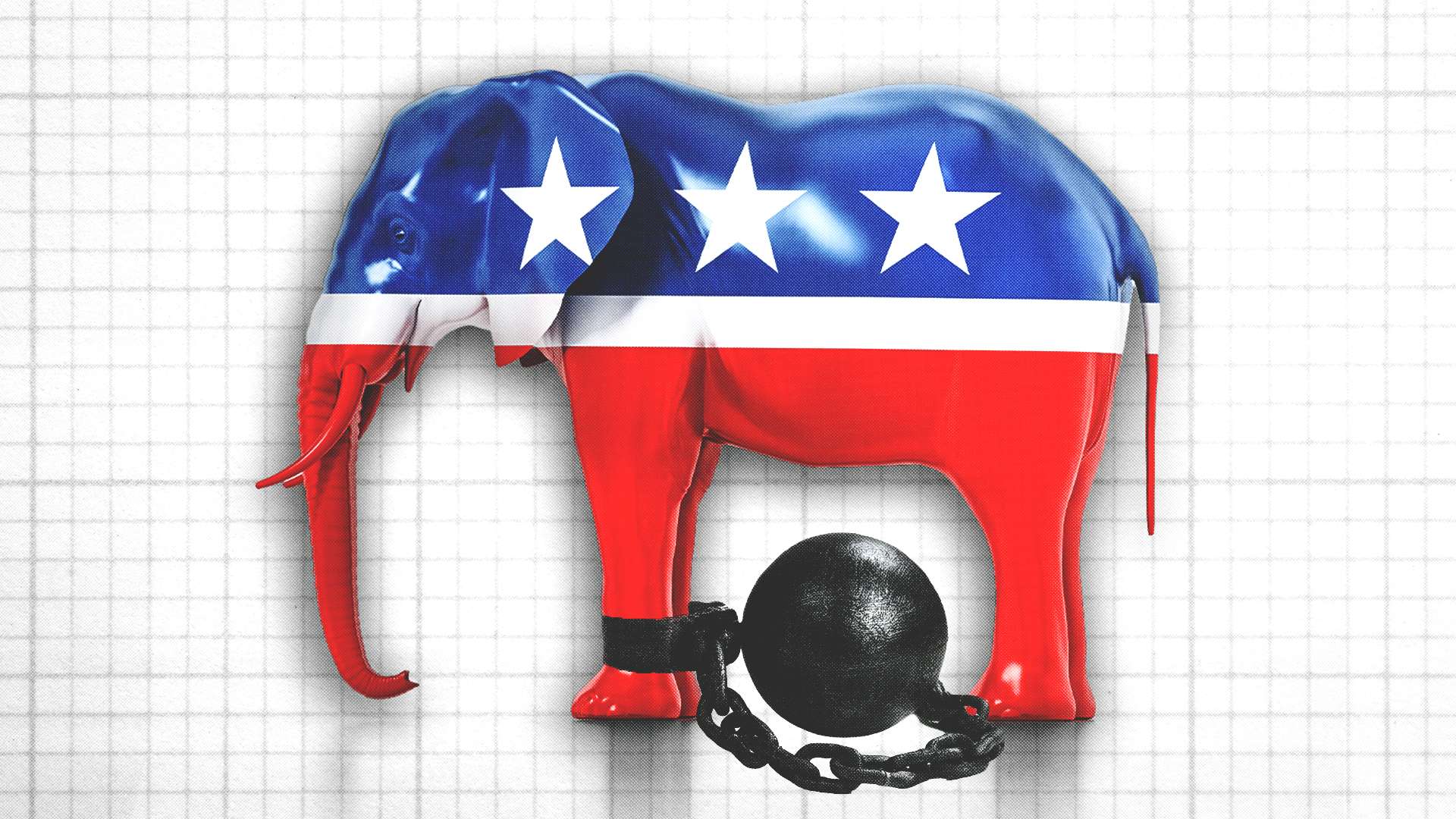
You cannot govern for years in this fashion—ignoring voters’ explicit demand to lower prices—and then expect fears about what Democrats might do to shield your party from accountability.
Following the Republicans’ crushing defeat in the midterm elections, a familiar refrain among conservatives is to warn that the future holds alarming consequences. Whether you consume commentary on X, Instagram, or from friends on Facebook, you’ll likely hear concerns that Democrats will greatly expand government, push socialism, or undermine the foundations of Western civilization.
Undeniably, a slate of misguided, expansive-government policies seems on the horizon. But if the return of Democrats to power sounds so terrifying, why did Republicans elect a president and vice president as controversial as Donald Trump and J.D. Vance? Why back policies that clearly undermine the goal of a free and virtuous society? Did they expect a majority of voters to applaud the outcome?
You cannot keep steering the country in this way—imposing tariffs and other measures that raise everyday costs, ignoring the voters’ clear instruction to lower prices—and then count on fear of Democratic actions to spare your party from accountability.
Consider when Trump’s 2024 voters began drifting away: April 2, 2025. On “Liberation Day,” the president unveiled in the Rose Garden a chart of tariff rates built on embarrassingly faulty mathematics. He then moved to raise taxes on nearly all imports, including goods from allies and uninhabited territories.
Voters were told tariffs would be part of policy. In fact, they were pitched the idea that tariffs could fix everything. The reality was a president who taxed importers at whim, according to how he felt on any given day. Americans quickly understood they were paying the price, not foreign producers.
Prices rose across the board—from steel to groceries to luxury goods and everyday essentials. After a conservative-leaning Supreme Court in February determined that the tariffs lacked statutory authority, the president pressed ahead by citing a different flawed legal basis.
Meanwhile, the ineffective and disorganized tenure of the Department of Government Efficiency, coupled with refusals to reform entitlement programs, extra war spending, harmful tax breaks for tips and overtime, and new giveaways to seniors, produced a $2 trillion shortfall. It also fueled inflation that no amount of scapegoating of former Fed chair Jerome Powell could conceal.
Immigration policy followed suit. While the administration did shut the border in some respects, a sense of unfinished business led to aggressive raids on farms, meatpacking plants, construction sites, and hotel properties. Beyond hurting workers and employers, the brutal footage of these raids magnified the political harm.
Farmers bore the heaviest damage: 2025 saw soybean shipments to China drop 76%, beef down 69%, cotton down 85%. In December, USDA unveiled a $12 billion relief package for farmers harmed by market distortions. The fairness issue stemmed from trade policies that repeatedly gutted their export markets, and the burden has since shifted to ordinary Americans through taxation to support the farmers.
Next was the Iran conflict. Fuel prices surged—from $2.98 to $4.15 per gallon by Election Day. Diesel jumped to $6.28, about 65% higher than before the conflict. Moody’s estimates the Iran episode would cost around $2,000 per household when considering mortgage rates, travel costs, and heating oil.
Farmers suffered again since roughly a third of global traded urea—an essential agricultural input—passes through the Strait of Hormuz. Prices for nitrogen fertilizer roughly doubled within weeks.
Not all endured hardship. Lobbyists and allies flourished. When a single unpredictable leader can adjust taxes on inputs, firms curb hiring and investments and seek carve-outs. Tariff lobbying registrations surged by 218% in 2025. Tech firms promising substantial domestic investment gained exemptions. Unsurprisingly, the AI sector prospered. The administration also acquired equity in 41 companies, many linked to officials’ acquaintances.
Vance now suggests the electoral beating occurred solely due to the war. That’s convenient. If the conflict explains everything, no one must question the hollow populist pledge that abandoning free-market policies would restore American greatness, or how a top-down system fuels corruption. These are defining traits of a MAGA agenda that, it appears, Vance may soon lead.
So the Democrats should indeed be feared. I fear them too. They will likely retain most tariffs, widen industrial policy, applaud the equity stakes, and push for even larger deficits—or worse. That fear ought to have influenced Republicans earlier, before they tolerated MAGA policies and conduct that were intolerable.
COPYRIGHT 2026 CREATORS.COM
