
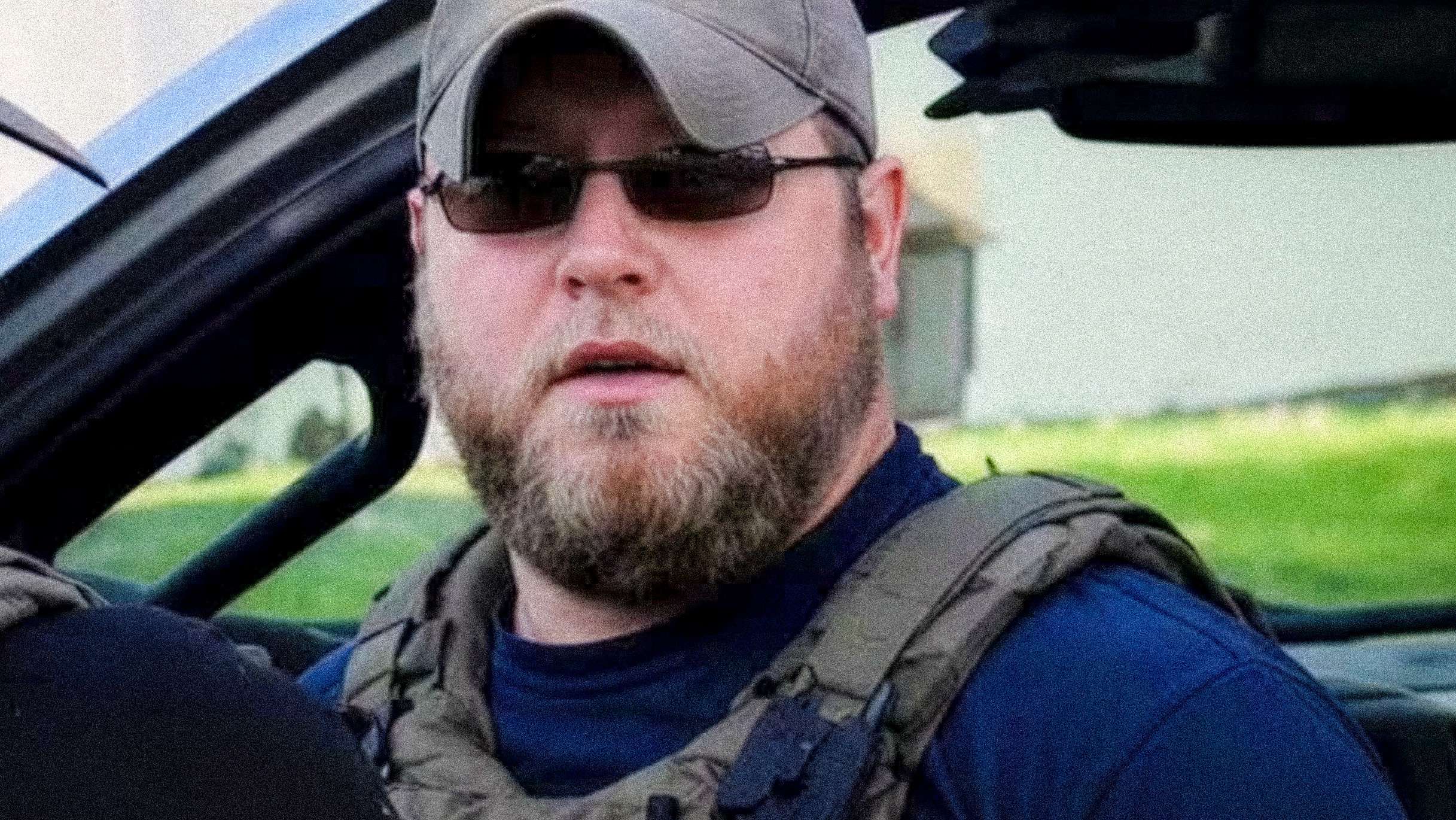
A rookie ICE officer’s fatal shooting of a Colombian migrant intensifies scrutiny of the agency’s hiring vetting amid rapid expansion
David Brouillette is the inexperienced enforcement official with Immigration and Customs Enforcement who shot and killed Johan Sebastián Durán Guerrero during a July traffic stop. Newly released messages reveal a troubling hostility toward immigrants, especially Colombians, that appears to have colored Brouillette’s attitudes. These disclosures come as questions mount about Brouillette’s suitability for the role, given a history suggesting inconsistent employment, accusations of domestic abuse, and possible mental health concerns. All of this feeds a broader inquiry into how thoroughly ICE checks the people it hires.
Witnesses say ICE agents tried to pull over Durán Guerrero’s car while they were surveilling his Maine residence in connection with a separate search. The Department of Homeland Security contends that Durán Guerrero attempted to drive away, and that Brouillette fired out of concern for public safety. Durán Guerrero’s family, through his lawyers, maintains he had valid work authorization to stay in the United States and no criminal record. No body camera footage has been released, and investigators are still examining the circumstances surrounding the shooting.
The New York Times has since obtained a sequence of bitter emails Brouillette wrote to his sister about her longtime partner, a man of Colombian descent. In the messages, Brouillette disparages his sister’s partner, suggesting he should “take his non citizen ass back to his country and enjoy his third world luxuries,” asserts that his sister’s partner’s family “knows nothing about what it takes to earn and then CHERISH the freedom America offers,” and adds, “Your choices have cost you a brother. I am so so so ashamed of you. You’re dead to me Liz. Enjoy it. Dead to me. DEAD.” These communications, the sister said, offer a window into the officer’s anger toward people born outside the United States; they are not the sole troubling aspect of Brouillette’s history that has surfaced since the shooting.
According to the Associated Press, a family member says Brouillette was diagnosed with severe bipolar disorder and attention-deficit/hyperactivity disorder when he was a child. His sister, a licensed therapist, says his condition deteriorated after his return from Afghanistan in 2013 and that he has been grappling with post-traumatic stress disorder.
Brouillette’s mother told the Times that her son “is dangerous and should not have weapons.” She also urged readers to “believe his victims, not him.” Two former wives have accused him of physical abuse, allegations he denies. His daughter told the AP that he once told her he had sat on a tree stump with a gun to his head after school one day.
From 2015 through 2025, Brouillette held at least six jobs, moving between roles and responsibilities. In late 2021 he worked briefly as a volunteer firefighter; the then-fire chief described him as “a loose cannon,” admitting it didn’t take long to realize a mistake had been made.
During a firefighter training exercise at Southern Maine Community College, Brouillette sustained a traumatic brain injury. He sued the college in 2023, claiming lasting symptoms such as impaired memory, cognitive deficits, headaches, vertigo, and light sensitivity.
“He was a walking red flag,” remarks Aaron Reichlin-Melnick, a senior fellow at the American Immigration Council. “He should not have been allowed within a mile of a law enforcement job… and yet ICE not only brought him on board, but they fast-tracked him into the field.”
Brouillette joined ICE in December, at a time when the Trump administration was pressuring the agency to increase its numbers. The Times notes that the agency permitted him to bypass portions of the standard training program as part of a looser protocol for former law enforcement officers; on the day of the shooting, his background check was still incomplete.
When CNN inquired about Brouillette, border-security chief Tom Homan called him a “rare instance.” Yet David J. Bier, director of Immigration Studies at the Cato Institute, contends that even a single notable failure can have outsized consequences. “One is too many,” Bier told Reason. “When you say it’s only a few people, those few individuals interact with thousands of people each year. A handful of hiring mistakes can have major implications for how the public views ICE and how the agency’s work is perceived.”
The concern isn’t limited to isolated instances. Reichlin-Melnick notes the uncertainty about how many others might resemble Brouillette. Some reports indicate ICE has quietly terminated recruits after the fact, exposing issues in their backgrounds. A former federal official told the Times that hundreds hired during the surge had already been removed, while a Washington Post report identified 19 officers with past misconduct allegations, criminal charges, or other employment red flags.
In August 2025, a 17-year veteran of ICE who oversaw the vetting process filed a formal whistleblower complaint with the DHS Office of Inspector General. The complaint describes “systemic breakdowns in vetting” that allowed people to receive job offers before basic checks, such as identity verification and credit reviews. It asserts that the DHS engaged in “deliberate circumvention of personnel vetting and clearance procedures in violation of governing law and policy” and calls for an immediate halt to offers until proper standards could be restored.
The DHS did not heed that warning. Brouillette was hired three months later, and seven months after that, Durán Guerrero was dead.
