
The midterm elections in the United States have transformed the political balance in Washington. Democrats have captured the Senate and the majority in the House of Representatives, after voters expressed a resounding rejection of President Donald Trump and the Republican Party.
The results give the Democrats the legislative power needed to investigate Trump’s decision to delay a $14 billion weapons package for Taiwan. The control of both chambers will also allow them to pass laws, set deadlines and use federal funds to pressure the Administration.
However, the most important change perhaps is not the transfer of legislative power itself. Trump will enter the last two years of his presidency as a weakened figure, whose party lost both chambers after an election dominated by discontent over the Iran war, rising prices, corruption and the cost of living. He will retain substantial constitutional authority, but his ability to impose discipline among Republicans could be markedly reduced.
“The president will retain considerable constitutional authority, but his ability to impose discipline among Republicans could be substantially diminished”
The proposed package, primarily made up of air defense systems, has already cleared the informal legislative review process. Senators from both parties said it had been approved by Congress in advance and that Taiwan would finance the entire purchase. What remains is the formal notification from the Trump Administration to Congress, a prerequisite for the sale to move forward.
It is expected that the package would include hundreds of Patriot Advanced Capability-3 (PAC-3) Missile Segment Enhanced interceptors, nine advanced national air defense systems and an integrated combat command system. Collectively, these systems would form a central component of the layered air defense network known as the ‘T-Dome’ proposed by Taiwan.
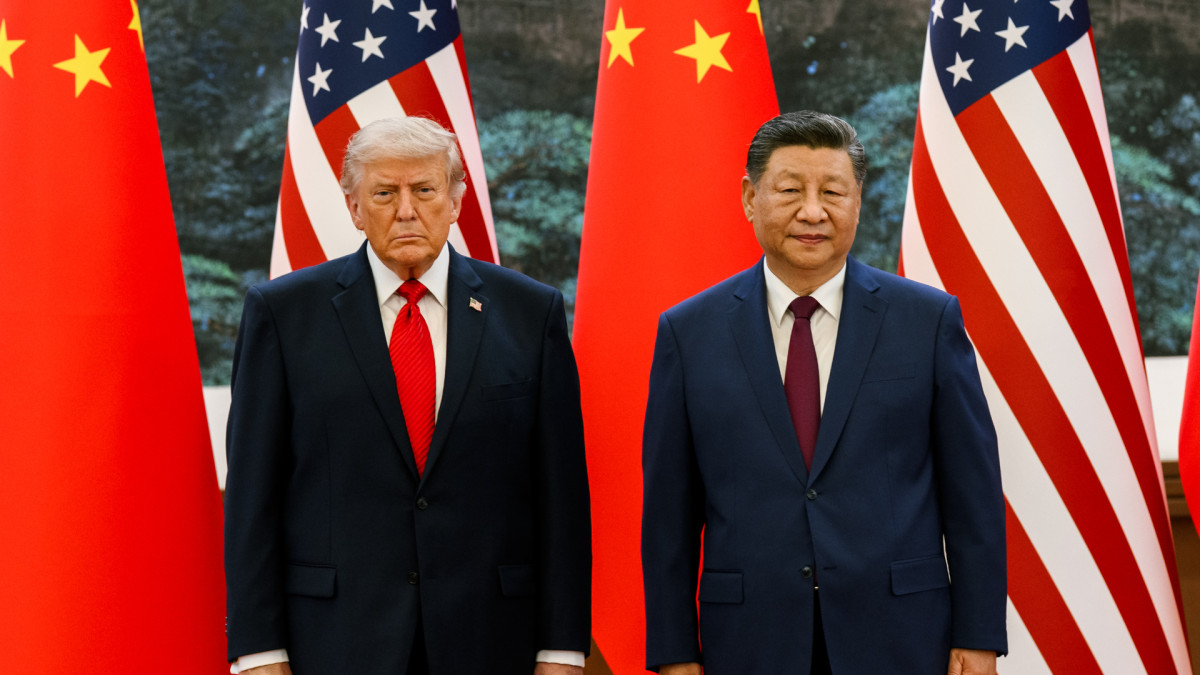
Trump acknowledged earlier this year that he kept the package on hold and described it as a bargaining chip in his negotiations with Chinese President Xi Jinping. This marked a departure from the United States’ traditional position that arms sales to Taiwan should not be negotiated with Beijing.
“Trump acknowledged earlier this year that he kept the package on hold and described it as a bargaining chip in his negotiations with the Chinese president”
Control of the House Foreign Affairs Committee and the Senate Foreign Relations Committee would allow Democrats to summon Administration officials, demand internal communications and hold public hearings to determine whether Taiwan’s security was used as a bargaining tool with China. If the Administration refused to cooperate, the committees could issue formal subpoenas and escalate the dispute through budgetary and oversight procedures. Congress could also require the Administration to provide periodic reports on Taiwan’s pending arms requests, the status of each proposed sale, and the reasons for any delays.
The legal basis for congressional intervention is stronger in the Taiwan case than in an ordinary arms sale to another country. The Taiwan Relations Act states that the United States will provide Taiwan with defense articles and services necessary to maintain a sufficient self-defense capability. It also provides that the president and Congress will determine the nature and quantity of that armament based solely on Taiwan’s defensive needs.
That provision does not exclude the president from the process, but it directly contradicts the idea that Taiwan’s defensive needs should be subordinated to negotiations with Beijing. Congress could turn that principle into a legal duty requiring the Administration to formally notify the package within a set deadline. The requirement could be incorporated into the National Defense Authorization Act, into a State Department authorization bill, or into standalone Taiwan-specific legislation.
The Democratic majorities could also attach conditions to funds for the State Department or other Administration priorities. Congress could withhold parts of discretionary funding until notification is provided. These measures would significantly raise the political and administrative costs of maintaining the blockade, though they would not eliminate presidential power.
Under the Arms Export Control Act, the Executive Branch initiates the formal notification of major arms sales abroad. Congress reviews proposed transactions and can block or revise them through legislation, but the process usually begins after the president decides to move forward with the sale.
Trump could, therefore, veto legislation requiring notification or reject appropriations that include Taiwan-related conditions. To override a presidential veto, Congress would need two-thirds majorities in both chambers.
However, concentrating solely on Trump’s formal powers could lead to underestimating how much the elections have weakened his political position. He cannot run again for the presidency, his closing-campaign message failed and Republican candidates paid the price for decisions closely tied to his Administration.
“Concentrating exclusively on Trump’s formal powers could lead to underestimating how much the elections have weakened his political position”
The Iran war, rising prices and persistent inflation had already made Trump a burden for Republicans before Election Day. A Reuters analysis concluded that two-thirds of Republican candidates in tight legislative races had already distanced themselves from him on at least one policy or downplayed their relationship with the president. Several broke with the Administration over the war or supported moves to curb Trump’s war powers.
The defeat weakens one of the most effective tools Trump used to control Republican lawmakers. He can still threaten them with criticism or by backing rivals in primaries, but lawmakers preparing for the 2028 or 2030 elections have found that loyalty to Trump does not guarantee victory. Some may conclude that distancing themselves from a weakened president is necessary to secure their own political survival.
In the Taiwan case, Trump would find it especially hard to demand that Republicans remain obedient. Supporting the package would allow them to reaffirm their stance of firmness toward China, back American arms manufacturers and protect jobs in the United States without advancing the Democratic Party’s domestic agenda.
Republicans could also argue that using Taiwan’s defense as a bargaining chip benefits Beijing and undercuts deterrence. That stance would be consistent with criticisms already voiced by Republican lawmakers, including Thom Tillis, who joined Democrats in urging Trump to unlock the package.
“Republicans could also argue that using Taiwan’s defense as a bargaining chip benefits Beijing and undermines deterrence”
The decisive question, therefore, is not simply whether Democrats can pressure the president. The question is whether Trump’s electoral defeat will enable Democrats and Taiwan-friendly Republicans to build a broad enough coalition to make the blockade politically untenable and, potentially, override a presidential veto.
It would still be difficult to reach a sufficient majority to formally override a veto, but perhaps Congress won’t need to go that far. A credible bipartisan threat to attach notification requirements to essential defense or budget legislation could force the Administration to back down before a veto confrontation.
The economic argument could attract more Republican support. Taiwan will finance the package and the orders would support manufacturers, workers and U.S. military production lines. This is a Taiwanese purchase of American-made equipment that would strengthen both deterrence in the Taiwan Strait and the U.S. defense industrial base.
Trump will retain control of the Executive Branch agencies that must formally notify and execute the sale. Congress cannot negotiate contracts independently or issue export licenses. The elections, however, have ended his ability to delay the package with limited scrutiny and the unwavering support of Republicans.
“The elections, however, have ended his ability to delay the package with limited scrutiny and the unwavering support of Republicans”
Democratic control of both chambers will bring investigations, subpoenas, reporting requirements, legislative deadlines and budget pressure. Trump’s weakened position could also provide Congressional Republicans with both the incentive and the political space needed to challenge him.
The fight over the $14 billion package will test more than Washington’s commitment to Taiwan. It will reveal whether Trump, after losing both chambers and entering the last two years of his presidency, can still bend the Republican Party to his will or whether Congress is ready to reclaim its role in shaping U.S. policy toward Taiwan.
