
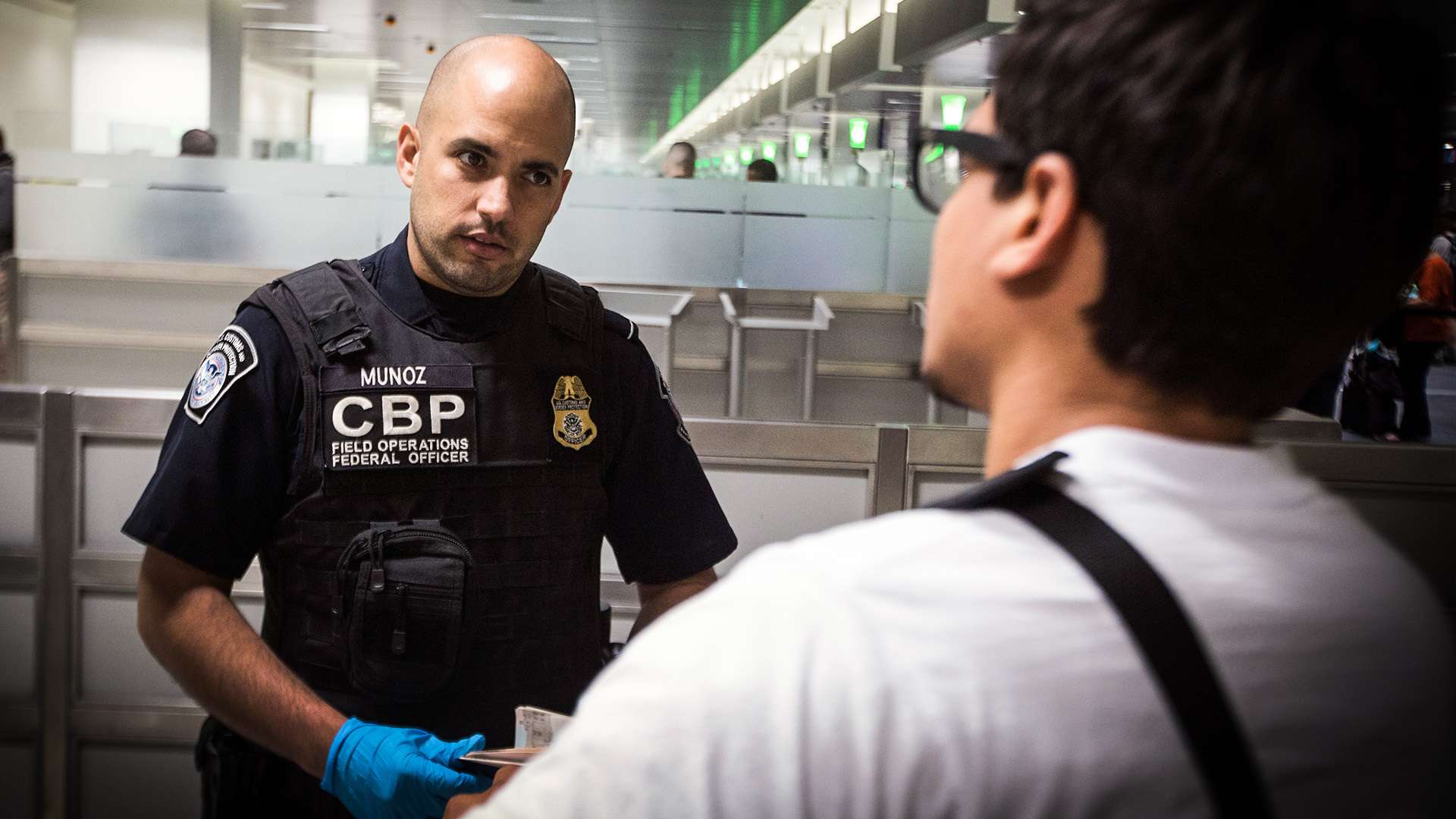
The border protection agency is coming under increasing legal pressure over its habit of grabbing travelers’ electronic devices at the border without obtaining a warrant. Recently, Judge Leonie M. Brinkema ruled that the agency had improperly concealed what it did to nurse Muhammad Numaan Imam’s electronics. A few days afterward, Judge Allison D. Burroughs held that CBP was likely retaliating against lawyer Andrew Lattarulo by searching his phone rather than pursuing a legitimate inquiry.
For years, CBP has asserted sweeping authority to inspect the digital data of all travelers as part of its routine border search for contraband, arguing that Fourth Amendment protections do not apply at the point of entry. If travelers refuse to share passwords, agents can seize their devices outright. Yet the Supreme Court seems inclined to entertain a challenge to electronic border searches, and lower courts appear increasingly irritated by the border agency’s approach.
Lattarulo co-owns Georges Cote LLP, a firm that handles personal injury and immigration matters. Last year, while returning from a vacation, he passed through CBP preclearance in Aruba, a process that allows travelers to clear immigration before boarding a flight to the United States. But at the domestic terminal of Boston Logan International Airport, three CBP officers and a DHS agent detained Lattarulo and seized his phone. The DHS later mailed back the device after downloading its contents; before decryption could occur, Lattarulo sued the government.
The government contends that the search of Lattarulo’s phone was part of an inquiry into Georges Cote LLP for allegedly employing non-citizens illegally. Burroughs, however, was not persuaded by that rationale. She suspected the DHS was punishing Lattarulo for speaking out about immigrant rights. After all, Audai Cote, a partner at the firm who oversees employment compliance and who had been approached by DHS three days earlier, passed through the same airport on the same day without incident.
The government “offered no evidence that cellphone searches are regularly conducted during the type of employment investigation at issue here,” Burroughs wrote in her ruling issued on Friday. “The fact that the government, after Lattarulo publicly criticized the agency, chose to adopt an unusually intrusive investigative method that seems designed to impose the maximum burden on him strongly suggests a pretext.”
Burroughs ordered the government not to decrypt Lattarulo’s data while the case proceeds. While she did not immediately resolve the Fourth Amendment issues, she indicated that the government’s actions may have exceeded lawful bounds there as well. “From the information before the Court, there appears to be no connection between Lattarulo’s border crossing (or, more broadly, the government’s border-policing interests) and the suspected crime that formed the basis for the border search,” she wrote.
Imam’s case stood on a different footing. The nurse practitioner, based in Virginia, cannot recall a clear reason provided by CBP for seizing his electronics during his return from a family trip to Turkey. At Washington Dulles International Airport, CBP officers told Imam that he had been “flagged” for unspecified reasons and demanded his phone passwords. Imam stated that he could not provide them legally because his device contained patient communications and case-management software.
“Your lawyer cannot intervene. We are the authorities at the border,” one of the officers reportedly told Imam before taking all the family’s electronic devices, according to the complaint.
Imam filed suit, and CBP promptly mailed back the devices without explaining what information they had looked for. Brinkema then ordered the agency to spell out what it had done to Imam’s electronics before returning them. The agency is now contesting the decision to disclose those details, arguing that the information involves sensitive law enforcement methods.
“Almost all of the materials that the defendants claim to be privileged relate to CBP’s practice of seizing electronic devices, a matter that the government previously disclosed in other cases,” Brinkema wrote in her Tuesday ruling. “The fact that the government possesses equipment used to access and copy data from cellphones and laptops should surprise no one, especially not those who may have something to hide.”
Brinkema gave the agency one final opportunity to demonstrate—by Tuesday of this week—why most of the information should remain sealed. A day before the deadline, CBP requested a two-day extension, arguing that coordinating with multiple components of the Department of Homeland Security on sensitive law enforcement matters required additional time.
Although courts have traditionally shown deference to the government at the border, CBP and other DHS agencies may be overstepping their welcome. Some of the government’s justifications for harassing travelers have appeared flimsy, and its efforts to withhold information give the impression of evasiveness. Seizing the correspondence of lawyers also raises attorney‑client privacy concerns beyond the Fourth Amendment, not to mention turning victims into sympathetic figures in the eyes of judges.
“Historically, the government has stretched national security and law-enforcement rationales to cover up corruption and dishonesty, and it’s hard not to conclude that is what is happening here,” remarks Jenin Younes, Imam’s attorney, to Reason.
