
A fresh legal challenge argues that the state cannot compel platforms to display official government messaging.
A lawsuit has been lodged against New York State over its statute that requires social media apps to present a warning about the potential mental health risks connected to their features.
Beginning January 1, residents of New York will encounter a mandatory, non-skippable 10-second alert when they open social platforms, conveying a message along the lines of: “The Surgeon General has warned that while social media can benefit some young users, excessive use may be linked to notable mental health harms.”
The notice would appear on the first opening of the app by a user aged 17 or younger each day, and would reappear for 30 seconds after three hours of use. The requirement would apply to any platform that features an “addictive feed, autoplay, and/or infinite scroll,” according to a lawsuit filed by NetChoice—a trade association representing technology companies—on Friday. Exemptions would only be granted if the platform has “reasonably determined that the user is over seventeen years of age.”
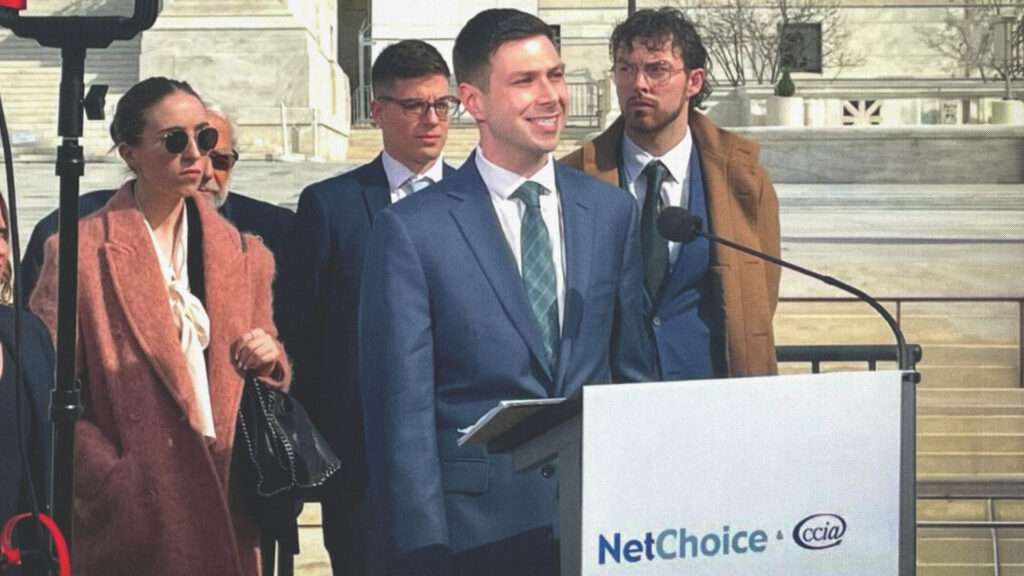
NetChoice contends that the statute interferes with access to information and forces private actors to echo government viewpoints. “The First Amendment bars New York from compelling private speakers to serve as government mouthpieces, including forced state-scripted warnings on speech,” noted Paul Taske, director of the NetChoice Litigation Center.
While warnings on products are common—cigarettes, over-the-counter medicines, and even Lego—NetChoice maintains that applying one to social media raises a different concern. “Unlike a static warning on a product label, these alerts continually interrupt users and block access to protected speech,” the complaint states. The group adds that the thing being constrained here is others’ speech rather than a tangible product, and that the warning does not accurately reflect the surgeon general’s findings. Instead, they argue, labeling these warnings as the government’s opinion—rather than as established fact—is more accurate, since evidence about social media harms remains inconclusive.
NetChoice is also challenging comparable laws in California, Minnesota, and Colorado, with the latter recently blocked after a federal judge found that it compelled protected speech and likely violated the First Amendment.
Under Zauderer v. Office of Disc. Counsel (1985), the government may require disclosures for commercial speech—that is, language proposing a sale—as long as the information is “purely factual and uncontroversial” and tied to a legitimate governmental interest. Disclosures about noncommercial speech face strict scrutiny, requiring the government to prove that the law uses the least restrictive means to serve a compelling public interest. In Colorado, the judge ruled that social media content constitutes noncommercial speech and that, although the state had a laudable goal, it lacked justification to compel noncommercial speech.
Around the world, several countries have imposed their own limits on social media apps. Australia’s ban on users under 16 took effect last December, and France enacted a ban for under-15s in July. Denmark, Spain, the United Kingdom, and other nations have announced plans to follow suit.
A sharp rise in mental health diagnoses among young people in recent decades—often attributed by leading social scientists to social media—has driven these bans. Yet the link between social media and these problems remains far from conclusive. In some cases, social media use has been associated with better health outcomes among teens. Regardless, lawmakers have embraced this narrative to justify restrictive measures. For instance, New York’s law notes that from 2011 to 2018, suicide rates among girls aged 10 to 14 doubled, and major depressive episodes among girls aged 12 to 17 climbed by 52 percent. While this trend is troubling, bans have largely failed to keep teens off social media.
In Australia, for example, findings from the Molly Rose Foundation show that roughly 61% of 12–15-year-olds who previously held accounts on restricted platforms still retain access to one or more active accounts, and about 70% of children continuing to use restricted sites report that it was easy to circumvent the ban. The restriction has also raised security concerns; last year, hackers stole at least 70,000 government ID photos from Discord, which users had provided during age verification to use the site.
It seems intuitive that the near-constant online presence of children is contributing to rising mental health challenges. Yet conditions like depression and anxiety arise from a complex mix of factors, and social media is only one element of this generation’s altered environment. Even if it were possible to remove social media from young lives, there is no guarantee this would curb the lack of in-person interaction that social scientists say fuels today’s mental health crisis.
The decline in youngsters’ mental health is concerning, but the state’s conclusion that social media use “may be associated” with harm does not justify curtailing people’s right to free speech.
