
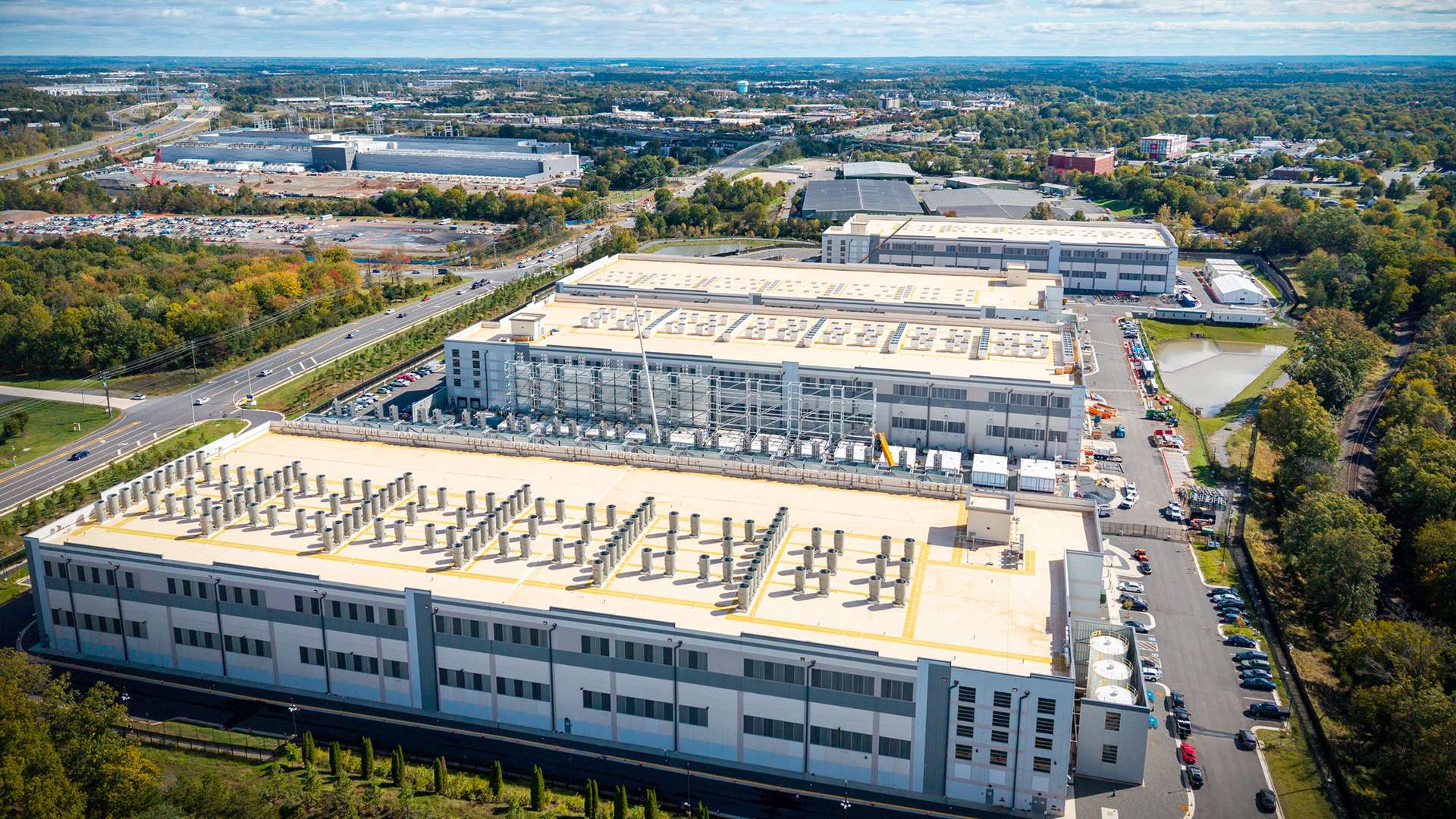
In Loudoun County, a place widely regarded as the data center capital of the world, the pressure from communities concerned about noise, air quality, and stress on the power grid has begun to shape the industry’s future. On Tuesday evening, the Board of Supervisors voted to pause approval of new data center projects for the next ten months. The decision passed 7–1, with one supervisor choosing to abstain.
The move will stop new data center and substation permit reviews potentially until September, as the county works out fresh rules. Projects located in the Route 28 tax corridor, a special commercial district in eastern Loudoun, are exempt from the halt. For the moment, projects that already received pre-approval can proceed as planned.
The decision follows rising concerns from residents about nearby developments, including issues with noise, air quality, and the strain on the electrical grid. “The reality is that this growth in data centers has outpaced the board’s ability to react,” explained Supervisor Juli Briskman, who had proposed the pause, citing Bisnow’s coverage. “We’ve missed chances to respond and to bring this under control, despite what our constituents have been pleading for, and tonight presents a critical opportunity to address it.”
Loudoun County is home to the densest cluster of data centers anywhere, with roughly 233 facilities either online or under construction. Proponents of the industry emphasized at the meeting the considerable economic upside for the locality. County projections indicate that data centers will contribute about $1.3 billion in tax revenue in fiscal year 2027, and that revenue from data centers alone could account for around 40 percent of the county’s overall budget.
That influx of revenue has also helped to steadily reduce the county’s real property tax rate over the past decade. The rate has fallen from $1.145 per $100 of assessed value in 2016 to $0.805, a figure reported by the county as the lowest in northern Virginia. Concurrently, the county boosted funding for schools by about $105 million this year, a gain largely credited to data center-related revenues.
Board Chair Phyllis Randall, who voted in favor of the pause, acknowledged the economic benefits while stressing her obligation to her constituents. “I’m an elected official who must respond to the people I serve, and when their views shift, I can’t simply revert to what we did years ago,” she noted, according to local coverage from WUSA9.
Not everyone on the board was persuaded. Supervisor Caleb Kershner, who abstained from the vote, accused the move of being a political maneuver aimed at winning votes. “This is a political calculation designed to influence voters,” he said. “It signals poor governance and invites litigation.” He warned that if developers challenged the pause in court, the county could face significant costs. While he conceded the pause might be legally defensible, the county attorney echoed his warning about potential legal exposure.
Even with their economic advantages, data centers have encountered growing resistance from communities nationwide. On election night, numerous jurisdictions considered at least 40 ballot measures aimed at tightening the industry’s reach, with outcomes skewing toward restrictions in many places. Construction activity for these facilities slowed in the third quarter of 2026 for the first time in a year, according to CleanView, a firm that tracks data center activity.
Now, Loudoun County—arguably feeling the impact of data centers more directly than any other locality—has chosen to reduce the pace of development. If the data center hub is pausing to reassess, the broader trajectory of the United States’ AI infrastructure expansion could face fresh headwinds as well.
