
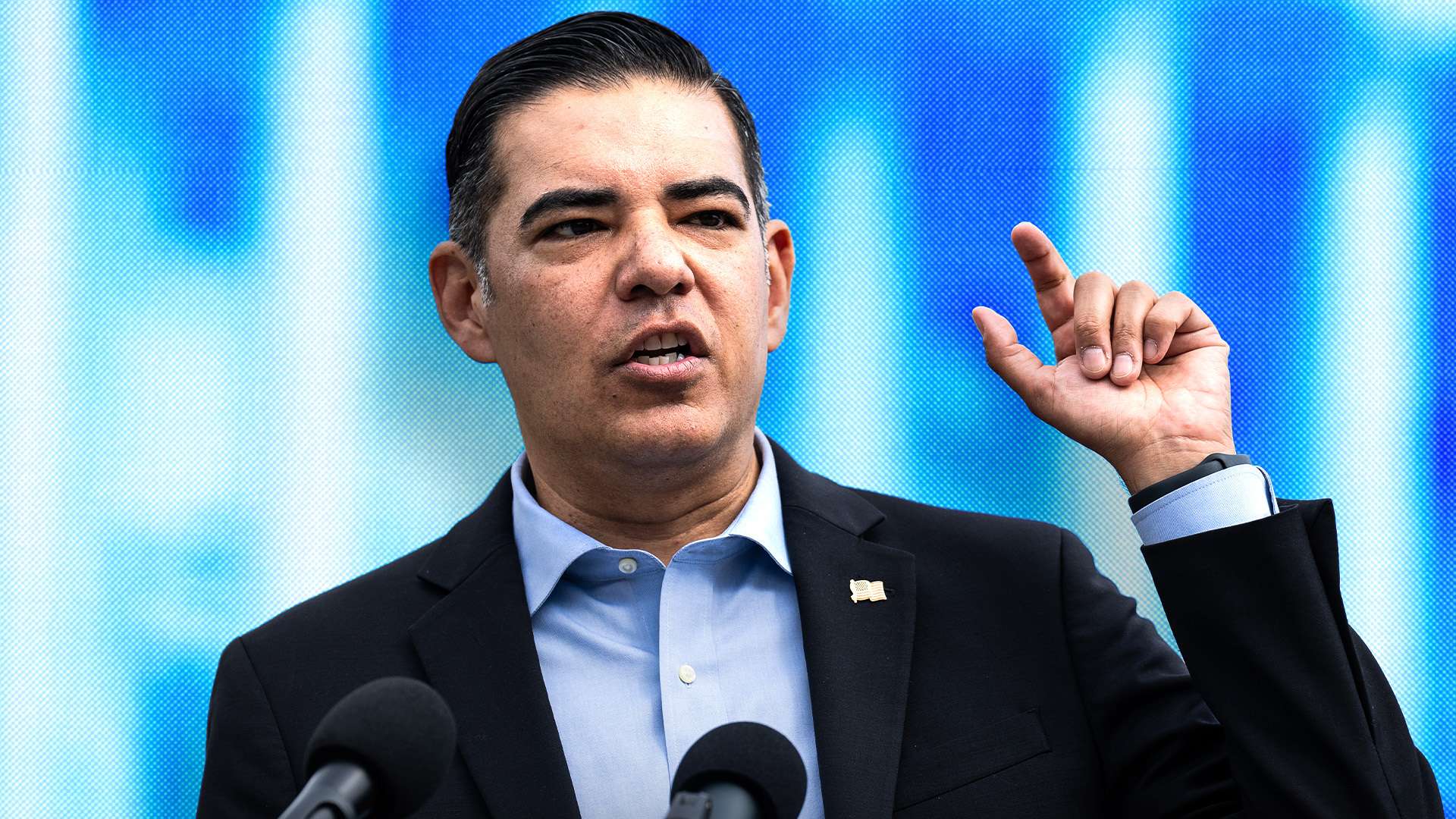
On Wednesday, Representative Robert Garcia, a Democrat from California who is set to chair the House Committee on Oversight and Government Reform in January, issued document-preservation notices to President Donald Trump’s family, Vice President J.D. Vance, White House Chief of Staff Stephen Miller, and a number of other figures. The action signaled a broadening of the ongoing investigations into alleged corruption within the Trump administration. “Oversight Democrats are committed to ending this Administration’s self-dealing, misconduct, and abuse,” Garcia stated, adding that these letters represent “only the opening phase” of what lies ahead.
In his correspondence with Trump’s sons, Garcia asserted that the president and his relatives had amassed “billions of dollars” through Donald Trump Jr. and Eric Trump in their roles as co-founders of the cryptocurrency firm World Liberty Financial (WLF), portraying them as central players in the family’s alleged pay-to-play operations.
Concerns about genuine corruption are forward-looking in several dealings connected to Trump’s offspring. One highlighted transaction was WLF’s agreement with Binance and its founder, Changpeng Zhao, who received a presidential pardon months after the firm was contracted to host and develop the Trump family’s crypto platform. Aryam Investments—a company controlled by Sheikh Tahnoon bin Zayed Al Nahyan, the United Arab Emirates’ national security adviser—holds a 49 percent stake in WLF, fueling questions about whether the Trump apparatus enjoyed favorable treatment.
At a minimum, Garcia has ample grounds to examine possible conflicts of interest. Through their ties to 1789 Capital, a venture capital concern where Trump Jr. is a partner, and the financial firm Dominari Holdings, the president’s sons are linked to a striking number of entities that have conducted business with the government, especially the Pentagon. This list includes five companies—Vulcan Elements, Unusual Machines, and Powerus among them—that secured initial contracts after receiving investments from equity firms backed by the Trump clan.
However, the Trump brothers maintain that they are passive investors, denying involvement in day-to-day management or interactions with the government. At an Axios event on Tuesday, Trump Jr. argued that it would have been illogical for him to “sit on the sidelines, do nothing, and wait eight, or in this case twelve, years until we’re out of the political game” before investing in enterprises that work with the government. He contended that many others from political families had pursued similar paths, and in his view, some had acted far more aggressively “because they actually had no business background.”
If you judge by the recent midterm results, Americans do not share Trump Jr.’s assessment that stronger business acumen justifies profiting from his father’s tenure in the White House.
Garcia additionally sent a letter to Jared Kushner, the president’s son-in-law who has operated as a special envoy for diplomatic missions, accusing him of earning “hundreds of millions of dollars” in fees and benefits in a diplomatic capacity, which Garcia characterizes as “masked payoffs for policy shifts, favorable treatment, exemptions from legal scrutiny, and access to sensitive government information and technology.” Kushner’s investment firm, Affinity Partners, draws substantial backing from Middle Eastern sovereign wealth funds. In October, CNN reported that Affinity Partners holds the largest stake in an Israeli company engaged in funding defense firms that supply munitions for conflicts in Gaza, Lebanon, Syria, and Iran. Since Kushner’s envoy role is not an official government title, he is not obligated to disclose his finances. Chad Mizelle, Kushner’s attorney, told The Washington Post that Garcia’s allegations “have it exactly backward.”
“Jared Kushner has always acted in the best interests of the United States,” Mizelle stated. Nonetheless, as an international representative of the American people, Kushner owes the public a clear explanation for the notable overlap between Affinity Partners’ activities and his diplomatic duties.
Garcia’s scrutiny extends beyond the Trump family. He also dispatched letters to Attorney General Todd Blanche; Kimberly Guilfoyle, the former U.S. ambassador to Greece; former White House Chief of Staff Susie Wiles; former Secretary of Homeland Security Kristi Noem and her former adviser Corey Lewandowski.
Indeed, the Democrats’ target list is fairly expansive, encompassing corporations and executives who donated to or benefited from the Trump administration’s policies. One notable example is a letter Garcia sent to Catherine Townsend, CEO of the Trust for the National Mall, regarding private donations to the White House ballroom project from Nvidia and its former chief executive Jensen Huang.
Garcia may be reveling in his new authority, but the Trump administration has no intention of yielding without resistance when January arrives. The Washington Post reported that the White House has “already sought legal opinions” to shield itself from taking part in congressional investigations. The administration contends that the president, his family, and his allies have done nothing wrong, a stance they may test by complying with reasonable requests in future probes.
Of course, any obstruction from the White House would leave Garcia facing a slate of private-sector executives who have cultivated relationships with the administration as potential targets. While there are genuine worries about the government’s expanding footprint in the private sector, letting investigations degenerate into gratuitous assaults on disfavored industries would transform Congress’s oversight into a political witch hunt.
If Democrats treat accountability as a mechanism to punish Trump-aligned leaders, the public could pay the price through investigations that, while substantive in merit, yield results that are superficial and lacking in illumination.
