
While the European Union finds itself entangled in disputes over who should represent it in the peace negotiations between Ukraine and Russia, where the future of its security and defense architecture is at stake, Washington and Moscow set the pace of a negotiation that can determine the fate of the continent. Under the pressure of a Trump administration determined to impose its terms, the Europeans appear more concerned with settling their internal balances than with building a common strategy. Meanwhile, Putin, Xi Jinping, and Trump act from a logic of great powers that evokes the ghost of a new Yalta, a world organized around spheres of influence and conditioned sovereignties, where international law is subordinated to power relations.
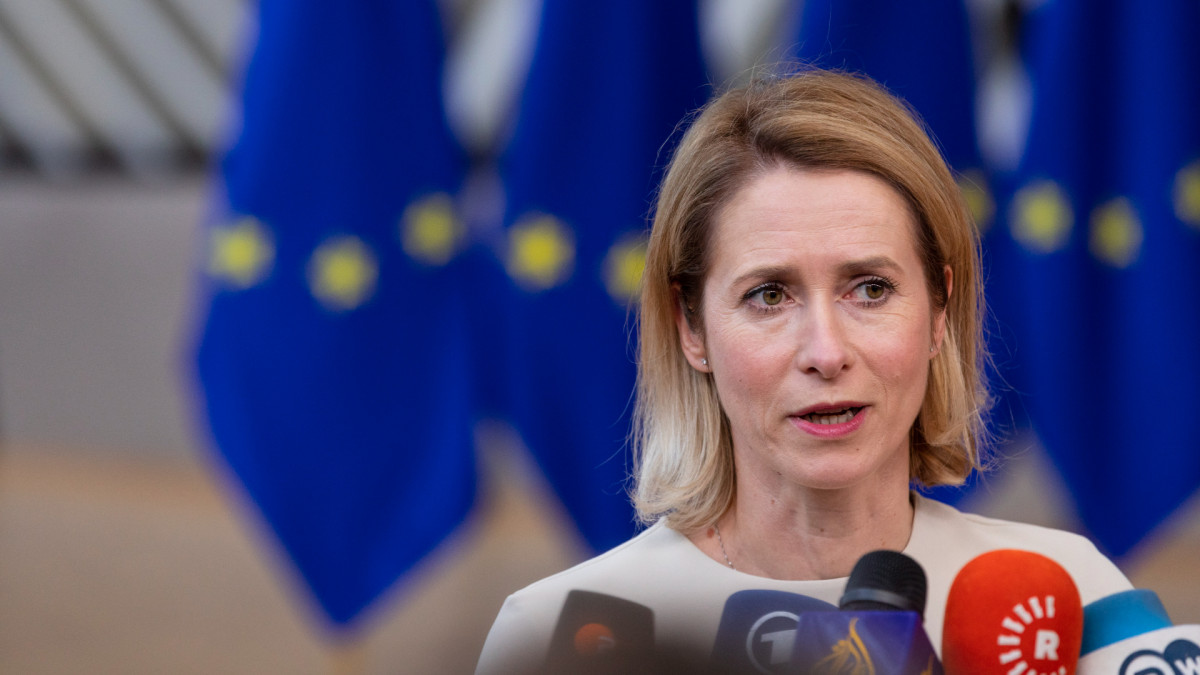
The situation of Kaja Kallas constitutes a particularly revealing expression of this contradiction. Her exclusion from the negotiating core does not merely represent a setback for the high representative, but also exposes the limitations of a Union that, after nearly five years of politically, economically, and militarily supporting Ukraine, remains unable to translate that effort into diplomatic influence. The EU may end up financing reconstruction, taking on a large share of security guarantees and managing the consequences of a peace whose fundamental terms have been negotiated by others.
“The EU may end up financing reconstruction, assuming a large share of security guarantees and, moreover, managing the consequences of a peace whose fundamental terms have been negotiated by others”
The recent gathering of European leaders in Dublin has confirmed this trend. In contrast to Kallas’s ambitions, the major governments have chosen a negotiating format led by the great capitals, with participation from the European institutions, but leaving out the High Representative and the European External Action Service (EEAS). Neither António Costa nor Ursula von der Leyen supported her candidacy. A decision that calls into question the authority of the person who, according to the treaties, should lead common foreign and security policy.
The cost of negotiating with too many interlocutors
In this sense, it would be a mistake to interpret this episode solely as a personal dispute. On the one hand, Kallas has maintained especially hardline positions toward Moscow and her political style has generated resistance among some European governments; on the other hand, it is also contradictory that someone who for months rejected opening direct talks with Russia would now aspire to lead them. But the problem goes beyond her figure: accepting that Moscow could condition who represents the EU would amount to granting the Kremlin a veto over European foreign policy that it does not have. The problem lies elsewhere.
The problem lies in the constant questioning of the EU’s institutional architecture. While the Lisbon Treaty was designed to strengthen the coherence of its external action, when major strategic issues arise, the intergovernmental logic reappears. Thus, the Ukraine war has accelerated this dynamic, consolidating power blocs that displace the common institutions. In this way, the EU proclaims its strategic autonomy while its member states continue resisting sharing the power necessary to exercise it.
“The EU proclaims its strategic autonomy while its member states remain reluctant to share the power necessary to exercise it”
In this context, the statements of the Finnish president, Alexander Stubb, who advocates to begin preparing a discussion with Russia about the future European security order once the war ends, gain particular relevance. His proposal raises a question that EU leaders have avoided addressing with sufficient depth. It is not enough to stop hostilities; it is essential to define what security architecture can be built afterward and what role Europe should play in it.
Stubb’s stance contrasts with the caution of Kallas and the Baltic governments, who fear that premature negotiations could allow Moscow to reclaim its demands prior to February 2022, especially those aimed at limiting the sovereignty of neighboring states and conditioning NATO enlargement, a legitimate concern and a valid view, but not the only ones that exist among the member states.
However, both positions should not be considered incompatible. Europe needs to ensure that Ukraine is not forced to accept a peace imposed on them, but it must also prepare to manage a strategic relationship with Russia that will not disappear when the war ends. Arms control, nuclear deterrence, and security guarantees will have to be part of that discussion. Now we must decide who will set its terms.
“Europe needs to ensure that Ukraine is not compelled to accept an imposed peace, but also must prepare to manage a strategic relationship with Russia that will not disappear when the war ends”
While the United States directs diplomatic contacts and Russia seeks to impose its terms, the EU continues without articulating its own strategy, a shortcoming that has been evident in the Abu Dhabi talks, with Washington at the center and Europeans in a subordinate position. And all this in a context where the Trump administration understands negotiation as a transaction between powers, while for Europeans the consequences of that negotiation directly affect their security and their institutional future.
The marginalization of Kallas has once again exposed the enormous institutional fragility of European foreign policy, but also the political mistake that her appointment represented. Not for her firmness in facing Russian aggression, but for having positioned at the head of European diplomacy a leader openly hostile to any negotiating approach with Moscow and whose conception of foreign policy has been almost monopolized by the Russian threat. A vision understandable from the Baltic states’ historical and geopolitical experience, but insufficient to represent the diversity of the twenty-seven and to tackle a much more complex international agenda. The problem, therefore, does not reside solely in Kallas’s personal limitations, but in the responsibility of those who chose her to lead a common foreign policy that requires capacity for dialogue, consensus-building, and a strategic perspective that transcends regional priorities. Her subsequent sidelining of the negotiations highlights the contradiction of institutions that appoint their representatives only to deprive them of authority when it comes to making the fundamental decisions.
“Her subsequent sidelining of the negotiations reveals the contradiction of institutions that appoint their representatives and then deprive them of authority when it comes time to make the fundamental decisions”
But there is a second risk, equally worrying. As Minister José Manuel Albares has warned, the multiplication of European voices, far from strengthening its negotiating position, may end up weakening it. The cacophony of interlocutors, each with their national priorities and their own readings of the Russia relationship, does not amount to a shared strategy nor does it guarantee greater influence. On the contrary, it makes it easier for Washington and Moscow to exploit European differences and impose the terms of a negotiation whose consequences will primarily fall on the continent.
At this point, the paradox is evident. The very states that chose a high representative without the diplomatic profile required to face this scenario now intend to correct that error by multiplying national representatives, which threatens to deepen European fragmentation. At a moment when the great powers are reclaiming the logic of spheres of influence, the EU risks discovering that its main weakness is not that others want to exclude it from the table, but that its own contradictions prevent it from sitting at it with a common position. And in a new Yalta, speaking with many voices may end up being another way of having none at all.
