
One of my favorite songs by Mikel Erentxun is titled Love Letters (when there is no love left). As I write this letter to the upcoming Minister of Housing, I feel that same heartbreak about the past—whether recent or distant—as the song expresses. But now that we are approaching that magical moment known as Three Kings’ Day, I want to believe, as the song suggests, that there is a new Ministry of Housing waiting there, one that will be like a field hospital for our battered housing market.
I would like the next Minister of Housing to have a clear diagnosis. And not be misled. To that end, all he or she needs to do is read the excellent reports that the Bank of Spain has produced on the state of the housing market. Our housing market suffers from two very serious illnesses. First, an extreme shortage, quantified by the Bank of Spain itself at one million homes by 2028. That’s one million households… without a home. The second is the absence of social housing, at levels well below the European average. Being aware of these two illnesses will prevent wasting time and effort on any measure that does not improve one of those two problems. The symptom of scarcity is high prices and rents, but that is the symptom, and what must be treated is the disease. By attacking the symptom, we may end up provoking even more scarcity.
“The symptom of scarcity is high prices and rents, but that is the symptom, and what must be attacked is the disease”
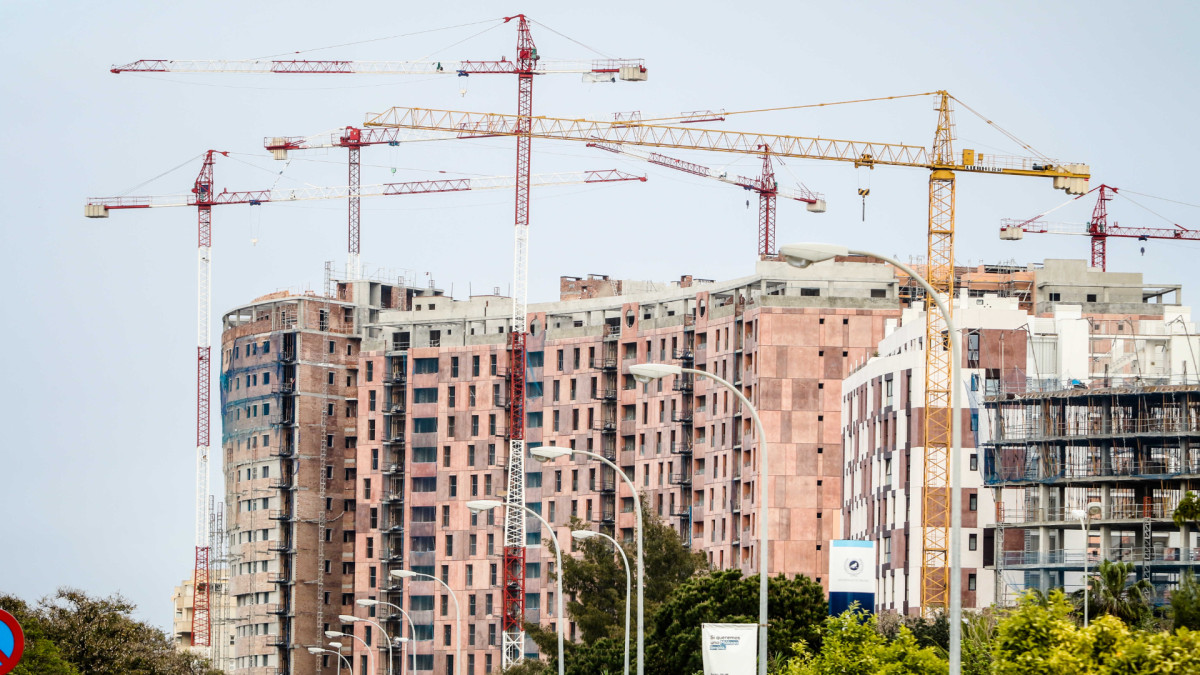
Tackle the first disease: scarcity. To do that, we need to build the housing that is needed. We must finally forget the stigma generated by the real estate bubble of twenty years ago. Back then, too much was built. But building can be a wonderful policy, and, incidentally, a very left-leaning policy, a policy that provides homes and opportunities. A policy that welcomes those who come. But building in 2026 is by no means easy (which is why there are some numerical promises I would like explained). We must unclog the land-use law. Change the priority: anything that does not have a clear reason not to be housing should be capable of becoming housing, precisely the opposite of what is happening today. We must put public land at the disposal of construction (half of the available land is public). We must simplify administrative procedures. It is necessary to reverse the priority: now the priority is to build, not to stop building. The current urban planning process is designed to make building difficult. A multitude of reports, often repetitive, negative administrative silences, very demanding technical codes, paralysis of urban plans for a formal defect, administrative delays in licenses, etc. We must digitalize processes, create one-stop shops, reduce reports, use AI to speed up permit processing, and turn administrative silence into a positive. If there is no news, we move forward. If the Bank of Spain’s diagnosis is to be believed, many of these measures appear in a recent CNMC report. We simply need to listen to our, fortunately brilliant, institutions. Do we believe housing should be a priority? Well, everything else is secondary, except building homes.
I have not forgotten that we have a sector very different from 2006. With an aging workforce, not well adapted to the changes needed such as industrialized construction, and facing very substantial financial constraints. We must help it in every way: with specialized dual professional training and by facilitating access to bank financing, which right now imposes quite strict criteria on the type of company that dominates. This isn’t about returning to 2006, but about changing the framework. I know many of these measures aren’t sexy, but sometimes what is needed isn’t “sexy,” nor quick, nor something that easily wins votes.
Let us move on to the second illness: more social housing is needed. Here it is even more “easy.” If we believe that housing is a pillar of the Welfare State, it must be funded with a larger budget. It cannot be that only 1% of the public budget goes to housing, far from what we spend on any other welfare policy, far from European standards and far from the tax resources we obtain from housing. To begin with, social housing (VPO) should have reduced taxation. It makes no sense to impose taxes that hinder social emergency relief. But delivering social housing at a reasonable pace would solve the problem within ten or fifteen years (at least). Can we, meanwhile, expand the social stock without harming private renting? Only in one way, and to a limited extent: bring the scarce vacant housing to residential rental where it is needed. This is what Bizigune does in the Basque Country: the owner lends the use of the apartment for about six years in exchange for a guaranteed rent (up to €700, expandable in tight areas), comprehensive management, insurance and financing for renovations, and the tenant pays rent proportional to their income. Belgium does it with its social housing agencies. The same formula can be extended to tourist or seasonal flats that wish to return to ordinary rental.
“If we believe that housing is a pillar of the Welfare State, it must be funded with a larger budget.”
Be aware that any other formula simply moves the “tail” of scarcity. It takes homes from private rental to put them into public hands. One way is to buy using the right of first refusal and the right of repurchase. Municipalities with scarce social rental can acquire homes when they are sold, starting with the large holders (companies and funds that bought portfolios from the banks). Paris and Barcelona are benchmarks. The second option is to buy time, to buy the right to rent. It isn’t about acquiring the home, but the right to rent it for fifteen, twenty, or twenty-five years. Ireland rents long-term housing, paying between 80% and 85% of market rent; France, Hamburg and Berlin also undertake similar actions. In this case, one must bear in mind that the asset would be lost. It is a solution to avoid cases like Maricarmen while construction continues. All of these formulas require budget.
Having enough social housing helps us assist the most vulnerable. An alternative path, while the housing stock is being built or acquired, is a public and free guarantee, inspired by France’s Visale program, that the tenant applies for before looking for a flat and presents to the landlord. If the tenant stops paying, the managing body pays the landlord, within a few weeks, the unpaid rents, up to thirty-six months, plus legal costs, and then seeks repayment from the tenant. A guarantee for young people and vulnerable families that places them at the forefront of a scarce market that currently pushes them to the back. Because they are the most at risk and there is plenty of demand. We also prevent the landlord from exiting long-term rental after a default (as the data show). It does not matter if the tenant defaults if the landlord is paid promptly. French experience also shows that it is not an expensive measure.
Finally, while we address these two illnesses, we need a context of legal certainty and stability for everyone. Let us begin with legal certainty. Security for the tenant should not imply insecurity for the landlord. The non-payment insurance mentioned above also solves that. Protecting a vulnerable tenant facing a risk of default should not mean that the landlord bears the responsibility. It is the public administration that must assume that responsibility, as it does in health or education. Legal certainty also means a stable environment that does not operate on the basis of monthly decrees.
An interesting proposal that Jorge Galindo and I raised a few weeks ago is a single indefinite housing lease contract for apartments and rooms, replacing the five- or seven-year terms and the tacit renewal. The tenant can leave whenever they want, after six months and with one month’s notice, as today. The landlord can exit without cause from the second year with one month’s notice per year of contract and a compensation that grows with the tenant’s tenure, from half a month’s rent to a full month per year, with a maximum. If the home is sold, the buyer is subrogated. In this context, the initial rent should be freely set across Spain, updated in line with the CPI, and either party may request its adjustment to market (also downward), at most every five years, with an official index as reference. Default is resolved quickly: a notice to pay or oppose within ten days and eviction in about three months. Vulnerability does not suspend eviction: social services assess it within that period and the Administration pays the rent or rehousing. This is where the above mechanisms come into play. Legal certainty for all. Security for all. The tenant avoids the costs (and risks) of constant moving, while the landlord feels secure and does not remove their property from residential rental. Stability and consistency in public policies.
“Protecting a vulnerable tenant facing a risk of default should not mean that the landlord bears the responsibility”
Are these the only measures your Ministry can take to solve the problem of housing inaccessibility? Of course not. But they are the essential ones, and everything done should serve these objectives. And if, by the way, we can review regulations that do not favor these principles, even better. Let me give you one more example of a measure with many possibilities to tailor it to our objectives (some spoiler already exist): a taxation that responds to our goals. Do we want to favor housing used as a residence over housing used for other uses? Then reduce the taxation on VAT, ITP, and IBI for primary residence and residential lease, and increase it for other uses (seasonal rentals, vacant housing, tourist rentals, etc.). It should also facilitate the purchase of home ownership by solvent young people and rehabilitation by adapting homes to new households, for example.
By the way, I am convinced that many of these measures will enjoy the support of a large portion of the Congress that results on November 29, regardless of the parliamentary majority that emerges. Perhaps it would be a good time for certain aspects of housing policy to leave the debate and to find the mechanisms for housing policy to be stable over time. A quick example: Is there a single party that does not want to increase social housing? What percentage of parliamentarians still think that building should not be expanded?
“Perhaps it would be a good time for certain aspects of housing policy to leave the debate and to find the mechanisms for housing policy to be stable over time”
Notice, finally, that there isn’t a single easy “enemy” to target with policies throughout the text. Focusing the messages on an enemy, which, at best, is often only a symptom and not the disease, tends to be an unthinking forward push. I hope that, as the next Minister of Housing, you will practice self-criticism, as David Broncano did last week. Looking inward is the best way that, after the work of the upcoming Ministry of Housing, you will have to think simply about a love letter, without parentheses.
