
In political science, there are the so-called “valence issues”: matters on which political parties tend to agree on the objectives, even if they disagree about how to achieve them. The quintessential example is the fight against corruption, but the reduction of child poverty also fits. And to discuss the latter, there are few voices in Spain with more knowledge than Pau Marí-Klose.
In this dimension, educational difficulties, health problems, and inequality of opportunity can accumulate from the early years of life. Likewise, the effects of child poverty also carry an economic cost: a study sponsored by the Office of the High Commissioner estimated it at 5.1% of Spanish GDP. “Prevention is more worthwhile than patching up a situation that has already occurred”, asserts Marí-Klose.
But is it enough to simply increase monetary aid? “The poverty threshold is not magical”, cautions the sociologist, who questions policies that focus exclusively on reducing monetary poverty figures. The experiences of Poland and Hungary, where transfers to families have failed to reverse a decline in birth rates, illustrate the limits of these approaches. In contrast, he advocates strengthening public services and addressing the structural causes of inequality.
“The birth-rate crisis is uneven by neighborhood“, he notes, before addressing the relationship between housing, working conditions, and family decisions. The conversation ends with a call to revitalize the political commitment against child poverty, whose eradication remains unfinished work.
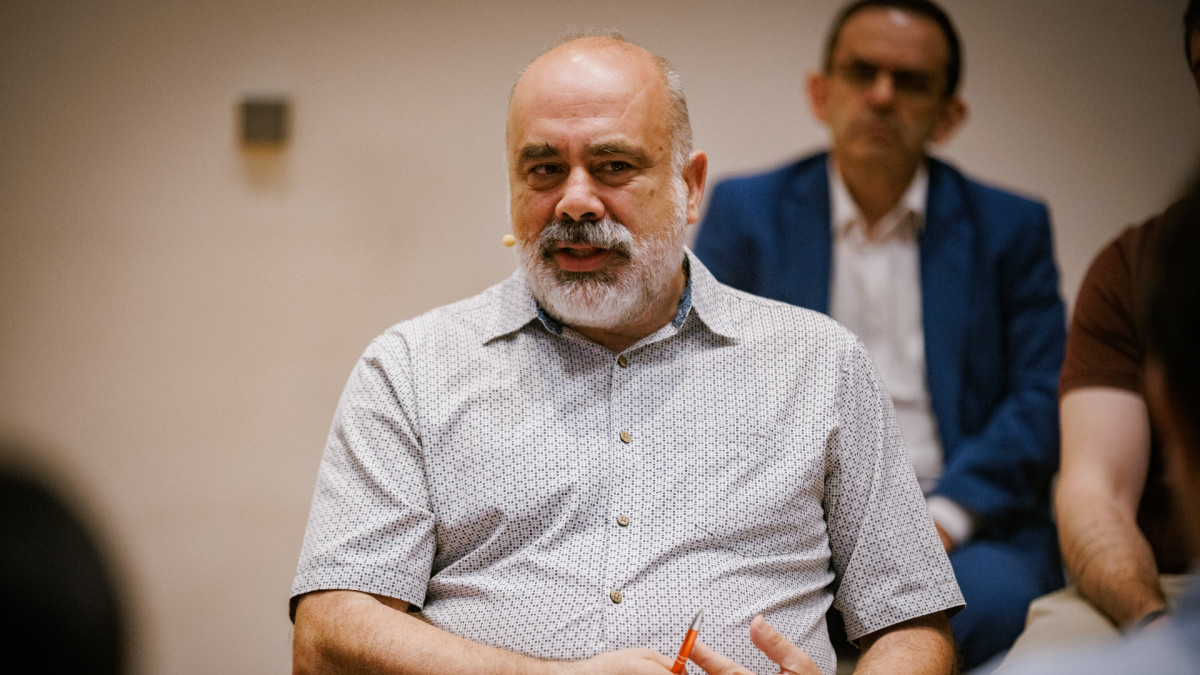
Marí-Klose is a professor at the University of Zaragoza. Photo: Agenda Pública / Tania Sieira
What is the current status of the minimum vital income? How many households does it reach and what aspects should be improved?
At the moment, the minimum vital income covers about 900,000 households, which is roughly the target the minister Escrivá set when promoting its adoption in Congress. In other words, it has reached where it was expected to reach. For a long time, critics argued that it did not reach that figure, and now that it has, some sectors think it should be substantially reduced and limited to people who can demonstrate a substantial work history or who commit to taking jobs, even if these might distort caregiving patterns or if those individuals live in areas where access to employment is more difficult.
The minimum vital income has tripled the coverage that existed before with autonomous minimum incomes and, furthermore, has done something very positive: it has concentrated resources in those autonomous communities where poverty was higher. That is the great expansion of territorial redistribution that it has entailed.
Should it reach more households? Yes, it should reach more households at risk of poverty, but those it already reaches are in the most extreme situations, and that is positive.
“The minimum vital income has tripled the coverage that existed before with autonomous minimum incomes”
One reason it does not reach other households is that they have some form of income or expectations of working soon. They think the minimum vital income is not a benefit designed for them because they do not expect their situation to become chronic. Moreover, the amount they would receive would be very small, because it remains a top-up benefit that supplements other incomes until a threshold is reached. These groups have less incentive to apply, because it involves cognitive costs: filling out forms, gathering information, etc.
There is an important outstanding task: the child support supplement. This is a benefit that can represent a considerable amount of money for households with children, but it is far from reaching its full potential. In addition, it has a higher access threshold. It is what is called an expanded targeting aid: not only to the poorest, but also to households with children who are even above the poverty line.
Presumably, it will come to reach more households and be more effective in the fight against child poverty, which remains an area of concern. In Spain, general poverty has declined slightly but significantly, although child poverty has not.
“In Spain, general poverty has declined slightly, but significantly, while child poverty has not”
This is partly due to the limited reach of this benefit and partly to the fact that social conditions also generate substantial child poverty. Families are more fragile and child poverty is often linked to situations of single-parenthood. If single-parenthood grows, child poverty will grow as well.
Another phenomenon is immigration. We are a country that receives a lot of immigrant population, often in relatively precarious situations. Immigrants typically cannot access certain benefits in their early years, and there are still large pockets of poverty among the immigrant population. If this population grows, the risk of child poverty also increases.
All of this explains why, even though aid improves—and it does not do so at the desired pace—child poverty indices persist.
You’ve mentioned that there are households with certain employment-derived incomes, yet they could still qualify for the minimum vital income. This also presents a major challenge: people who are employed but still living below the poverty threshold.
Yes. Lately this is less about low wages and more about two phenomena tied to the intensity of labor participation.
On the one hand, job intermittency. That is, you have a job, but not continuously throughout the year, only during certain periods. This is the case with fixed-term contracts, short-term temporary jobs, or seasonal work.
A second problem is part-time work, which has risen quite a bit in Spain. If there is only one income from a part-time job, often you fall below the threshold that entitles you to the minimum vital income. In that case, the benefit supplements your income and offers a small incentive to work.
“If there is only one income from a part-time job, you often end up below the threshold that entitles you to the minimum vital income”
The minimum vital income is designed so that working pays off. Some people think it should be an even stronger incentive, especially when the wage is low or work is intermittent or part-time. Many people work and later receive a top-up of 100, 200, or 300 euros a month to make their incomes more decent and to surpass that severe poverty threshold.
What are the consequences of growing up in an environment of child poverty?
Child poverty has many consequences. We tend to think of it as a harsh experience, generating discomfort, negative feelings, humiliation, and indignity. It is also a social justice issue: children born into poor homes have not done anything to deserve it. From a meritocratic discourse, child poverty cannot be understood, because they have not had the opportunity to accumulate merits or demerits. Child poverty is a lottery that falls to some, with no clear reason.
“From the meritocratic discourse, child poverty cannot be understood”
Moreover, it challenges normative principles we have embraced, such as the Convention on the Rights of the Child, which commits us to ensuring material well-being for families with children from an early age.
But beyond social injustice, there is a limitation of opportunities in life. Children born into poverty not only suffer monetary deprivation, but also other deficiencies: lack of educational resources, lack of cultural capital in families, or insufficient stimulation to develop both cognitive and non-cognitive skills.
For example, families who read to their children, stimulate their linguistic abilities, or teach them numbers are preparing them to better benefit from school learning. In very disadvantaged families, these practices often do not occur, creating disadvantages from the earliest age.
Breaches open not only in educational outcomes but also in the ability to learn when they join the school system. Some children arrive more prepared than others to keep pace, and without reinforcement and follow-up, these difficulties end up manifesting as higher dropout rates or school abandonment.
“Breaches open not only in educational outcomes, but also in the abilities to learn when they join the school system”
Even certain health problems appear more frequently in poor households. Children have less balanced nutrition, which predisposes them to obesity. Childhood obesity concentrates in these homes and is a serious problem that carries into adulthood, generating new health complications.
During childhood, a series of cumulative effects are generated, not necessarily all at once, which scar and complicate the transition to adulthood. They increase disadvantages and can give rise to social, health, or even marginalization problems that require public intervention.
And managing poverty does not come free. It requires substantial resources in social services, health care, and even security. Highly unequal countries end up spending many resources on police, imprisonment, or private security devices. All of these are costs borne by countries that do not invest in fighting inequality from early stages.
But beyond those costs lie opportunity costs. Children who are prevented from fully developing their abilities, creativity, and all their capacities are steered toward trajectories in which they do not contribute to society as much as they could. Economists would say their potential is not fully capitalized.
This has been studied in different countries. When we were at the Office of the High Commissioner, we promoted a study on the cost of child poverty in Spain. We had two powerful teams of researchers from Pompeu Fabra University and the University of Alcalá who determined that the cost of child poverty in Spain was 5.1% of GDP.
We would hope to devote 5% or 3% of GDP to preventing child poverty. We would save a large portion of that cost by not letting it persist. Prevention pays more than repairing a problem that has already occurred.
“We would hope to devote 5% or 3% of GDP to preventing child poverty. We would save a large portion of that cost by not letting it persist. Prevention pays more than repairing a problem that has already occurred”
There are people who are not very responsive to the message that poverty is a matter of social injustice or of curtailed life opportunities. But even those more insensitive sectors can surely keep in mind the economic cost of child poverty and its medium- and long-term consequences.
RELATED ARTICLES
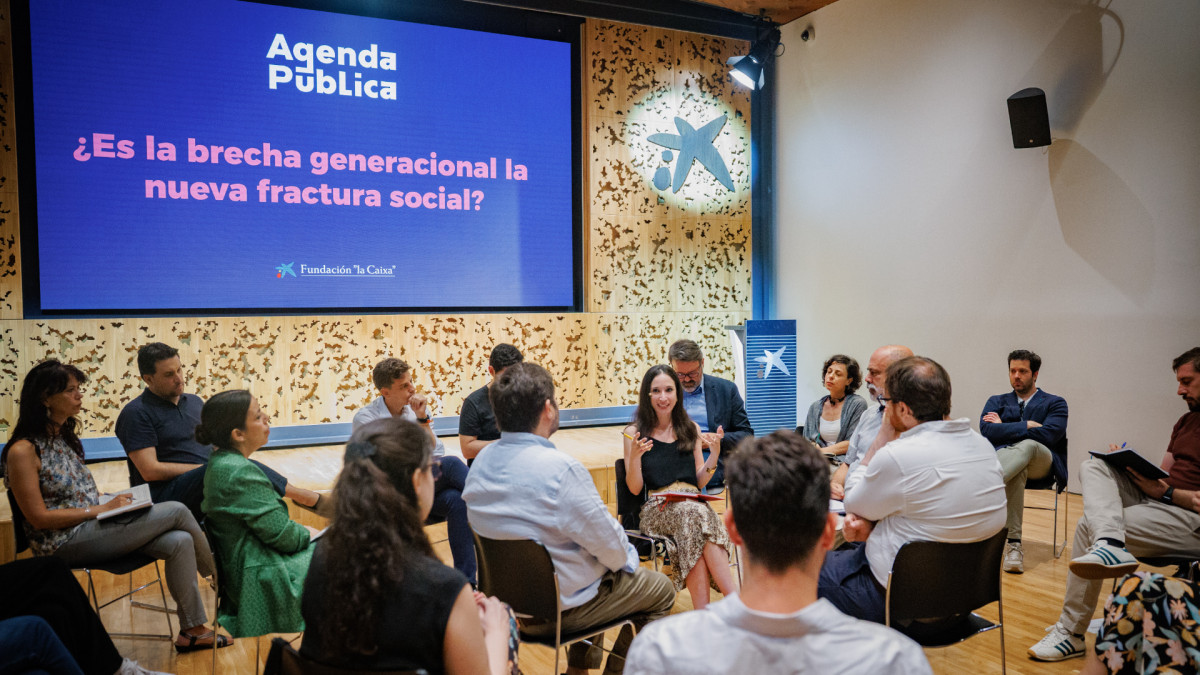
CaixaForum Madrid hosted the Agenda Pública micro-space on the generational gap.Agenda Pública / Tania Sieira
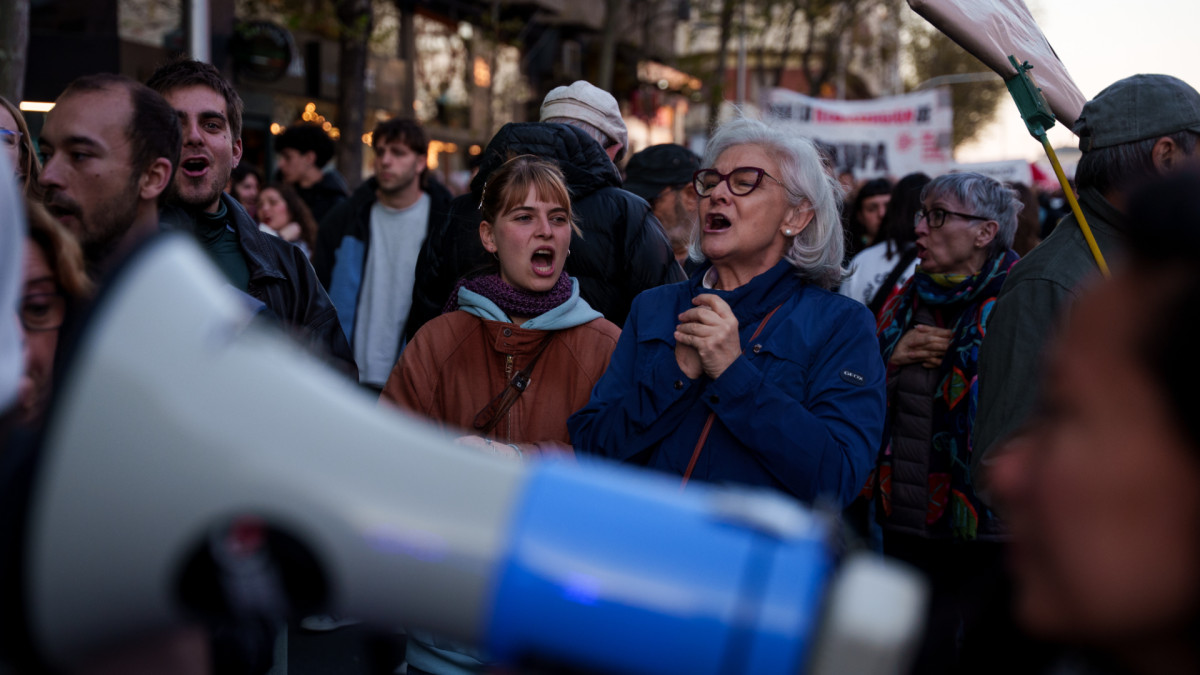
People of different generations in a demonstration Matias Chiofalo / Europa Press
In Spain, we have gone years without a housing policy that has managed to solve the main access problems. How does this situation affect child poverty?
The high housing costs are concentrated mainly on those who have recently acquired a home or who are trying to access one. Often they do so to begin family projects in which they will have children in the near term.
One thing is monetary poverty, a lack of income, and another is the effort it takes to devote a majority of those incomes to housing. We are talking about dedicating 30%, 40%, or 50% of your resources to paying for housing.
“One thing is monetary poverty, a lack of income, and another is the effort it takes to devote a majority of those incomes to housing”
These are resources not available for other things and generate deprivation in households. You forgo certain consumptions, going on vacation, keeping the home at an appropriate temperature, renewing furniture, or buying certain foods.
In the poorest households, nutrition is often quite unbalanced because higher-quality food costs money. Fruits cost money, vegetables cost money. So, they often opt for cheaper but less healthy foods.
Primarily ultra-processed foods.
Indeed. Poor households eat much worse, poor children eat much worse, and the consequences show up as obesity and certain morbidities, such as diabetes, from early ages.
The poverty intensified by housing costs translates into experiences of deprivation, and those experiences materialize in various vulnerabilities and forms of exclusion.
If a family or couple thinks that having a child will put the child into poverty, it makes sense that they think twice. What impact does this have on demography?
This is the problem most often pointed out by families when deciding whether to have children: the economic costs involved and the sacrifices to a relatively comfortable lifestyle.
In fact, there has been a rather interesting shift, not only in Spain. Traditionally, the poorer sectors were the ones with more children. And that was a paradox we studied.
In recent years, the more affluent sectors have more children than the poorer sectors. This is related to the high cost of having children for the less advantaged. In other words, the birth-rate crisis runs through neighborhoods. It is more pronounced in the most disadvantaged households.
“In recent years, the more affluent sectors have more children than the poorer sectors. This is related to the high cost of having children for the less advantaged”
Look at the immigrant population, which is often presented as a group more likely to have children. That is partly true in their countries of origin, but once immigrants arrive here they quickly adapt to local birth rates because they essentially face the same obstacles as natives. Cultural predisposition does not explain demographic behavior; it is primarily the economic conditions that do so.
Experts who say that migration, in terms of birth rate, does not solve the demographic problem have a point. Another matter is that in the short term it does help because it broadens the base of contributors to fund the welfare state.
There are countries that have tried to resolve this situation with different recipes, from the radical right to social democracy. What can we learn from these experiences and what other alternatives exist?
There are certain countries that, from radical-right approaches, have increased monetary transfers to families to encourage birth rates. There stood Hungary and Poland.
These countries have managed to reduce poverty in monetary terms, though they have not succeeded in increasing birth rates. They injected large sums of money, a high percentage of GDP, to achieve this.
There is speculation about why they did this. When talking to Polish academics, some say it was a form of clientelism to buy electoral support. In any case, the effects on child poverty in monetary terms are indisputable.
But those very high expenditures—some have even inspired proposals from progressive sectors to establish universal, costly benefits—often come at the expense of other types of investments.
Fighting child poverty does not mean cosmetically reducing the proportion of households below a given threshold. The threshold is not magical. Once you manage to get someone above it, you are not ending all their difficulties.
“Fighting child poverty does not mean cosmetically reducing the proportion of households below a given threshold”
These measures are not just about money. Obviously, resources are important—as I always insist—but sometimes the decisive factor is the existence of services that attend to vulnerable populations. For example, schools aware that there are children with learning difficulties and offering tutoring programs, accompaniment, or teams that monitor those problems and involve families.
The two-to-three-year-old preschool is especially important for vulnerable groups because it provides cognitive stimulation that these children often lack at home. It is also essential to have early disability intervention services.
These services exist in countries that treat child poverty as a multidimensional experience and do not limit themselves to reducing a single risk figure.
Poland and Hungary, which spend a lot on transfers, spend very little on other dimensions of child poverty. They have a very family-centric discourse: they understand that, once the money is delivered, families must be self-sufficient and manage their own realities.
They do not invest in compensatory mechanisms in areas such as education or leisure, leaving it to private initiative.
That is why we should not be seduced by false recipes that lead us to think this is simply about injecting resources so that a large number of poor children cross the threshold and we can display wonderful figures in OECD reports.
There is a demand to go beyond and improve working conditions so that these benefits become less necessary. What role does the fight against inequality play in this objective?
The first step in fighting child poverty, or poverty in general, is to fight inequality. This means improving all those conditions that produce inequality. collective bargaining, a minimum wage, empowering unions to negotiate, or taking measures to prevent wage discrimination are measures of what is called predistribution.
In other words, measures to generate a primary distribution of income, the income created by the market, that is more balanced and, above all, that does not leave anyone behind.
Setting an adequate minimum wage is crucial because it prevents many households from suffering experiences of working poverty. They have income, but it is low because they are receiving indecent minimum wages.
These measures and others, such as reducing electricity bills or implementing accessible housing policies with affordable rents, are also policies to combat child poverty and deprivation experiences.
“The first step to fighting child poverty, or poverty in general, is to fight inequality”
It is important to understand: fighting child poverty is not an isolated experience to be tackled by injecting resources into households. It is a multidimensional project, and fighting inequality is one of the keys to fighting poverty.
We are in an election period. If you had to pick two measures or reforms you would like political parties to propose to reduce inequality, what would they be?
To pick two: one concerns housing and the other child poverty. The main factor worsening vulnerability right now is housing payments. When you look at deprivation indices in households renting, they are very high and have risen in recent years.
You have to tackle the rise in housing prices, not only with long-term measures. In the medium and long term, build more social housing, even mobilize land for private construction, but in the short term you must implement measures.
You must regulate prices and restore landlords’ confidence to allow them to rent their properties at capped prices. They must understand they will have a stable income, even if not a very high one.
In the short term, measures must be taken, and this is sometimes forgotten among those who want to build millions of homes. We have a problem now, and that problem demands responses.
You cannot wait for all land to be mobilized and for builders to start constructing quickly because, as there is plenty of labor, we would have pushed out all immigrants… But there is excess labor. All of this prevents the problem from being addressed seriously.
The second measure, of course, is the fight against child poverty, of which I have spoken almost in full.
I sense a certain fatigue in the fight against child poverty because it is always an unfinished project. Social conditions are constantly changing and generating new factors of poverty.
We have very important factors, such as family changes and shifts in the demographic composition of the population, especially due to the arrival of many immigrants.
“I sense a certain fatigue in the fight against child poverty because it is always an unfinished project”
It seems that fatigue has already occurred to some extent, and it is important to revitalize the commitment. We were key at certain moments in emphasizing the fight against child poverty in many policies, especially the minimum vital income, but also through alliances with the third sector and with corporate social responsibility, as well as in Europe.
It is true that in the last legislature, with a narrower parliamentary margin, the achievements have been more limited. And this is a fight in which one must not waver because conditions are changing and recipes must adapt.
Thank you very much.
In collaboration with the “la Caixa” Foundation
