
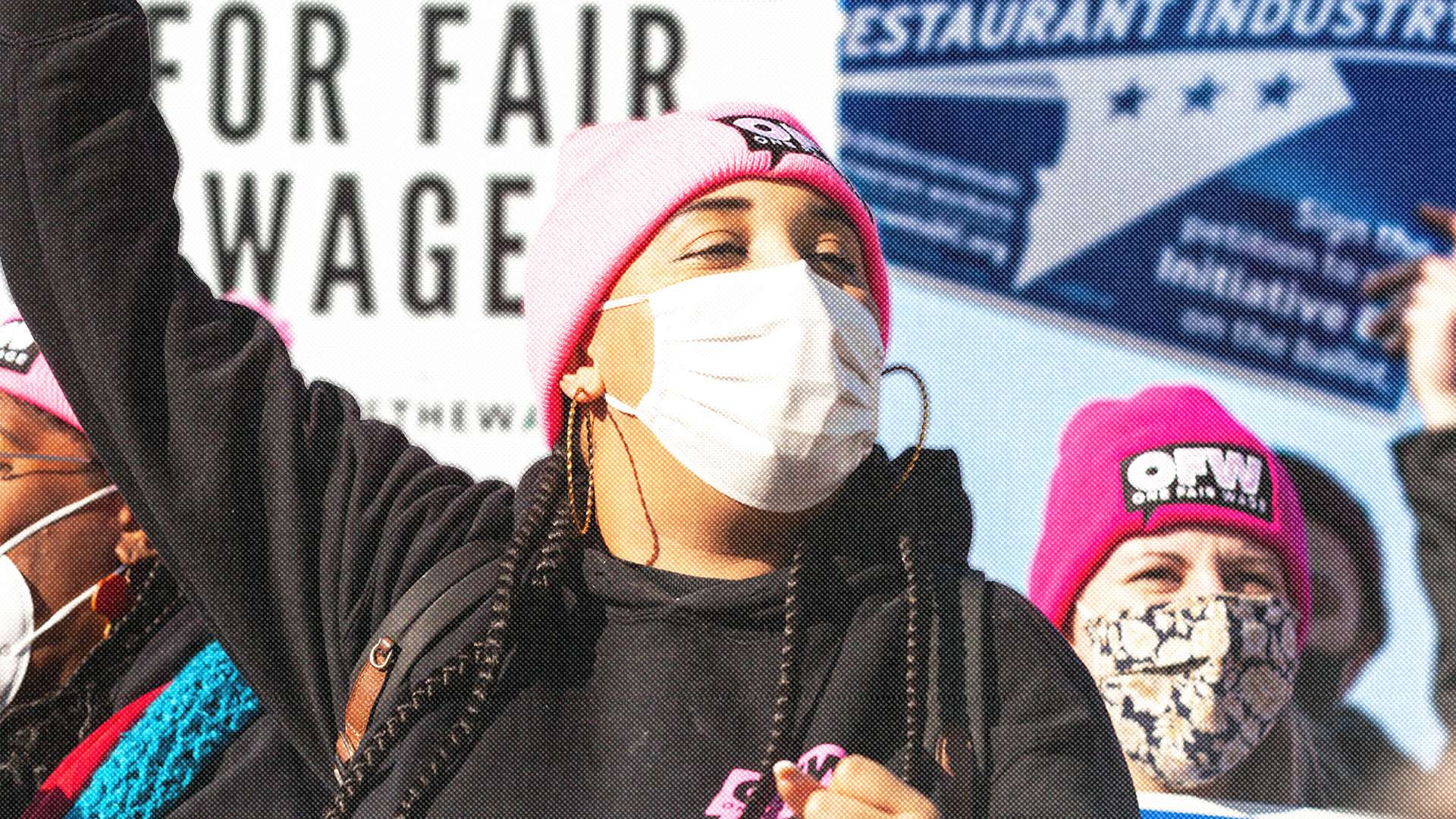
Initiative 87 aims to dismantle the tip wage credit, following two prior efforts in D.C. that yielded negative results for local restaurants.
In 2022, residents of Washington, D.C. voted to remove the tip wage credit, a policy that lets employers pay tipped staff a lower base hourly rate supplemented by gratuities. Known as Initiative 82, the measure won upwards of seventy percent support and pledged a gradual increase in the minimum wage for waitstaff until it matched the city’s established minimum.
Predictably, the District experienced a series of adverse economic effects, prompting the city council to partially repeal Initiative 82 the following year. Now, a little over a year later, the movement against D.C.’s tip credit has resurfaced.
The hospitality sector has long operated under a tipped-wage framework. Accordingly, servers may legally receive a minimum wage below the standard statutory minimum, so long as their tips cover the shortfall. (If tips fall short, the employer must make up the difference.)
At the time Initiative 82 was repealed, waitstaff in D.C. could earn $5.35 per hour under local law, with tips bridging the gap to the traditional $16.10 minimum. (D.C.’s minimum wage now stands at $18.40, revised for inflation.) Initiative 82 aimed to dismantle this arrangement by abolishing the tip credit entirely and requiring district servers to be paid the full traditional statutory wage by 2027.
What followed was, unfortunately, foreseeable. After Initiative 82 passed, full-service bar and restaurant jobs in D.C. dropped by about 5 percent, and workers’ earnings declined by more than $11 million as restaurants cut hours and staff. Surrounding counties in Virginia and Maryland saw declines of less than 1 percent during the same period, providing a stark counterpoint to gauge the negative impact of eliminating D.C.’s tip credit. Concurrently, many D.C. establishments began adding “service fees”—sometimes labeled as “auto-gratuity”—to bills, significantly increasing the cost of dining. A number of tipped employees in D.C. have voiced opposition to the law.
Faced with these consequences, Mayor Muriel Bowser urged a full repeal of Initiative 82; the City Council ultimately chose a partial rollback. This echoed a familiar pattern. In 2018, voters approved Initiative 77 to end the tip credit, only for the Council to repeal it in full a few months later.
Yet just when it appeared the campaign against the tip credit in D.C. was winding down, it re-emerged. Initiative 87 proposes not only to lift the District’s minimum wage to $25 by 2029 but also to phase out the tip credit by 2031. Proponents have submitted the necessary signatures to the D.C. Board of Elections, setting up a likely April 2027 District-wide vote.
The push is led by One Fair Wage, a New York–based organization that has orchestrated a nationwide drive to eliminate the tip credit. As in D.C., this broader effort has faced economic headwinds. In Chicago, a One Fair Wage initiative led to higher restaurant prices and reduced hours, prompting the City Council—hardly renowned for fiscal conservatism—to authorize a temporary halt on ending the tip credit.
Despite this track record, there are reasons some observers believe Initiative 87 could take root in D.C., unlike its predecessors. Mayor-elect Janeese Lewis George has voiced support for scrapping the tip wage credit— setting her apart from Bowser—while still expressing reservations about a front-loaded minimum wage rise to $25.
When it comes to eliminating the tip wage credit in D.C., the third time may indeed prove to be the charm.
