
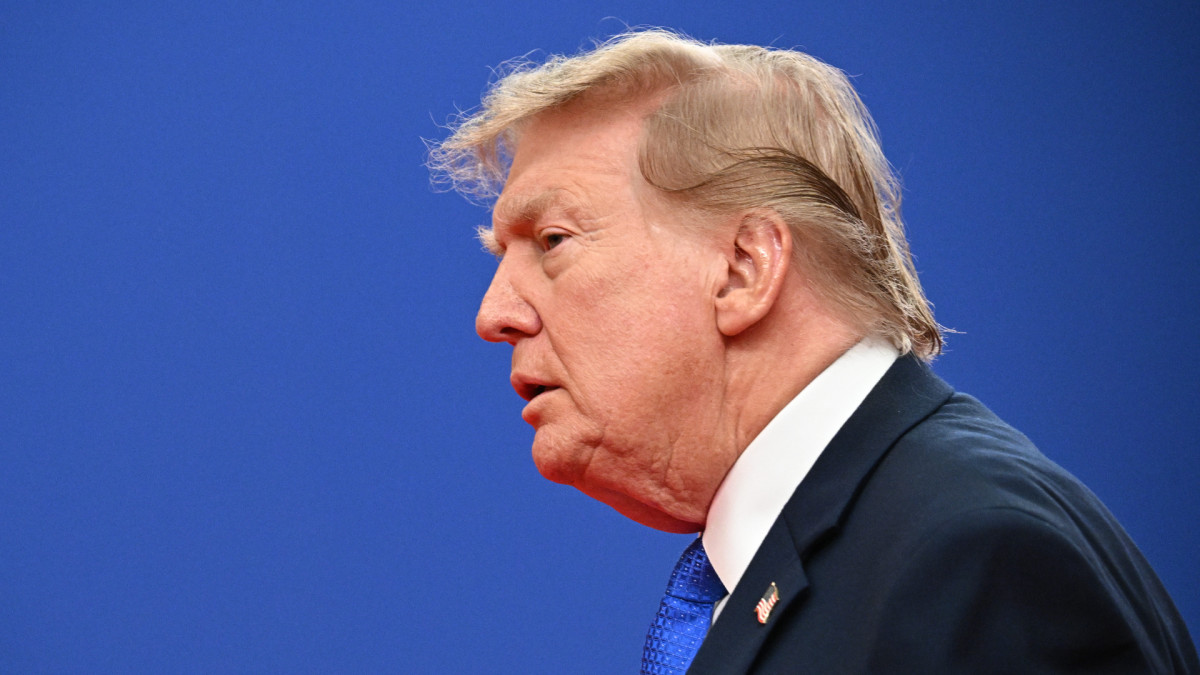
Trumpism has been badly wounded after the midterms. In two years, Trump has squandered his leadership with policies that harmed not only Americans, but especially Europe: tariffs, the Iran war, or the handling of AI. Deep America has also turned its back on Trump, who has gone from imperial eagle to a “lame duck.” A powerful majority of Democratic lawmakers and governors has seized the populist impulse of the average citizen and their rejection of the excesses of techno-oligarchy. Soon the Republicans will debate the essence of their party and the MAGA movement.
Our “transatlantic relationship” has reached this point: the worse things go domestically for the U.S. president, the better for Europe. From now to the 2028 presidential elections, the EU will be better able to withstand the bullying. Trump will wield his veto power over Congressional laws, and could embark on more battles. But national Democratic pressure will act as a brake, even when it does not translate into concrete measures.
“A powerful majority of Democratic lawmakers and governors has embraced the populist impulse of the average citizen and their rejection of the excesses of techno-oligarchy”
Can Europe put distance from the lame duck and take flight? The caution is the tone in Brussels: “Europe depends on itself”. Indeed, the EU could take to the skies toward an “open strategic autonomy.” But that depends on whether Europeans play their cards well. For now they remain divided and they are not doing well.
The first step would be more Europe in the Capitol and in the states. Subtly leverage the new internal balances in the U.S. to advance our interests. A window of renewed confidence in American democracy has reopened. That will spur links and support-seeking with leaders and key committees in Congress —Commerce, Defense, Appropriations, Foreign Affairs—. Also with companies, including some big tech uncomfortable with government intervention. A key is to connect not only with the new Democrats, but — equally important in the long term — with Republicans seeking an exit from the Iran, Middle East or Ukraine wars. But to do that, the EU would need a strategist who sets unity and direction, beyond the national and ideological fractures and the sálvese quien pueda. Where is it? A Merz, a Marine Le Pen, the High Representative Kallas, von der Leyen?
“A window of renewed confidence in American democracy has opened. That will spur ties and support-seeking with leaders and key committees in Congress”
The second is more Europe-ism for Europe. The question is how to manage the influence of the forces of the far right. The problem is that the American and European pendulum almost never move in sync. In Europe there remains a strong gravitational pull of the radical right, which is part of governing coalitions or is the leading political force. The presidencies of the European Council and the European Parliament (Costa and Metsola) are renewed in 2027 under great tension, and there are high-stakes elections in Spain, France, Italy or Poland. They worry a lot about the “ruined” France or the Germany where AfD could climb in the polls up to the 2029 elections. The only good thing is that, beyond the “culture war,” in practical matters the European far-right has distanced itself from Trump. Elon Musk’s millions are welcome on the campaign trail; but tariffs and Trump’s arrogance are lethal for their electorates. A “vassalage” (in the words of ultra-MEP Jordan Bardella) would not be profitable. On the other hand, it could happen that the radical right clashes strongly in the European Council on issues such as U.S. or China investments, tariffs, data centers or energy mix. The disaster would be served: the same confrontation with Trump, and more European confrontation.
The third is more Europe and a bit less the U.S. This is the hardest: the readjustment of strategic interests and dependencies. The Draghi and Letta reports on reindustrialization, competitiveness or the single market need leaders to interpret them and execute them. But the Europeans do not assert themselves enough against Washington. With Obama, the pivot toward Asia. With Biden, the Inflation Reduction Act, the restrictions on advanced chips or the erratic support for Ukraine. With Trump, the turbulent Turnberry trade deal. Europe has to fly on its own if necessary; but it still lacks wings. Lack of ambition: the financial outlook 2028–2034 will surely fall below €2 trillion (1.26% of the community’s GNI) under pressure from the “frugal” countries like Germany and the Netherlands. Lack of firmness: to apply, if necessary, deterrent instruments, of the technological bazooka, in addition to the commercial. Lack of strategic unity: to go with one voice to Ukraine peace negotiations and to establish paneuropean security parameters with U.S. backing. From there should come robust guarantees for Ukraine and, in the long run, a return of Moscow to the European fold. Lack of cooperation: on defense spending in NATO (the impossible 5%) and in European defense. It will be difficult to reconcile the Buy American with the Buy European, but even more so if everyone looks after their own industry.
From the U.S., a tailwind is blowing for Europe. It is a great opportunity—but only that—to take off and not let itself be dragged into the mud.
